
Sizing a mini split for heating means matching the unit’s power, measured in kilowatts (kW), to your room’s needs. The calculation starts with floor area but must account for insulation, ceiling height, and windows. A Ponsonby villa owner learned this the hard way; their new unit was too small for their drafty, high-ceilinged lounge, leading to a cold winter and high power bills.
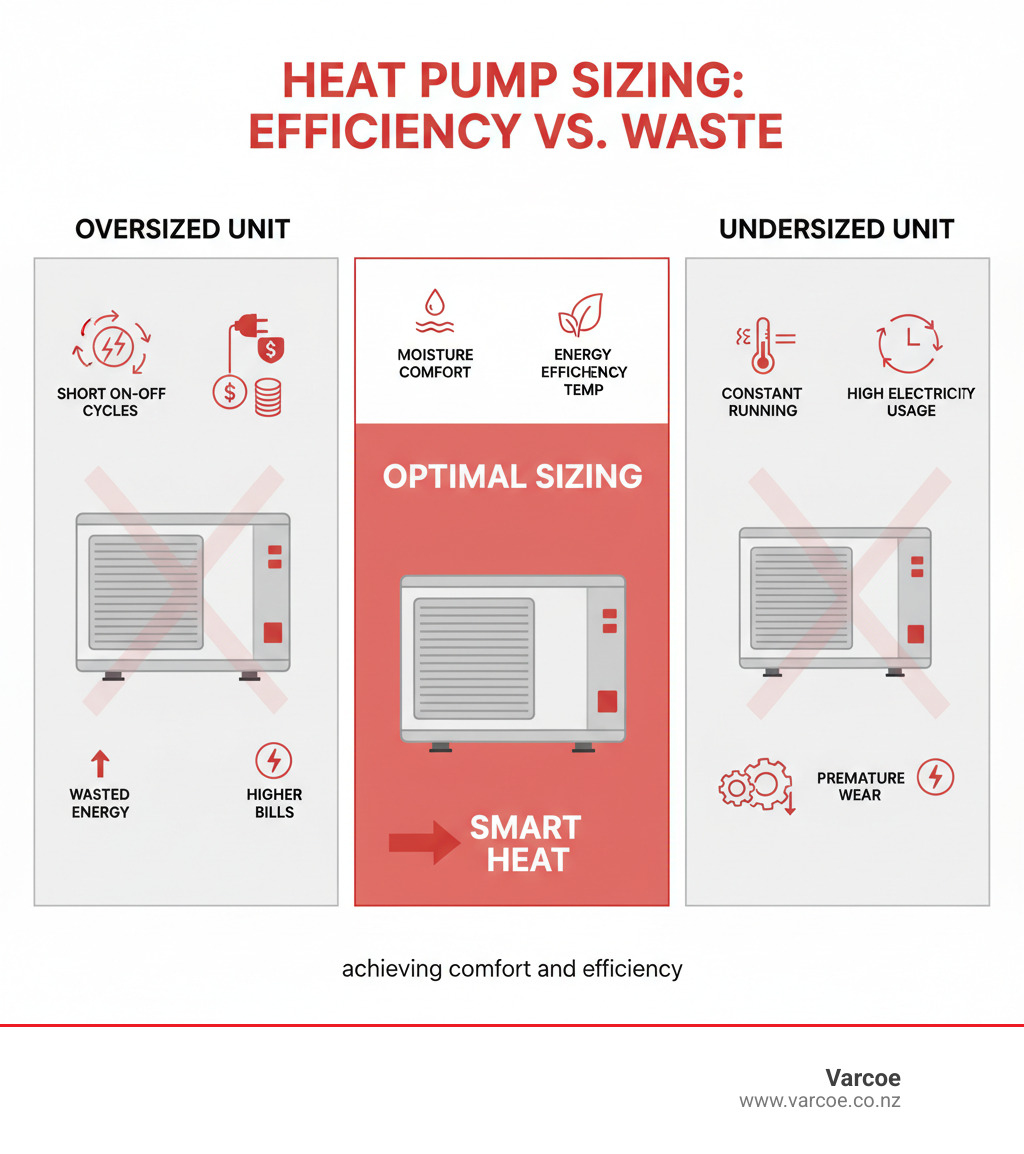
Getting the size wrong is a common problem. An undersized unit runs constantly, wasting electricity and wearing out fast. An oversized unit heats too quickly and shuts off, a process called short-cycling. This fails to remove humidity, leaves the air feeling clammy, and puts stress on the system. Both mistakes cost you money and reduce the unit’s lifespan, a point highlighted by efficiency authorities like EECA and Gen Less.
Auckland’s damp, mild winters present a unique challenge. The humidity in an older Grey Lynn weatherboard requires more heating power than a modern Flat Bush build, even if the rooms are the same size. A “she’ll be right” attitude doesn’t work; finding the ‘just right’ size is key to comfort and efficiency.
Quick Sizing Guide:
Choosing the right size heat pump is the most important decision for keeping your home warm and power bills down. Online calculators provide a starting point, but they miss the unique details of your home, like drafty windows or high ceilings. We’ll walk you through the essentials, from basic math to the details a professional looks for.
In New Zealand, heating power is measured in kilowatts (kW). You might see BTU (British Thermal Units) on some products; 1 kW is about 3,412 BTUs. The first step is measuring your room’s floor area (length x width in meters). A 5m by 4m room is 20m². From there, you can use this general guide:
| Room Size (m²) | Recommended kW |
|---|---|
| 10-20 m² | 2.5 – 3.5 kW |
| 20-30 m² | 3.5 – 5.0 kW |
| 30-45 m² | 5.0 – 7.0 kW |
| 45-60 m² | 7.0 – 8.5 kW |
These numbers are rough estimates for standard, well-insulated rooms. Our Heat Pump Calculator can help refine this, but many Auckland homes have features that require adjustments.
Your home is more than its floorplan. A 25m² room in a 1970s Epsom brick home needs a different solution than the same size room in a new Hobsonville build. Here are the factors that matter most:

The approach to sizing changes if you’re heating one room or several. For a single-zone system, one outdoor unit connects to one indoor unit. You calculate the heating needs for that specific room and choose a matching unit. This is straightforward for a lounge or bedroom. Our Single Room Heat Pumps offer many reliable options.
A multi-zone system uses one outdoor unit to power several indoor units, allowing different temperatures in different rooms. Sizing is more complex. Each indoor unit is sized for its room, but the outdoor unit’s capacity is determined by how many zones will run at once. This prevents overloading while providing flexible, whole-home comfort. Explore the possibilities with our Multi Room Heat Pumps.
Use this fast method to get a ballpark size before booking a professional assessment:
An online calculator gives a rough estimate, but it can’t replace a professional assessment. An expert considers your home’s unique thermal properties to guarantee performance, which is especially important for older Auckland properties or multi-level layouts.
After 50 years of installing heat pumps across Auckland, we see the same sizing mistakes. A few wrong assumptions can lead to a frustrating and expensive winter. Avoid these common traps:
A professional heat loss assessment is like insurance against a poor investment. Our accredited Varcoe technicians use principles from the Manual J calculation, adapted for Auckland’s climate, to measure your home precisely. We assess room dimensions, window size and type, insulation R-values (see MBIE’s guidance on energy efficiency H1), and air infiltration from drafts.
This detailed analysis determines the exact kW capacity you need. The small cost of an assessment is nothing compared to a $500 emergency call-out for a broken-down unit or a $3,000 compressor replacement from long-term strain. Get your free, no-obligation quote and sizing assessment from our experts this winter!
A correctly sized mini split is a great start, but its performance depends on your home and its care. To get the most out of your system:
We hear the same questions from homeowners across Auckland, from Ponsonby to Papakura. People want to understand sizing a mini split for heating before they invest. Here are the answers to the most common questions we get.
BTU stands for British Thermal Unit. It’s an older measurement for heat energy. In New Zealand, we use kilowatts (kW). The conversion is simple: 1 kW equals about 3,412 BTUs. A higher number, whether in kW or BTU, means more heating power.
Floor area is the starting point. A bigger room needs more power. A rough guide is 0.06 kW per square meter for an insulated space. But this is just a baseline; factors like insulation, windows, and ceiling height can change your needs dramatically.
Insulation, ceiling height, and climate are the main factors. A poorly insulated 1970s weatherboard in Grey Lynn loses heat fast and may need 20% more capacity. High ceilings in older villas also increase heating needs. Auckland’s damp climate means your system must work to create dry, comfortable warmth, not just raise the temperature.
Yes. A large, single-glazed window can lose a lot of heat. Double-glazed windows are much better at trapping warmth. North-facing windows provide free solar heat during the day, which can reduce the size of the unit you need by about 10%.
An oversized unit short-cycles, turning on and off constantly. This wastes power, creates a clammy feeling, and shortens the system’s life. An undersized unit runs non-stop, struggling to heat your room and leading to high power bills and premature failure. A correctly sized system runs smoothly and can last fifteen years or more.
For multi-room systems, each indoor unit is sized for its specific room. The outdoor unit must have enough capacity to power the indoor units that will run at the same time. We don’t just add up the capacities; we use manufacturer data to match the outdoor unit correctly, ensuring efficient operation.
Online calculators use general assumptions and can’t see your home’s unique features, like drafty windows or poor insulation. A professional load calculation measures everything precisely to find the exact kW capacity you need. It’s the best way to ensure your system performs well and saves you money in the long run.
Older Auckland homes lose heat quickly and often need 15-20% more heating capacity. The smarter approach is to improve your insulation first. This reduces your heating load, allowing you to install a smaller, more efficient heat pump that costs less to run. Our Healthy Homes Assessment can help.
For heating, look at the Coefficient of Performance (COP). A COP of 4.0 means the unit produces 4 kW of heat for every 1 kW of electricity used. A higher COP means lower running costs. For more on COP and heat pumps, see EECA’s heat pump guidance.
Always get a professional assessment, especially for multi-room systems, older homes, or complex layouts. A Mt Eden villa with high ceilings and large windows needs an expert eye. With 50 years of experience in every type of Auckland home, our technicians can identify issues and opportunities you might miss. Get your free, no-obligation quote and sizing assessment from our experts this winter!
As another damp Auckland winter approaches, it’s time to make sure your home is ready. If you’re tired of cold rooms and high power bills, we can help. For 50 years, Varcoe has helped families from Ponsonby to Papakura stay warm and comfortable.
Sizing a mini split for heating isn’t a guessing game. Our accredited technicians, like Tim Varcoe, know what Auckland homes need. We provide expert installation backed by our 12-month workmanship guarantee and solid after-sales support.
A professional assessment prevents the frustration and cost of future repairs. An undersized system can lead to a $500 emergency call-out, while an oversized one might cause a $3,000 compressor failure. Your comfort is worth more than that.
Winter booking slots fill fast. Get My Free Quote Today and lock in the right size mini split for your home.