You switch the heat pump on, and instead of warm, clean air you get a waft of something damp and stale, like a gym bag or an old basement. It is off-putting, it fills the room, and no amount of airing out seems to fix it for long. That musty smell is so common it has a nickname in the trade, and the good news is that it is both explainable and fixable. The bad news, if you ignore it, is that you are breathing whatever is causing it.
A musty heat pump smell is caused by mould, mildew and bacteria growing on the damp evaporator coil, the filters and the drain inside the indoor unit, a problem so common it is nicknamed dirty sock syndrome. It thrives because the unit’s dark, moist interior is ideal for microbial growth, especially in humid Auckland. Clean the filters, run the unit in fan or dry mode to dry it out, and book a professional coil and drain clean to clear it for good.
Here is what is actually causing the smell, how to get rid of it, and how to stop it coming back.
The smell is biological. Inside the indoor unit, the evaporator coil gets cold and damp as the heat pump runs, particularly in cooling and dehumidifying mode, and that dark, moist environment is a perfect home for mould, mildew and bacteria. As they build up on the coil, the filters and in the drain, they give off that unmistakable musty, dirty-sock odour, which is then blown out into your room every time the unit runs. HVAC technicians literally call it dirty sock syndrome, because that is exactly what it smells like.
It is worth being clear about what this smell is not. A musty or mouldy smell is a cleanliness and moisture issue. A burning or electrical smell, by contrast, is a warning sign to turn the unit off and call a technician, and it should never be ignored. This article is about the musty one.
Three things feed the problem, and our climate makes all of them worse.
Moisture is the root cause. Every time the heat pump cools or dehumidifies, it pulls water out of the air, and that dampness lingers on the coil. In humid Auckland, there is simply more moisture to work with, so the interior stays damp and microbes flourish.
Dirt is the food. Dust and grime that build up on the filters and coil give mould and bacteria something to grow on, which is why a neglected unit smells far worse than a clean one.
And stagnation seals the deal. A unit that is switched off wet, without ever running its fan to dry out, stays damp inside between uses, giving the growth time to take hold. Warm, humid, dirty and damp is the perfect recipe, and it is one Auckland homes serve up easily.
Clearing a musty heat pump is a two-part job, part of which you can do yourself and part of which needs a professional.
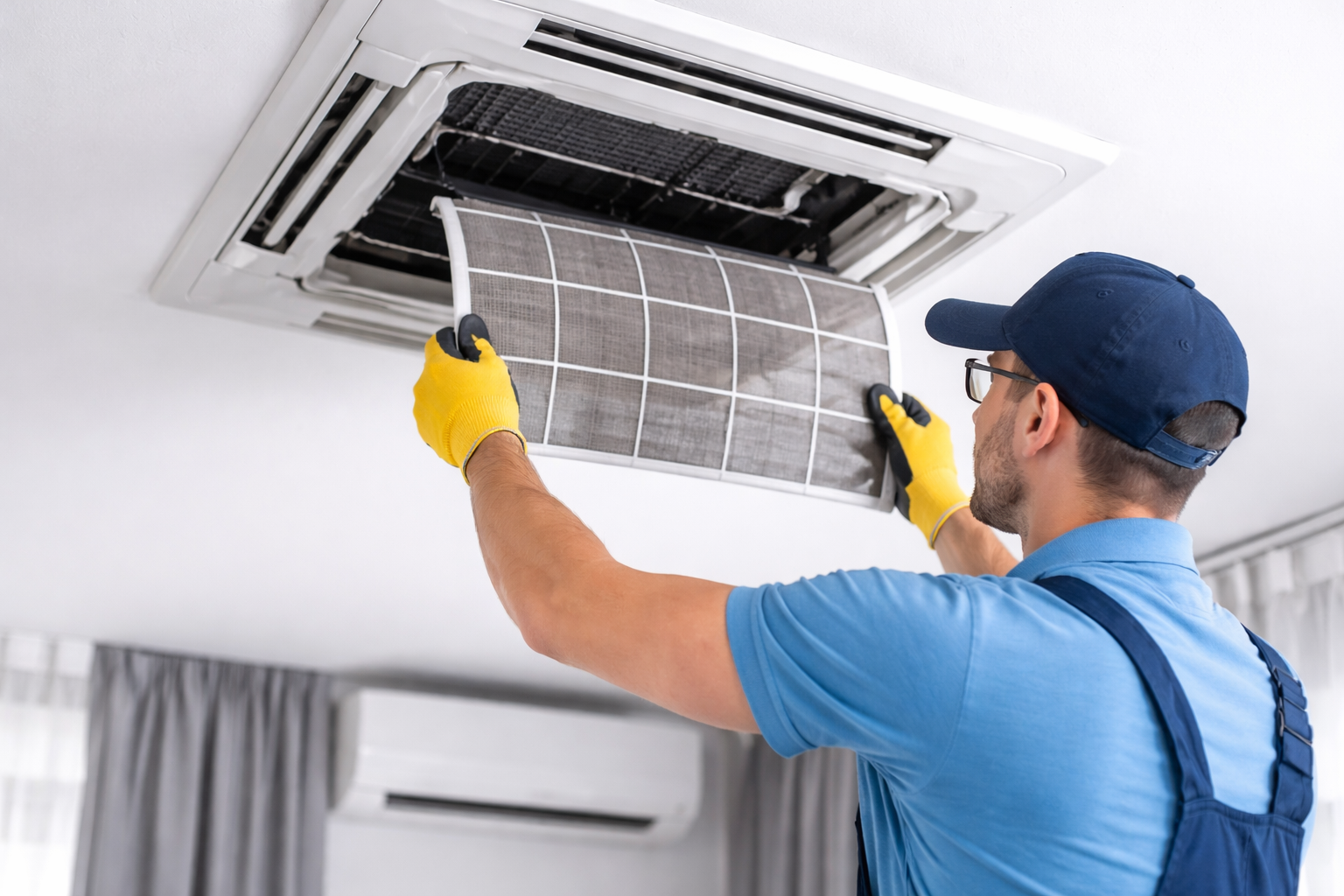
Clean the filters. This is the first and easiest step. Pull the filters, wash them, dry them fully and refit them, since dirty filters are both a source of the smell and a place for growth. Our maintenance and cleaning guide shows exactly how.
Dry the unit out. Run the heat pump in fan-only or dry mode for a while, which dries the damp interior and discourages the mould that is causing the smell. Doing this regularly, especially after using cooling mode, is one of the best preventive habits there is.
Get a professional coil and drain clean. Here is the honest limitation: cleaning the filters does not reach the evaporator coil or the drain, which is where the worst of the growth lives. Clearing a genuinely musty unit for good means a professional deep clean and service that treats the coil, clears the drain, and removes the mould you cannot get to yourself. Without that, the smell tends to come back.
It is tempting to treat a musty heat pump as just an annoyance, but the air it produces is the air your household breathes. Mould and bacteria being blown around a room can irritate airways, trigger allergies, and worsen asthma, particularly for children and anyone with respiratory sensitivities. Damp and mould are exactly the kind of indoor-air issue that a healthy home is meant to avoid, so clearing a smelly unit is as much about your family’s air quality as it is about comfort. If the room itself is damp, improving ventilation helps tackle the moisture that feeds the problem in the first place.
A musty smell is the most common, but a heat pump can produce a few different odours, and it helps to know which need urgent attention. A burning or electrical smell means turn the unit off and call a technician, because it can signal an electrical or motor fault, and it should never be ignored. A hot, dusty smell the first time you run the unit for the season is usually just dust burning off the elements and settles within a short time, which is normal. A sour or vinegar-like smell is the same mould and bacteria issue as the classic musty odour and is treated the same way. And a rotten-egg smell does not come from the heat pump itself, but if you notice it, treat it as a possible gas issue elsewhere in the home and act accordingly. When in doubt about any smell that is not simply musty or dusty, switch off and get it checked.
Prevention is simple once the unit is clean. Clean the filters regularly, about monthly in heavy use. Run the unit in fan or dry mode to dry the interior, especially after a stretch of cooling. Keep the space ventilated to control humidity. And book a professional service periodically so the coil and drain are cleaned before growth takes hold. Do those, and the musty smell simply never gets the damp, dirty foothold it needs.
A musty heat pump is not something you have to live with or keep masking. It is mould and bacteria in a damp, dirty unit, and once you clean the filters, dry it out, and have the coil and drain properly cleaned, the smell goes and your air is genuinely cleaner for it.
Varcoe has serviced heat pumps across Auckland since 1975, more than 20,000 of them, and we know exactly where the mould hides in a musty unit and how to clear it. To get rid of the smell for good, get in touch for a service, call us on 0800 088 888, or email info@varcoe.co.nz, and we will have your heat pump blowing clean, fresh air again.
Because mould, mildew and bacteria are growing on the damp evaporator coil, filters and drain inside the indoor unit, and that growth is blown into the room when the unit runs. It is a moisture and cleanliness issue, common enough that technicians call it dirty sock syndrome.
It is the nickname for the musty, dirty-sock smell caused by microbial growth on the cold, damp coil inside the indoor unit. It is most common in humid conditions and after cooling mode, when moisture lingers on the coil and feeds mould and bacteria.
Clean the filters, run the unit in fan or dry mode to dry the interior, and book a professional coil and drain clean, since the worst of the growth sits on the coil where filter cleaning cannot reach. Without the professional clean, the smell usually returns.
It can be. The unit blows mould and bacteria into the room, which can irritate airways and trigger allergies or asthma, especially for children and sensitive people. Clearing the smell is about air quality as well as comfort.
You can clean the filters yourself, which helps, but the evaporator coil and drain, where most of the growth lives, need a professional deep clean to reach. For a unit that is genuinely musty, the coil clean is what clears it for good.
Clean the filters monthly, run the unit in fan or dry mode to dry it out after cooling, keep the room ventilated to control humidity, and have it professionally serviced periodically. Denying the interior the damp, dirty conditions mould needs keeps the smell away.
We deep-clean the coil and drain where the mould hides, so your air is fresh again.