Air conditioning service covers three main areas to keep your home comfortable year-round:
Understanding these services helps you make informed decisions, whether you’re facing a breakdown, planning an upgrade, or aiming for peak efficiency. In New Zealand, our “heat pumps” are air conditioners providing both heating and cooling, making them essential for Auckland’s variable climate.
Regular air conditioner maintenance can reduce energy consumption by up to 15%, a significant saving on your power bills. With proper care, most systems can last up to 20 years. This guide will help you troubleshoot common problems, decide between repair and replacement, and understand when to call a professional to maximise comfort and minimise costs.
Understanding your air conditioning service needs begins with knowing your system. In New Zealand, “air conditioner” and “heat pump” are used interchangeably because our systems provide both heating and cooling. This versatility makes them ideal for Auckland’s variable climate, offering a year-round comfort solution.
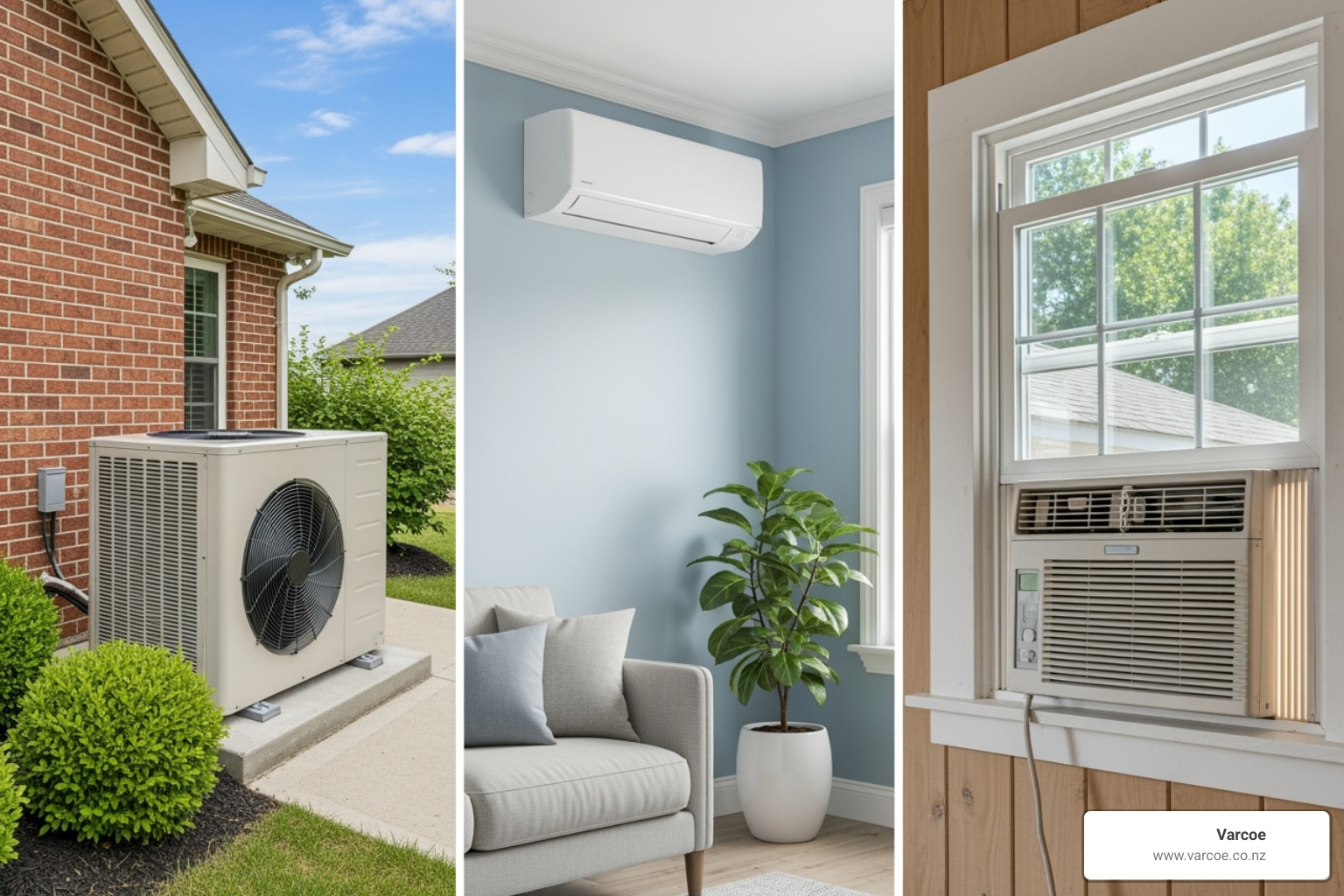
Choosing the right system depends on your home’s layout and your family’s needs. Here are the main options:
High wall split systems: The most common choice in NZ, these units are mounted high on a wall and are perfect for single rooms or open-plan areas. We offer both Single Room Air Conditioners and Single Room Heat Pumps.
Ducted systems: For seamless, whole-home comfort, air is distributed through hidden ducts. This is ideal for new builds or major renovations. Explore our Ducted Whole Home Air Conditioners and Ducted Whole Home Heat Pumps.
Floor console systems: These sit at a low level, making them effective for heating and ideal for rooms with limited high-wall space. See our Floor Consoles Cassettes.
Multi room systems: A single outdoor unit connects to multiple indoor units, allowing for individual temperature control in different zones. Check out our Multi Room Air Conditioners and Multi Room Heat Pumps.
Ceiling cassettes: For a discreet look, these units sit flush with the ceiling and are excellent for large, open spaces. Consider our Ceiling Cassette Air Conditioners for modern homes.
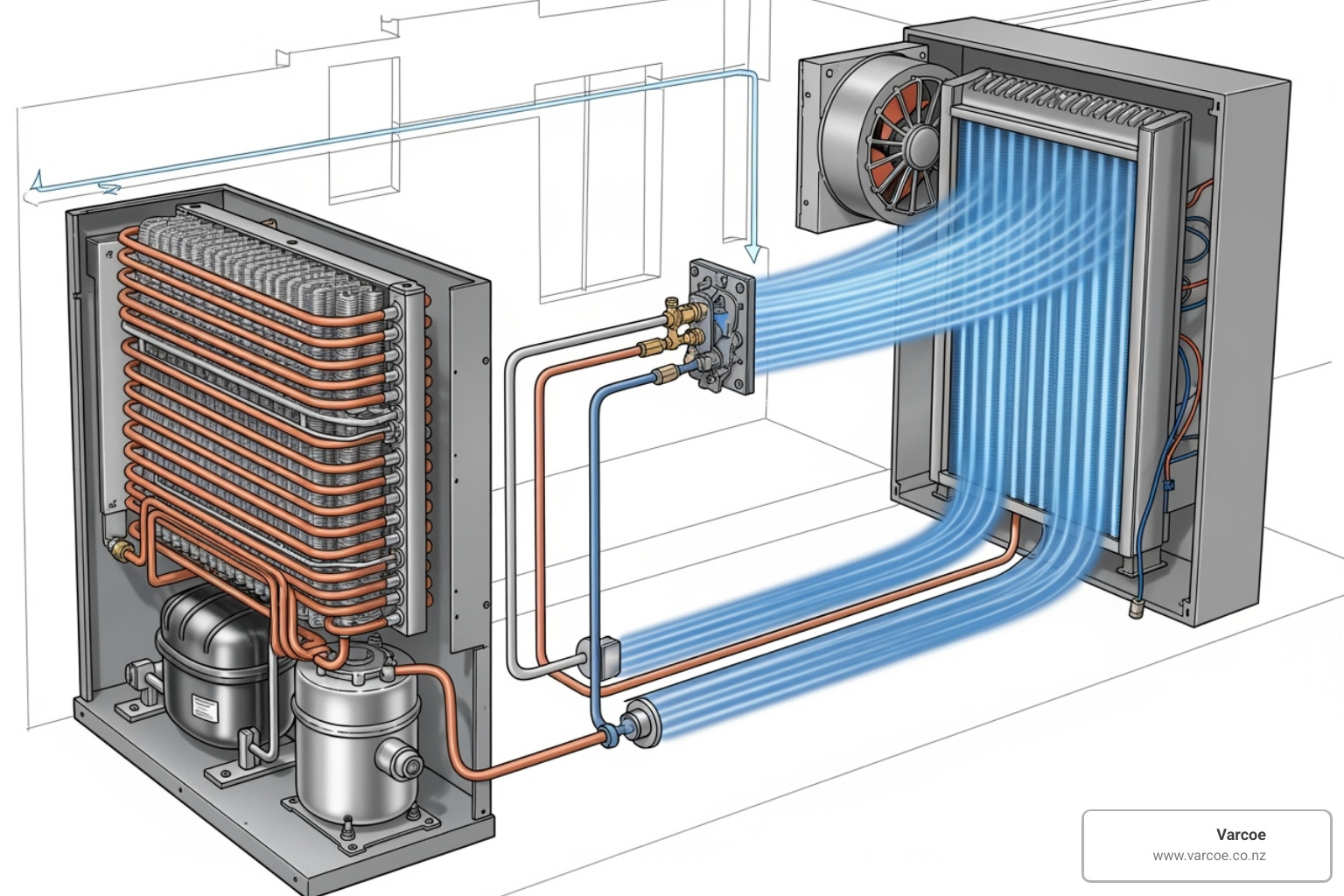
Heat pumps don’t create heat; they move it. This is achieved through reverse cycle technology.
In summer, the system extracts warmth from inside your home and transfers it outside. In winter, it reverses the process, extracting heat from the outdoor air (even on cold days) and moving it inside.
This energy transfer method is highly efficient. Instead of burning fuel, it simply moves existing heat. For every unit of electricity used, a heat pump can move three to four units of heat energy, making it a cost-effective way to heat and cool your home. Regular air conditioning service is vital to keep these components running efficiently. For more details, visit our Heat Pumps section.
Just like a car, your air conditioning system needs regular attention to prevent inefficient operation, high power bills, and unexpected breakdowns. Professional air conditioning service focuses on three key areas: maintenance, repair, and installation.
Regular air conditioner maintenance can reduce energy consumption by up to 15%. Beyond the savings, annual servicing offers several key benefits:
Your system will often show warning signs when it needs attention. Look out for:
Before making a service call, try these simple checks:
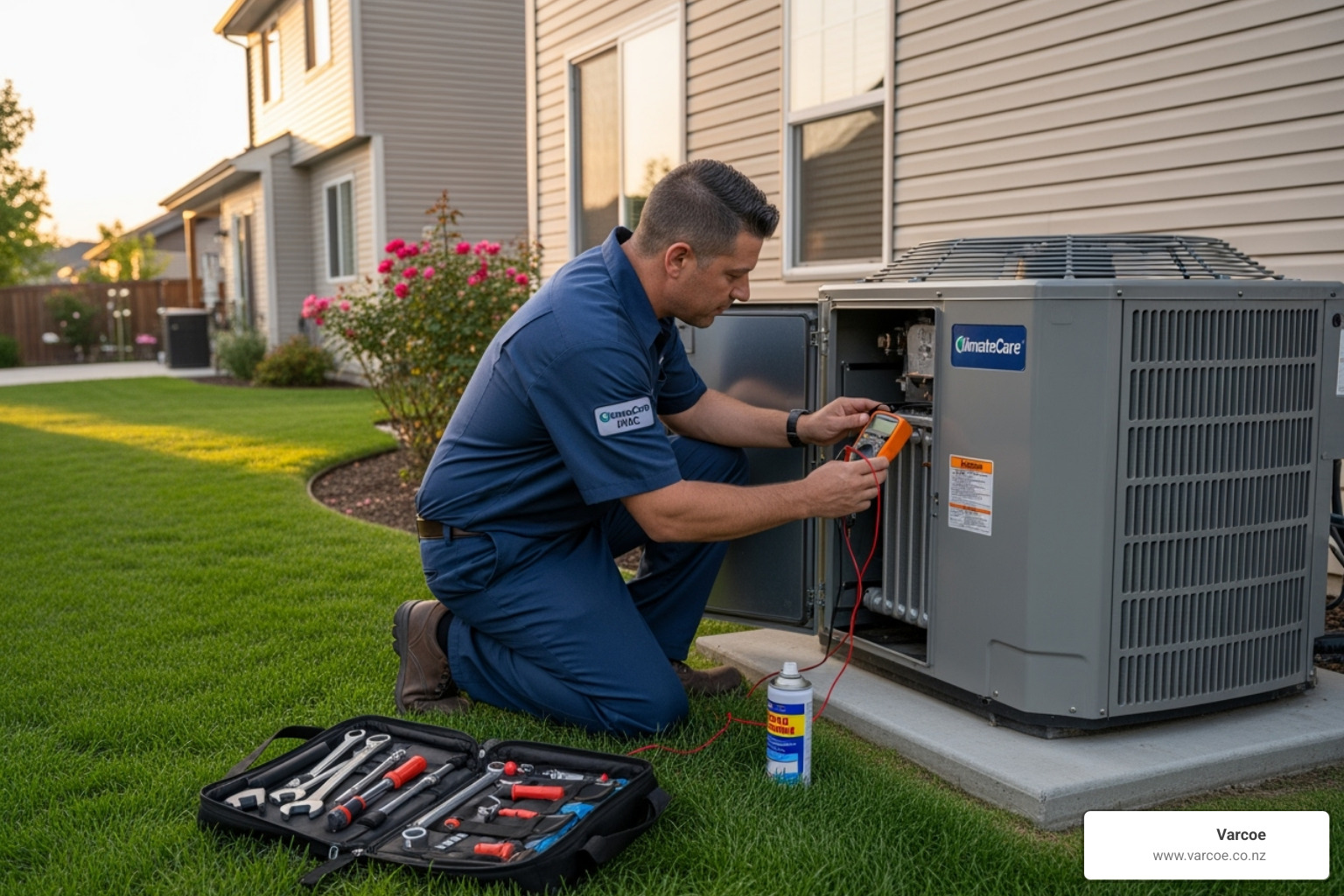
When you call us for air conditioning service, our technicians follow a thorough process. We start with an assessment of the problem, followed by comprehensive diagnostic testing to pinpoint the cause. This includes a full component inspection, where we clean coils, check refrigerant levels, and tighten electrical connections. We also calibrate the thermostat and clear the condensate drain. After our diagnosis, we provide a clear explanation and estimate for any necessary repairs. Once work is complete, we test the system to ensure it’s running perfectly.
Deciding to install or replace an air conditioning system is a major investment in your home’s comfort and value. Sometimes, starting fresh with a new, efficient unit is the smartest financial decision.

Selecting the perfect system requires matching it to your specific needs. Key factors include:
Even the best system will underperform if installed incorrectly. Professional installation ensures optimal performance and longevity.
Deciding between repair and replacement depends on several factors:
Upgrading to a modern system offers immediate and long-term benefits:
Ready to UPGRADE to a modern system? We can help you choose the right option for your home and budget.
Your air conditioning system acts as the lungs of your home, circulating air through your living spaces. This means that air conditioning service should also focus on the quality of the air you breathe. Over time, ductwork can accumulate dust, allergens, and other pollutants.
Every time your system runs, it pushes air through ducts that may be filled with contaminants. Professional air duct cleaning addresses this by providing several key benefits:
Clean air ducts are an important part of a healthy home. We recommend a Healthy Homes Assessment to evaluate your entire home environment.
With 50 years of experience in Auckland, we’ve answered thousands of questions. Here are some of the most common ones.
We recommend a professional air conditioning service once a year. This annual check-up is best scheduled in spring (for cooling) or autumn (for heating) before the peak season begins. Regular servicing is crucial for efficiency, preventing major breakdowns, and maintaining your manufacturer’s warranty. High-usage systems, such as those in commercial settings, may benefit from twice-yearly checks.
Refrigerant is essential for cooling, and a leak is a serious issue. Key signs include:
If you notice these signs, call a certified technician immediately, as refrigerant is hazardous.
In New Zealand, there is essentially no difference. The term “heat pump” refers to a reverse cycle air conditioner, which is standard here. Unlike cooling-only units common in other countries, our systems are designed for both heating and cooling.
They work by moving heat: in summer, they move heat out of your home, and in winter, they extract heat from the outside air and move it in. This versatility makes them perfect for Auckland’s climate. So, when we discuss air conditioning service, we are referring to these dual-function units. For more local information, see our FAQ Heat Pumps Auckland page.
Understanding your system is the first step, but partnering with an expert ensures its longevity and performance. For over 50 years, Varcoe has been Auckland’s trusted name in heat pumps and air conditioning. Our deep experience with the local climate means we provide solutions that work.
Professional air conditioning service is an investment in your home. It extends your system’s life, keeps energy bills down, and guarantees comfort year-round. Our factory-trained technicians provide care for your system, whether it needs routine maintenance, complex repairs, or a full replacement.
We’ve seen every type of system and solved every kind of problem. We offer clear advice and transparent service, ensuring you get the right solution for your home and budget.
Ready to give your air conditioning system the expert care it deserves? Contact us today to keep your home comfortable all year round. You can also find out more about our servicing options to see how our maintenance programmes deliver peak performance.