Ask ten Aucklanders what it costs to run a heat pump and you’ll get ten different answers, usually somewhere between “next to nothing” and “scary.” The truth sits in the middle, and it’s surprisingly easy to control once you understand what actually drives the number. A heat pump is the cheapest electric heater you can own, but only when it’s the right size, a decent efficiency rating, and used sensibly. Here’s the full picture for 2026.
The reason heat pumps are cheap to run comes down to physics. A fan heater or oil column heater generates heat by forcing electricity through a resistive element: one unit of power in, one unit of heat out. A heat pump doesn’t generate heat at all. It moves existing warmth from the outside air into your room using a refrigeration cycle, the same principle that runs your fridge in reverse.
That’s why heat pumps are measured by their Coefficient of Performance, or COP. A unit with a COP of 4 delivers four units of heat for every single unit of electricity it consumes. In plain terms, you’re getting 400% efficiency, where a plug-in heater only ever manages 100%. Choosing a high-efficiency system is the most powerful lever you have to reduce your energy costs over the life of the unit.
Before you can estimate running cost, you need to know what you pay per unit of power. As of early 2026, the national average residential electricity price sits at around 39 cents per kWh, ranging from roughly 35c in the cheapest regions to nearly 49c in the priciest. Prices have climbed about 21% over three years, with another modest rise expected through 2026, partly driven by rising line charges that make up roughly a third of your bill.
The takeaway: every cent on your power plan matters, and a more efficient heat pump shields you from those increases far better than an old resistive heater ever could. If you genuinely want to drive your whole-of-home power consumption down, a professional energy audit can identify where you’re losing money beyond just heating.

For a correctly sized high-wall split warming a typical living room or bedroom, expect to pay roughly 30 to 80 cents per hour on a cold evening. The exact figure depends on your power plan, the size of the space, and how well insulated it is.
Run that unit for four hours an evening through winter and you’re looking at somewhere between $1.20 and $3.20 a day to keep that room comfortable. Over a three-month Auckland winter, that’s a fraction of what the same comfort would cost from electric panel heaters and a world away from the cost of gas. For most households, the heating line on the power bill is far smaller than they fear before they make the switch.
This is where most people go wrong, and it costs them for years. An undersized unit runs flat-out trying to reach temperature and never quite catches up, burning power the entire time. An oversized unit blasts to temperature then short-cycles on and off, wasting energy and wearing out components. The sweet spot is a system matched precisely to your room’s floor area, ceiling height, insulation, window size and aspect. Our heat pump size calculator gives you a fast estimate, and a free in-home assessment confirms it exactly.
Two units of the same capacity can have noticeably different running costs depending on their COP and HSPF ratings. Premium models from brands like Mitsubishi Electric cost a little more upfront but deliver more heat per dollar of electricity, which adds up over a 15-year lifespan. The cheapest unit on the wall is rarely the cheapest unit to run.
Habits matter more than people expect:
Running cost isn’t only the power bill. A clogged filter, dirty coils or low refrigerant force the unit to work harder to deliver the same warmth quietly inflating your power consumption month after month. A neglected heat pump can lose a meaningful chunk of its efficiency within a few years.
Budget around $150 to $300 a year for professional servicing to keep the system running at the efficiency you paid for. An annual heat pump service plan keeps filters clean, refrigerant levels correct and faults caught early. If something does go wrong, prompt heat pump servicing and repairs restores efficiency before a small issue becomes an expensive one.
The goal isn’t to run your heat pump as little as possible, it’s to get the comfort you want for the lowest sensible cost. A well-sized, efficient unit, set to a steady temperature in a room with the doors closed and a clean filter, will keep your family warm all winter for a running cost most households find pleasantly low. Cut corners on sizing or skip the servicing, and that same unit quietly costs you more every single month.
If you’re weighing up your first heat pump or replacing a tired old one, our heat pumps range covers everything from single rooms to whole-home solutions, all sized and installed to run as efficiently as possible.
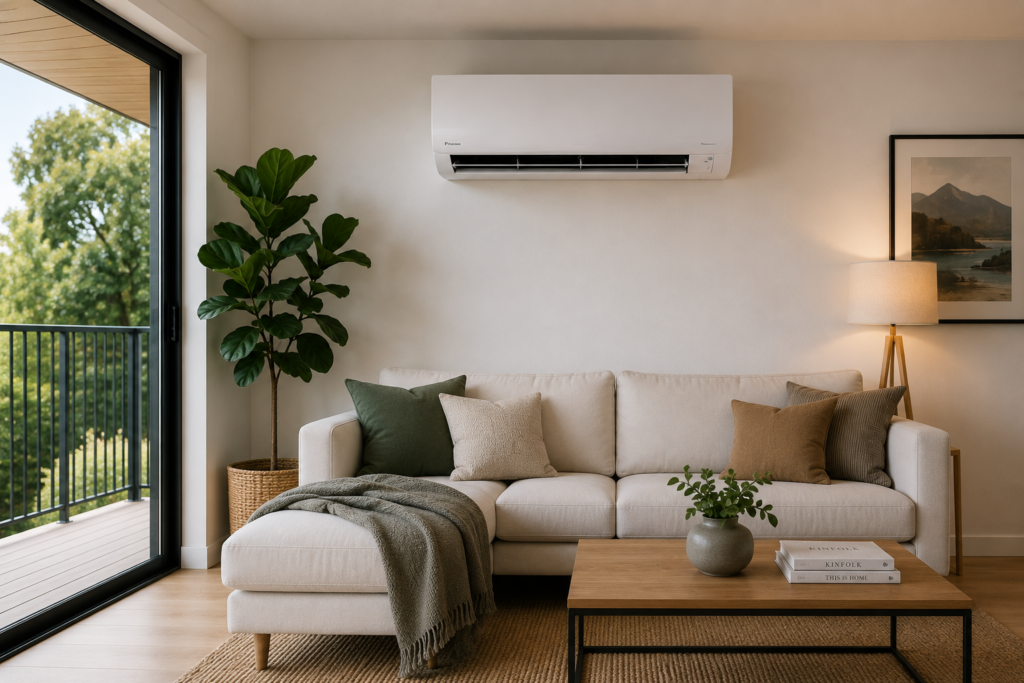
For a well-sized high-wall split on a cold evening, expect roughly 30 to 80 cents per hour. The figure depends on your power plan, the size of the room and how well insulated it is. A higher-COP unit set to a steady temperature costs less.
Yes, by a wide margin. Because a heat pump moves heat rather than generating it, a unit with a COP of 4 produces around four times the warmth of a plug-in electric heater for the same power. That makes it one of the cheapest forms of heating available in New Zealand.
Not necessarily. A heat pump set to a steady, moderate temperature often costs less than repeatedly blasting a cold room back up to heat. Using the timer or app to run it only when rooms are occupied is usually the most economical approach.
A correctly sized unit is what matters, not simply a bigger one. An oversized unit short-cycles and wastes power, while an undersized one runs flat-out. Matching capacity to the room is the key to low running costs.
A lot. Dirty filters, blocked coils and low refrigerant all force the unit to work harder and use more electricity for the same warmth. Annual servicing keeps the system at peak efficiency and protects your power bill.
Varcoe has installed over 20,000 heat pumps across Auckland since 1975, backed by 224 five-star reviews, licensed manufacturer-certified technicians, a 12-month workmanship guarantee and a 5-year warranty on parts and labour. We size every system precisely so it heats your home for the lowest sensible running cost, no guesswork, no oversized units padding the bill.
Call us free on 0800 088 888 or book your free, no-obligation quote today. Warmer rooms and a smaller power bill start with one phone call.