There are few worse moments in an Auckland winter than turning on your heat pump, waiting for that warm rush of air, and getting nothing but a faint draught of cool. Before you assume the worst and brace for an expensive repair, take a breath. A large share of “my heat pump won’t heat” problems come down to simple causes you can check or fix yourself in a few minutes.
This guide walks through the usual culprits in order, from the quick five-second checks to the faults that genuinely need a technician. Work through them top to bottom and you’ll either have warm air flowing again or a clear idea of who to call.
It sounds obvious, but the most common reason a heat pump “won’t heat” is that it isn’t actually set to heat.
Check the mode. Heat pumps have several modes: heat, cool, dry (dehumidify), fan and auto. It’s easy to knock the remote onto the wrong one. Look for the sun or “HEAT” symbol on the display rather than the snowflake (cool) or water drop (dry). In auto mode, the unit decides for itself based on the room temperature, which can leave it doing nothing on a mild morning.
Check the set temperature. Make sure the target temperature is set several degrees above the current room temperature. If the room is 18°C and the remote is set to 17°C, the unit has no reason to heat. Bump it up to 21–23°C and give it a few minutes.
Check the remote batteries. Weak batteries can send incomplete signals, so the unit beeps but doesn’t change settings, or the screen shows the wrong mode. Fresh batteries are a cheap first move.
Check the power. Confirm the unit is switched on at the wall and that a circuit breaker hasn’t tripped at the switchboard. After a power cut, some units restart on their previous timer or schedule rather than turning straight on.
If you control your unit through an app, double-check the schedule there too, a forgotten timer or a misconfigured WiFi controller can switch the system off or onto the wrong mode without you realising.
If the fan is running and the mode is right but the air still feels cool, a few things could be happening.
Give it time to warm up. Heat pumps don’t blast hot air the instant you switch them on. The compressor and coil need a couple of minutes to build heat, so cool-ish air for the first few minutes is completely normal. Judge performance after ten minutes, not ten seconds.
It may be in a defrost cycle. This is the single most misunderstood heat pump behaviour. On cold, damp Auckland mornings, frost forms on the outdoor coil. To clear it, the unit temporarily reverses, pauses indoor heating, and melts the ice off the outside. During defrost, which can last several minutes, the indoor fan often stops and you may see steam rising from the outdoor unit. This is the system working correctly, not a fault. Wait for it to finish and heating will resume automatically.
Your filters might be clogged. Dirty filters choke airflow, so even when the unit is heating, very little warm air actually reaches the room. This is so common that it’s worth ruling out first by cleaning the filters. A simple job you can do yourself, covered step by step in our guide to cleaning your heat pump filters at home.
Half of your heat pump lives outside, and it’s easy to forget. In heating mode, the outdoor unit pulls warmth from the outside air, so if it can’t breathe, the whole system suffers.
Walk outside and look at it. Is it buried behind overgrown shrubs, blocked by stacked firewood, or smothered in leaves? Clear at least a metre of space around it. In a hard frost, a light coating of ice that comes and goes with the defrost cycle is normal, but a thick, persistent block of ice that never clears points to a fault, often a failed defrost sensor or low refrigerant and needs professional attention.
Listen, too. A healthy outdoor unit hums steadily. Loud rattling, grinding or a unit that’s completely silent when it should be running can indicate a fan motor or compressor problem.
If you’ve worked through everything above and your heat pump still won’t heat properly, the cause is likely internal and these are jobs for a licensed technician, not a DIY fix.
Low refrigerant. Refrigerant is the fluid that carries heat. If there’s a leak, the unit loses its ability to warm the room and may run constantly while never reaching temperature. Refrigerant must be handled by a qualified, certified technician, it’s both a safety and a legal requirement in New Zealand.
A faulty reversing valve. This component switches the unit between heating and cooling. If it sticks, your heat pump may only cool, or blow lukewarm air no matter the setting.
Sensor, capacitor or control-board faults. A failed temperature sensor can make the unit misread the room and refuse to heat. A worn capacitor can stop the compressor or fan from starting, often with a clicking or humming sound. These need diagnosis with proper equipment.
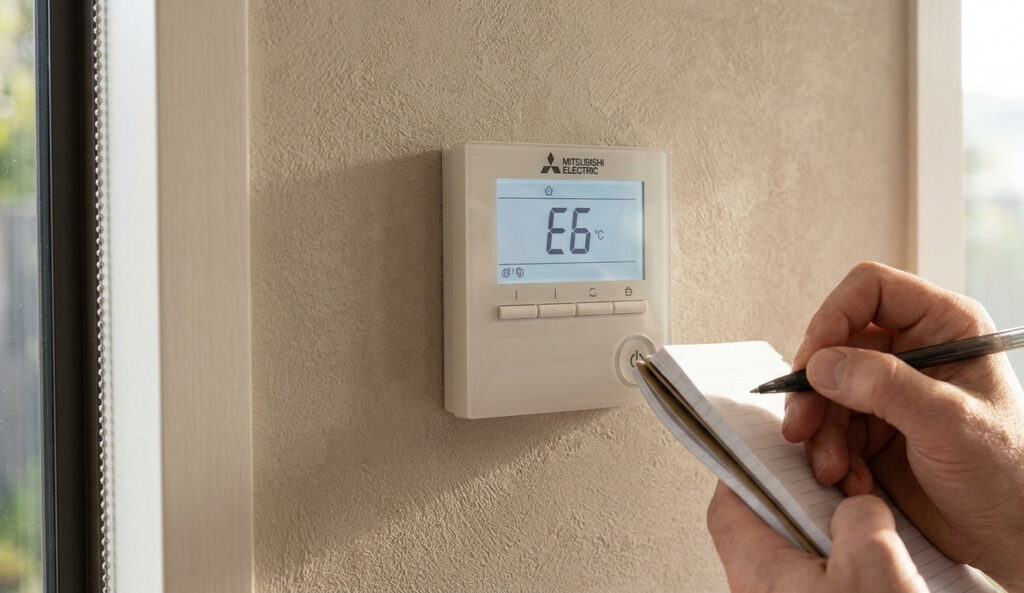
An error code on the display. If your unit is flashing a light pattern or showing a code, that’s it telling you something specific is wrong. Manufacturers such as Mitsubishi Electric and Daikin each use their own codes, note it down before you call, as it helps the technician arrive prepared.
When heating fails on the coldest night of the year, you don’t want to wait days. Our emergency repair service exists for exactly these moments, getting an Auckland home warm again fast.
Sometimes the heat pump isn’t broken at all, it’s just too small for the space. An undersized unit will run flat out yet never quite warm a large or draughty room on the coldest days, especially in an open-plan home. If your heat pump has always struggled rather than recently stopped, sizing may be the issue. Our heat pump size calculator gives you a quick reality check, and if a poorly matched unit was installed years ago, a correctly specified replacement and proper heat pump installation will transform your comfort.
Most heating problems are fixable, and many are quick fixes you can handle yourself. But when the simple checks don’t bring the warmth back, the smartest move is to get a licensed technician in before a small fault becomes a bigger, costlier one.
Varcoe has kept Auckland homes warm since 1975, with manufacturer-certified technicians, transparent pricing and a 12-month workmanship guarantee. Book a repair or request a free quote now or call 0800 088 888 and we’ll have your heat pump heating again in no time.
The most common reasons are that it’s still warming up (wait ten minutes), it’s in a normal defrost cycle clearing frost off the outdoor unit, or the filters are clogged and restricting warm airflow. If none of those apply and the air stays cold, it may be low on refrigerant or have a reversing-valve fault, which needs a technician.
Yes, briefly. On frosty mornings the unit pauses indoor heating to melt ice off the outdoor coil, then resumes automatically after a few minutes. This defrost cycle is normal. A unit that stays iced up or never resumes heating is not, and should be checked.
This usually points to either an undersized unit working beyond its capacity, badly clogged filters, or low refrigerant from a leak. Clean the filters first; if that doesn’t help, it’s worth having the unit and its sizing professionally assessed.
You can safely handle the basics: checking the mode and temperature, replacing remote batteries, resetting the breaker, cleaning the filters and clearing the outdoor unit. Anything involving refrigerant, electrical components or internal parts must be left to a licensed technician for safety and legal reasons.
Varcoe offers emergency repairs for urgent heating failures across Auckland. The sooner you call, the sooner we can get to you. Note down any error code shown on the display first, as it helps us diagnose and arrive with the right parts.