Your heat pump is humming along, and then one day a light on the indoor unit starts blinking, or the display shows a cryptic code like E1 or F3, and the unit stops working properly. It is unsettling, because it feels like the machine is speaking a language you do not understand. In fact, that is exactly what it is doing, and learning to read it is useful. A flashing light or error code is your heat pump telling you something specific is wrong, and knowing what it means helps you decide whether it is a quick fix or a job for a technician. Here is how to make sense of it.
A flashing light or error code on a heat pump is the unit reporting a fault. The blinking pattern or the code on the display or remote points to a specific problem, such as a sensor fault, a communication error between the indoor and outdoor units, a drainage or defrost issue, or a refrigerant problem. The codes vary by brand, so the manual is the key to the exact meaning. Some faults clear with a simple power reset or a filter clean, but repeated or refrigerant and electrical codes need a qualified technician.
Here is how to read the signals, what the common causes are, and what is safe to try yourself.
Modern heat pumps constantly monitor themselves, and when a sensor detects something outside normal operating limits, the unit flags it rather than simply failing silently. It does this in one of two ways. On units with a display, whether on the indoor unit, the remote, or an app, it shows an alphanumeric error code, something like E1, F2, P4 or similar. On units without a display, it communicates by flashing one or more of the indicator lights, such as the operation or timer light, in a particular pattern or number of blinks.
Either way, the signal is a diagnostic message, a shorthand for a specific fault the unit has detected. The crucial thing to understand is that the exact meaning of each code or blink pattern is specific to the brand and model. An E1 on one make is not the same fault as an E1 on another. So while the categories of fault are universal, the only way to know precisely what your code means is to check your unit’s manual or the manufacturer’s code list, or to have a technician read it.
While the codes themselves vary, the underlying problems fall into a handful of recognisable categories. Here are the common ones and what they generally point to.
| Fault category | What it usually means | Typical action |
| Sensor fault | A temperature or other sensor has failed or is reading wrongly | Often needs a technician to test and replace |
| Communication error | The indoor and outdoor units are not talking to each other, often a wiring or board issue | Technician, after a reset attempt |
| Drainage fault | The condensate is not draining, so the unit protects itself | Check and clear the drain, or call a technician |
| Defrost or icing signal | The unit is in or struggling with a defrost cycle | Often normal, but persistent icing needs attention |
| Fan or motor fault | A fan or motor is not running correctly | Technician |
| Refrigerant or pressure fault | A refrigerant leak or pressure problem | Technician only, never a DIY fix |
| Electrical or power fault | A voltage or electrical supply issue | Technician, check the power supply first |
Some of these, like a drainage signal or a one-off glitch, can be resolved without a technician. Others, especially anything pointing to refrigerant, electrical faults, or a failed component, are a clear signal to call a professional rather than keep running the unit.
When a code or flashing light appears, there are a few safe first steps before calling anyone, and they resolve a fair number of cases.
Start by noting down the exact code or counting the blink pattern, because that information is gold for diagnosing the problem, and then check it against your manual if you have it. Next, try a power reset, which clears many temporary glitches. Turn the heat pump off at the remote, then switch it off at the wall or the circuit breaker, wait a few minutes, and turn it back on. A surprising number of one-off electronic hiccups clear with this simple step. It is also worth cleaning the filters and checking the outdoor unit is clear of debris, since a blocked, dirty unit can trigger faults related to airflow and overheating, and basic maintenance resolves or prevents many codes. Our maintenance and cleaning guide walks through this. If the code clears and does not return, the fault was likely temporary. If it comes straight back, the unit is telling you there is a real, persistent problem.
Some situations call for a professional straight away rather than more resetting. Call a technician if the code returns immediately or repeatedly after a reset, if the code points to refrigerant, electrical, compressor or fan-motor faults, or if the unit will not run at all. Repeated codes mean the fault is real and ongoing, and continuing to reset and run the unit can risk further damage. Refrigerant and electrical faults in particular are never DIY jobs, both for safety and because refrigerant must be handled by a qualified person. A technician can read the code with the right knowledge and equipment, diagnose the actual cause, and fix it properly. If the unit is also failing to heat or cool alongside the code, our guides on a heat pump not heating and a full service explain what the fix involves.
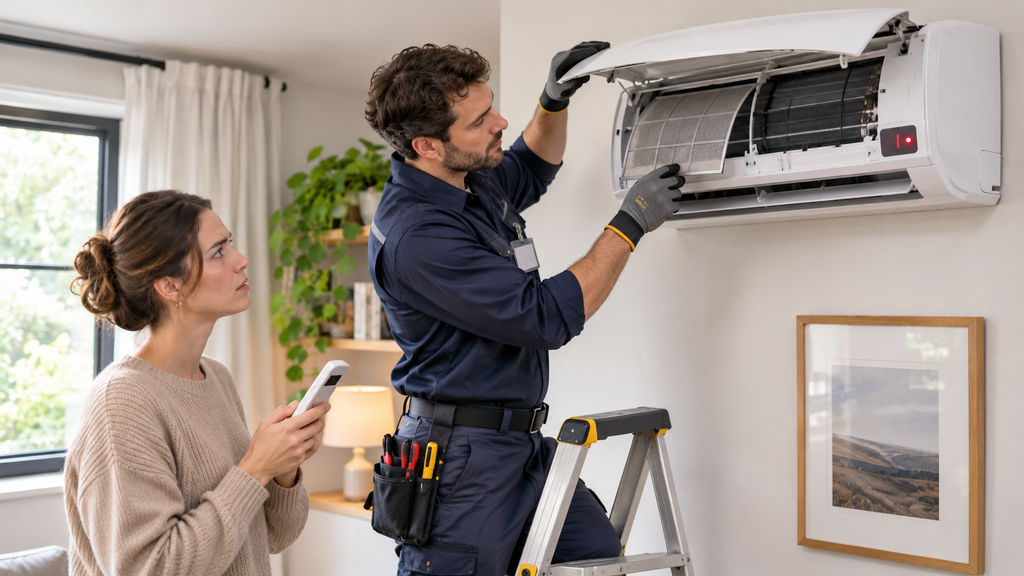
Many faults are preventable, because a well-maintained heat pump throws far fewer codes. Regular filter cleaning keeps airflow healthy and prevents the overheating and icing faults that dirty filters cause. Keeping the outdoor unit clear of leaves and debris prevents airflow and pressure faults. And periodic professional servicing catches developing problems, like a weakening component or a slow refrigerant issue, before they escalate into a fault that stops the unit. In other words, the same basic maintenance that keeps a heat pump efficient also keeps it from flashing codes at you. It is also worth noting that reliability varies between makes, which is one of the things our comparison of the best heat pump brands looks at.
A flashing light or error code is not a mystery to be feared, it is your heat pump pointing at the problem. Note the code, try a reset and a filter clean for the minor cases, and recognise the serious signals, repeated codes and anything involving refrigerant or electrics, as your cue to call a professional rather than keep running a unit that is asking for help.
Varcoe has diagnosed and repaired heat pumps across Auckland since 1975, more than 20,000 of them, so whatever your unit is flashing, we can read it and fix it properly. If a reset has not cleared the code, get in touch, call 0800 088 888, or email info@varcoe.co.nz.
It means the unit has detected a fault and is reporting it. On units without a display, the indicator lights flash in a particular pattern or number of blinks to signal a specific problem, such as a sensor, drainage, communication or refrigerant fault. The exact meaning depends on the brand, so check your manual or have a technician read it.
Each code, like E1 or F2, points to a specific detected fault, falling into categories such as sensor faults, communication errors between the indoor and outdoor units, drainage issues, fan or motor faults, and refrigerant or electrical problems. The codes are brand-specific, so the same code means different things on different makes, and the manual gives the exact meaning.
Turn it off at the remote, then switch it off at the wall or circuit breaker, wait a few minutes, and turn it back on. This clears many temporary electronic glitches. Note the code first, and clean the filters while you wait. If the code clears and stays gone, it was likely temporary; if it returns, there is a real fault.
Sometimes. A power reset, a filter clean, and clearing the outdoor unit resolve many minor or one-off codes. But codes that return immediately, or that point to refrigerant, electrical, compressor or motor faults, need a qualified technician. Refrigerant and electrical issues are never safe DIY jobs.
A code that returns after a reset means the fault is real and persistent, not a glitch. Continuing to reset and run the unit can risk further damage, so a repeated code is a clear signal to have a technician diagnose and fix the underlying cause rather than keep clearing it.
Keep up with basic maintenance. Clean the filters regularly, keep the outdoor unit clear of debris, and have the unit serviced periodically so developing problems are caught early. Most airflow, icing and overheating faults are preventable, and regular servicing stops small issues escalating into faults that stop the unit.
We diagnose and repair heat pumps across Auckland, so whatever your unit is flashing, we can read it and fix it properly.