Multi zone air conditioning systems are heating and cooling solutions that connect one outdoor unit to multiple indoor units, allowing independent temperature control in different rooms without traditional ductwork.
Key Features:
If you’ve ever walked from a freezing bedroom to a sweltering living room, you understand the frustration of inconsistent indoor temperatures. Traditional central air systems force you to heat or cool your entire home to one temperature, leading to uncomfortable hot and cold spots and sky high energy bills.
Multi-zone AC systems excel in providing both zone control and personalised comfort. By connecting multiple indoor units to a single outdoor unit, these systems allow for independent temperature regulation in each room or “zone.”
This technology eliminates the energy waste of traditional ductwork while giving you precise control over your comfort. Instead of battling with family members over the thermostat, everyone can enjoy their ideal temperature in their own space.
For Auckland homeowners dealing with varying sun exposure, different room usage patterns, and the challenge of year round comfort, multi-zone systems offer a smarter solution that adapts to your lifestyle rather than forcing you to adapt to your HVAC system.
Picture this: you’re tired of arguing with your flatmate about the thermostat, or perhaps you’re fed up with heating rooms you’re not even using. Enter multi zone air conditioning systems, the clever solution that’s changing how Kiwi homes stay comfortable.
These aren’t your typical bulky air conditioning units from the 80s. Instead, they’re sleek, whisper quiet systems that give you the power to control the temperature in each room independently. Think of it as giving every room in your house its own personal climate assistant.
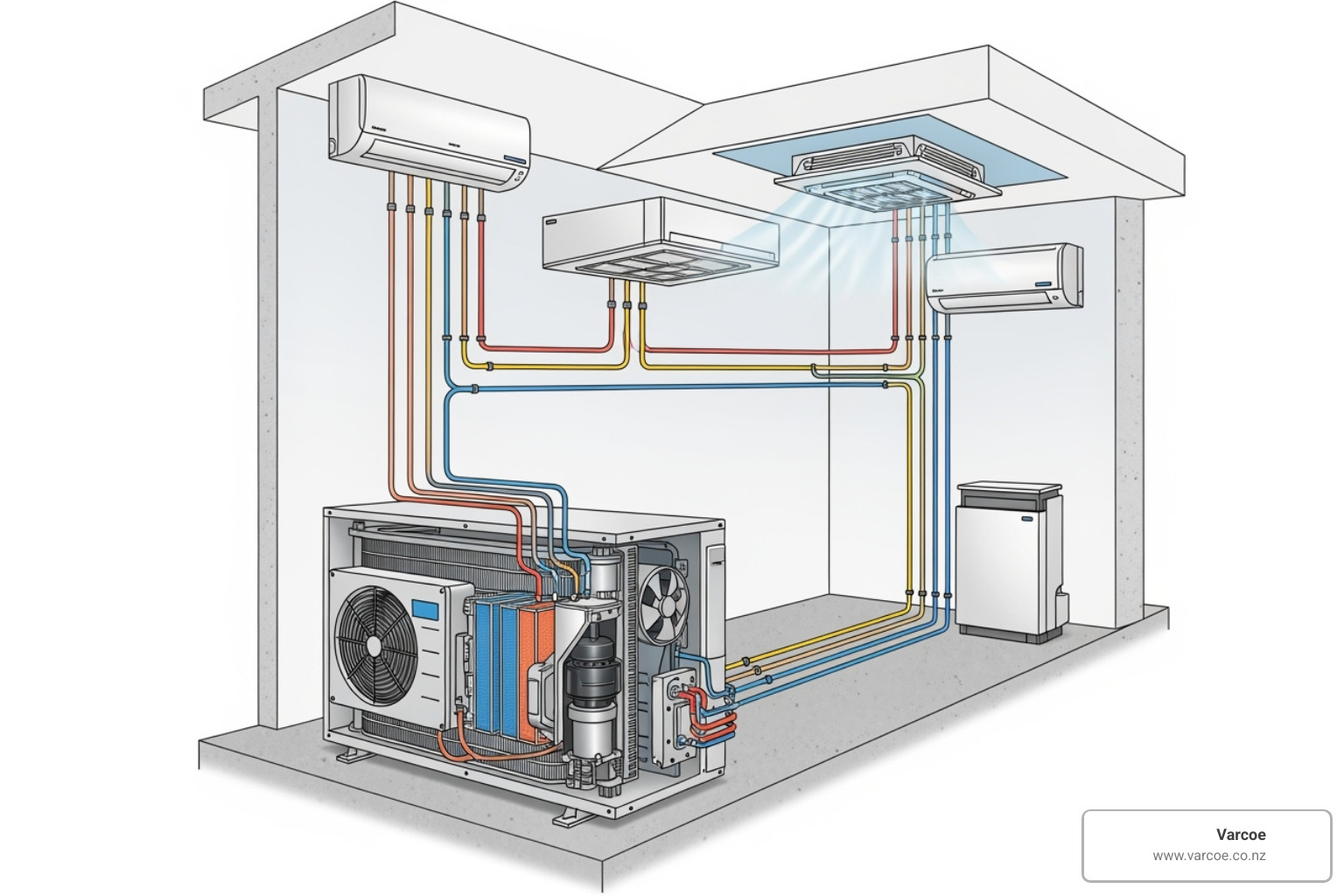
Unlike traditional central air systems that push conditioned air through a maze of ducts hidden in your walls and ceiling, systems take a more direct approach. They connect one outdoor unit to multiple indoor units using slim refrigerant lines, delivering heating and cooling exactly where you need it.
The beauty lies in their simplicity and efficiency. While traditional ducted systems can lose up to 30% of their energy through leaky or poorly insulated ducts, systems deliver comfort straight to each room with minimal waste.
A system, also called a mini split, is essentially a smart heating and cooling solution that doesn’t need traditional ductwork. This makes them perfect for Auckland homes where installing ducts might be tricky or expensive, like older villas, new extensions, or converted garages.
The concept is refreshingly straightforward. Instead of forcing air through long, winding ducts that snake through your home, these systems deliver conditioned air directly to each room. It’s like having a dedicated climate control system for every space, without the hassle of major renovations.
What sets multi zone systems apart is their ability to connect multiple indoor units to a single outdoor unit. This means you can have personalised comfort in your bedroom, lounge, and home office, all controlled independently but powered by one efficient outdoor unit.
For a deeper understanding of the technology, you can explore what a mini split is.
Every system has four main parts working together to keep you comfortable. The outdoor unit is the powerhouse, housing the compressor and condenser that do the heavy lifting of heating and cooling. It sits outside your home, quietly working away while you enjoy perfect indoor temperatures.
Inside your home, the indoor units (also called air handlers) are where the magic happens. These come in different styles to suit your space and preferences. You might choose wall mounted units for the lounge, a ceiling cassette for the kitchen, or a floor console for the bedroom. Each one can be controlled independently with its own remote control, giving everyone in the house the power to set their ideal temperature.
Connecting everything together are slim refrigerant lines that carry the special fluid responsible for moving heat around. These copper tubes are much less invasive to install than bulky air ducts, often requiring just a small hole through your wall.
Modern systems often come with smart features too, letting you control your comfort from your smartphone or integrate with your existing smart home setup.
Absolutely! This is where systems really shine. Most modern multi zone air conditioning systems are actually heat pumps, meaning they provide both heating and cooling year round.
Here’s how the magic works: in summer, the system extracts heat from inside your home and moves it outside, keeping you cool. Come winter, it reverses this process, pulling heat from the outdoor air (even when it’s chilly) and bringing it inside to warm your home.
This heat pump technology uses a clever component called a reversing valve that switches the direction of the refrigerant flow. It’s like having a heating system and air conditioner rolled into one efficient package.
The difference between a standard mini split air conditioner and a heat pump is significant. While an air conditioner only cools, a heat pump gives you complete climate control throughout Auckland’s varied seasons. This dual functionality means you don’t need separate systems for heating and cooling, simplifying your setup and often saving money in the long run.
For New Zealand’s climate, heat pumps are particularly brilliant because they can extract heat from outdoor air even when temperatures drop, making them an energy efficient heating solution for most of the year.
Picture this: your teenager loves their room arctic cold, your partner prefers cosy warmth, and you just want consistent comfort without the shock of opening your power bill. With multi zone air conditioning, this isn’t wishful thinking – it’s everyday reality.

These systems tackle the age-old problems of traditional heating and cooling head-on. No more heating empty rooms, no more family arguments over the thermostat setting, and definitely no more wondering why your energy bills keep climbing. Let’s explore what makes these systems such a smart choice for Auckland homes.
When it comes to keeping your power bills in check, multi zone air conditioning systems are absolute champions. The secret lies in their intelligent design and cutting-edge technology.
Inverter technology is the real game-changer here. Think of it like the cruise control in your car. Instead of your system constantly switching on and off like a light switch, inverter technology lets it adjust its speed smoothly to match exactly what your room needs. This means no energy-wasting power surges and much more stable temperatures throughout the day.
Traditional ducted systems are notorious energy wasters, losing up to 30% of their conditioned air through leaky ducts hidden in your roof space or walls. systems eliminate this waste entirely by delivering air directly where it’s needed through slim refrigerant lines.
The beauty of zone control means you’re only conditioning the spaces you’re actually using. Why cool the guest bedroom when no one’s staying over? With smart operation and precise temperature control, these systems translate directly into lower power bills that’ll make you smile when they arrive.
Here’s where multi zone air conditioning truly shines. Imagine having complete control over every room’s temperature, creating personalised comfort zones that suit everyone’s preferences perfectly.
Zone control gives you incredible flexibility. Set your bedroom to a cool 18°C for perfect sleeping conditions while keeping your living area at a comfortable 22°C for entertaining guests. Each indoor unit operates completely independently, so there’s no compromise needed.
Modern systems come packed with advanced features that make comfort effortless. Many offer smartphone app control, letting you adjust temperatures remotely or switch off units you’ve forgotten about. Some clever models even include a ‘Follow Me’ function that uses sensors in your remote control to detect where you are in the room and adjust the temperature around your exact location.
Smart thermostats from quality brands like Daikin take things even further with cloud connectivity and performance monitoring. They can even alert our team to potential issues before they become problems, ensuring your comfort never gets interrupted.
Beyond just temperature control, these systems actively contribute to a healthier, more comfortable indoor environment while adapting to virtually any home situation.
Multi-stage filtration systems capture dust, pollen, allergens, and other airborne particles that can trigger sensitivities or simply make your home feel stuffy. Because there’s no extensive ductwork collecting dust and potentially growing mould, you’re breathing cleaner air from day one. Many units feature innovative cleaning technologies that automatically maintain internal components, preventing bacteria and mould growth.
The flexibility of systems makes them perfect for so many situations. Planning a home addition or converting your garage into a workshop? Installing traditional ductwork would be expensive and disruptive, but a unit provides efficient climate control with minimal fuss.
Older homes often lack existing ductwork entirely, making central air conditioning installations complex and costly. systems offer a straightforward solution that doesn’t require major renovations. Got a room that’s always too hot or too cold despite your main system’s best efforts? A dedicated unit can solve that problem instantly.
Choosing between single-zone and multi-zone systems depends entirely on your specific needs and home layout. Understanding the differences helps you make the right investment for your situation.
| Feature | Single-Zone System | Multi-Zone System |
| Cost (Initial) | More affordable upfront | Higher initial investment (typically $2,000 to $10,500+ for 2-zone systems) |
| Installation | Quick, simple installation | More complex but still less invasive than ducted systems |
| Use Case | Perfect for one room, additions, garages | Ideal for multiple rooms, whole-home comfort |
| Efficiency | Highly efficient for single dedicated spaces | More efficient overall for homes with varying needs |
| Control | One unit, one control zone | Multiple units, individual zone control |
Single-zone systems work brilliantly when you only need to condition one specific area. Whether it’s a new home office, converted attic space, or that one bedroom that never seems comfortable, a single indoor unit connected to one outdoor unit provides targeted relief.
Multi-zone systems shine when you want comprehensive comfort throughout multiple rooms or your entire home. One outdoor unit connects to several indoor units, each serving different zones with independent temperature control. As we often explain to customers, “Yes, a mini split can cool two rooms. You would need a multi-zone mini-split system with one outdoor unit and two indoor units.” Each indoor unit operates independently, letting you set different temperatures wherever needed.
Multi-zone systems prove more efficient for most homes because they allow targeted conditioning only where needed, eliminating energy waste in unused spaces. For detailed information about your options, explore our Multi-Room Air Conditioners page.
Getting the most from your multi zone air conditioning system isn’t just about choosing the right brand or model. It’s about making smart decisions throughout the entire process, from understanding efficiency ratings to ensuring proper installation and ongoing care.
Think of it like buying a car. You wouldn’t just pick one based on colour and hope for the best. You’d want to know about fuel efficiency, whether it fits your family’s needs, and how to keep it running smoothly for years to come. The same thoughtful approach applies to your home comfort system.
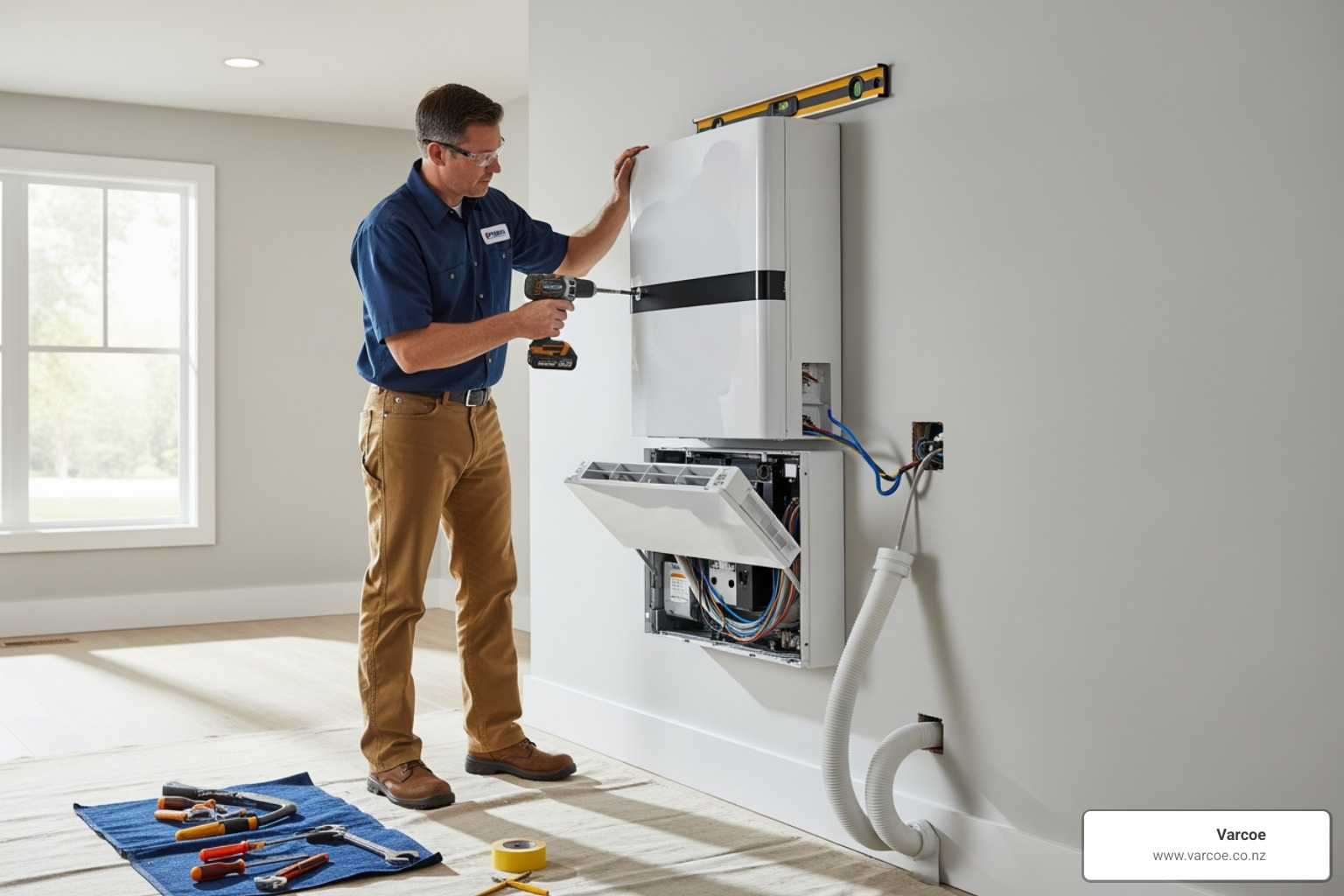
At Varcoe, we’ve been helping Auckland families make these decisions for 50 years. We know that proper planning from the start saves you money, frustration, and uncomfortable nights down the track.
Those numbers and letters you see on system specifications aren’t just marketing jargon. They’re your roadmap to understanding how much your system will cost to run and how well it’ll perform when Auckland’s weather gets extreme.
SEER (Seasonal Energy Efficiency Ratio) measures how efficiently your system cools over an entire season. Think of it as the fuel economy rating for your air conditioning. Higher numbers mean lower power bills. Some of the advanced systems we install, like certain Daikin models, achieve impressive ratings up to 20 SEER2.
EER (Energy Efficiency Ratio) tells you how well the system performs during peak conditions, like those sweltering Auckland summer days when everyone’s cranking up their air conditioning. It’s a snapshot of performance when your system is working hardest.
HSPF (Heating Seasonal Performance Factor) is specific to heat pumps and measures heating efficiency throughout winter. Since your multi zone air conditioning system doubles as a heater, this number directly impacts your winter power bills. Quality systems can achieve ratings up to 9.7 HSPF2.
Here’s the thing about these ratings: investing in higher efficiency might cost a bit more upfront, but it pays you back every month through lower energy costs. Over the 15 to 20 year lifespan of your system, those savings really add up.
Getting the size right is absolutely crucial, and it’s more complex than just measuring your room’s square metres. We’ve seen too many systems that struggle because someone took shortcuts during this step.
BTU calculation forms the foundation of proper sizing. BTUs (British Thermal Units) measure heating and cooling capacity. One “ton” of cooling equals 12,000 BTUs per hour. But here’s where it gets interesting: every room has its own personality when it comes to heating and cooling needs.
Room size is your starting point, but ceiling height matters too. A room with soaring 4-metre ceilings needs more capacity than a standard 2.4-metre space, even if the floor area is identical.
Insulation factors play a huge role. A well-insulated modern home with double-glazed windows needs less capacity than a charming older villa with single-pane windows and minimal wall insulation.
Sunlight exposure can dramatically affect your needs. A west-facing room that bakes in afternoon sun requires significantly more cooling power than a sheltered east-facing bedroom. We also consider window size and orientation because large windows act like solar collectors during summer.
Don’t forget about heat-generating factors like the number of people regularly using the space, kitchen appliances, or that home office packed with computers and monitors. All of these contribute to the overall heat load.
Why correct sizing matters can’t be overstated. An undersized system will run constantly, struggling to maintain comfortable temperatures while wearing itself out prematurely. An oversized system cycles on and off too frequently, wasting energy and failing to properly control humidity.
Our team conducts thorough assessments of your home’s unique characteristics to recommend the perfect system configuration. It’s not guesswork; it’s precision engineering based on decades of experience.
Even the most efficient multi zone air conditioning system won’t deliver on its promises without proper installation and regular care.
Optimal unit placement requires both technical expertise and practical thinking. Indoor units need strategic positioning where they can distribute air evenly without obstructions, while considering aesthetics and noise levels. Nobody wants a perfectly functional unit that looks awkward or sounds like a helicopter in the bedroom.
Outdoor units need careful placement too. They require good ventilation, protection from extreme weather, and accessibility for future servicing. We consider noise impact on both your family and neighbours, because good relationships matter.
Professional installation benefits go far beyond just following the manual. Our experienced technicians ensure proper refrigerant levels, sealed connections, optimal placement, and peak efficiency operation. This also protects your warranty, which can be voided by improper installation.
Typical costs for multi-zone systems vary based on complexity, number of zones, and specific requirements. For example, 2-zone systems generally range from $2,000 to $10,500 or more in Auckland, but every home is different.
Regular maintenance keeps your system running efficiently for its entire lifespan. Filter cleaning is the simplest but most important task. Those washable filters in your indoor units should be cleaned monthly to maintain airflow and air quality. It takes five minutes and makes a world of difference.
Annual servicing is where professional expertise really matters. Our comprehensive Servicing includes checking refrigerant levels, cleaning both indoor and outdoor coils, inspecting electrical connections, and ensuring every component functions correctly. This preventative approach catches small issues before they become expensive problems.
Think of maintenance like servicing your car. Skip it, and you’ll eventually pay much more in repairs and replacement costs. Stay on top of it, and your system will reward you with years of reliable, efficient comfort.
Here’s where the beauty of these systems really shines. A single outdoor unit can typically connect to anywhere from two to five indoor units, though some advanced systems can handle even more zones. The exact number depends on your outdoor unit’s overall capacity and how much heating or cooling power each room actually needs.
What makes this particularly appealing is the scalability factor. You don’t have to tackle your entire home at once. Many of our customers start with their most problematic rooms (perhaps a sweltering master bedroom and a chilly lounge) and then add more indoor units later as their needs evolve or their budget allows. The key is ensuring your outdoor unit has enough capacity to handle the additional zones.
For example, Daikin’s MXS & MXM Series can connect up to 5 indoor units, giving you tremendous flexibility to create custom comfort zones throughout your home. It’s like having your own personal climate control command centre.
This is probably our most popular question, and the answer is a resounding yes in most situations. Multi-zone systems typically outperform traditional central air for several compelling reasons.
The biggest game changer is targeted cooling and heating. Think about it: why cool your entire home when you’re only using the kitchen and lounge? With central air, that’s exactly what happens. Your system works overtime conditioning empty bedrooms and unused spaces. Multi-zone systems are smarter, allowing you to heat or cool only the rooms you’re actually occupying.
Then there’s the duct energy loss factor. Traditional central systems can lose up to 30% of their conditioned air through leaky ductwork as it travels through hot attics or cold crawlspaces. It’s like trying to fill a bucket with holes in it. systems eliminate this waste entirely by using slim, insulated refrigerant lines that deliver comfort directly where you need it.
The inverter technology benefits seal the deal. Instead of the old fashioned on/off cycling that wastes energy and creates temperature swings, these systems continuously adjust their output to match your exact comfort needs. It’s the difference between a light switch and a dimmer, and your power bill will definitely notice the difference.
When our customers invest in a quality multi zone air conditioning system, they’re making a long term commitment to comfort. With proper maintenance and professional installation, these systems typically last 15 to 20 years, which is comparable to or even better than traditional central systems.
Several factors influence how long your system will serve you well. Quality installation is absolutely crucial. When our experienced technicians handle the setup, they ensure correct sizing, proper refrigerant levels, and secure connections. This foundation work directly impacts your system’s longevity and performance.
Regular maintenance makes all the difference too. Simple tasks like cleaning filters monthly and scheduling annual professional servicing keep your system running smoothly. Our Servicing team can spot potential issues before they become expensive problems, helping your investment last as long as possible.
Component durability varies, but the core outdoor and indoor units are built to withstand New Zealand’s varied climate conditions. While accessories like remote controls might need replacement sooner, the heart of your system is designed for the long haul.
With Varcoe’s 50 years of experience behind your installation and ongoing support, you can feel confident that your system will provide reliable comfort for many years to come.
After diving deep into multi zone air conditioning systems, you can see why they’re changing how Kiwi families think about home comfort. These aren’t just fancy gadgets or passing trends. They’re practical solutions that address real problems we all face: uncomfortable temperature battles, sky-high power bills, and the frustration of heating or cooling rooms nobody’s using.
The beauty of these systems lies in their flexibility and intelligence. Whether you’re dealing with a scorching west-facing bedroom, a chilly home office, or simply want everyone in your family to be happy with their own temperature settings, systems adapt to your lifestyle rather than forcing you to compromise.
Energy savings, personalised comfort, and year-round reliability make these systems particularly appealing for Auckland homes. With our varied climate and diverse housing stock, from character villas to modern apartments, having a solution that works efficiently in any setting is invaluable.
The advanced features we’ve discussed, like smartphone control and ‘Follow Me’ functions, aren’t just nice-to-haves. They represent a shift towards homes that truly understand and respond to how we live today. Imagine adjusting your bedroom temperature from bed on a winter morning, or ensuring your home office is perfectly comfortable before you start your workday.
At Varcoe, we’ve seen how these systems change people’s daily comfort experience. With 50 years of experience in Auckland’s HVAC landscape, we understand that every home is unique. That’s why we take the time to properly assess your specific needs, from room sizes and sun exposure to your family’s lifestyle patterns.
Professional installation and ongoing support ensure your investment delivers the comfort and efficiency you’re expecting. We’re not just here to sell you a system; we’re here to make sure it serves you well for the next 15 to 20 years.
Explore our Multi-Room Air Conditioners and let’s discuss how we can create the perfect climate solution for your Auckland home.