Air conditioning plays an important role in keeping homes comfortable during warm weather. When your system is working correctly, it should maintain a consistent indoor temperature and deliver cool air throughout the room. However, homeowners sometimes notice that their air conditioner is running but the space is not cooling as expected.
If your air conditioner is not cooling properly, there is usually a clear reason behind it. In some cases, the issue may be something simple that can be resolved quickly. In other situations, the system may need professional servicing to restore proper performance. Understanding the most common causes can help you identify the problem and decide whether it can be resolved at home or requires professional assistance.
One of the most frequent reasons an air conditioner stops cooling efficiently is a clogged air filter. Air filters are designed to capture dust, pollen, and other airborne particles before they circulate through the system. Over time, these particles build up and restrict airflow.
When airflow becomes restricted, the system cannot move enough air through the unit to cool the room effectively. This causes the air conditioner to run longer and work harder while delivering weaker cooling performance. Many homeowners notice that the airflow feels weaker or that the system runs continuously without reaching the desired temperature.
Cleaning or replacing the air filter can often restore proper airflow and improve cooling efficiency. Regular filter maintenance is one of the simplest ways to keep your system operating effectively and avoid unnecessary strain on the unit.
Sometimes the issue is not mechanical at all. The thermostat may simply be set incorrectly. If the system is set to fan mode instead of cooling mode, the air conditioner will circulate air without actually cooling it.
A thermostat that is set too high can also prevent the system from activating the cooling cycle. In some homes, programmable thermostats may have schedules that raise the temperature during certain times of the day. If the thermostat batteries are low or the display is malfunctioning, the system may also behave unpredictably.
Before assuming the system has a serious problem, it is always worth checking that the thermostat is set to cooling mode and that the desired temperature is lower than the current room temperature.
Air conditioning systems rely on both indoor and outdoor components to function properly. The outdoor unit releases heat that has been removed from the indoor air. If this unit becomes blocked by debris such as leaves, dirt, or plant growth, it cannot release heat efficiently.
When heat cannot escape the system, the cooling process becomes less effective and indoor temperatures may remain high even though the system is running. A quick inspection of the outdoor unit may reveal debris, dust buildup, or objects placed too close to the unit.
Keeping the outdoor area clear and ensuring there is adequate space around the unit helps maintain proper airflow and improves cooling performance.
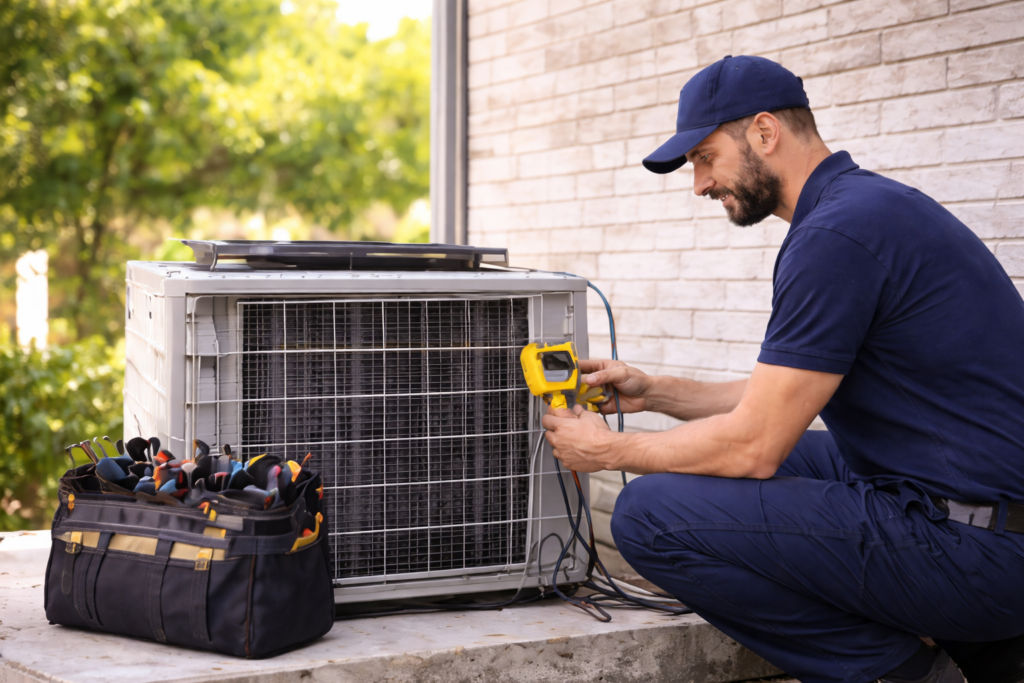
Refrigerant is the substance that allows an air conditioner to absorb heat from indoor air and release it outside. If the refrigerant level drops, the system loses its ability to remove heat effectively.
Low refrigerant levels are usually caused by leaks within the system. Because air conditioning systems are sealed, refrigerant does not normally get used up or disappear. When levels are low, it is usually a sign that the system requires professional inspection and repair.
Symptoms of low refrigerant can include warm air blowing from the vents, reduced cooling power, or ice forming on parts of the indoor unit. In these situations, professional servicing is required to locate the leak, repair it, and safely recharge the refrigerant.
If you notice signs of refrigerant issues or reduced cooling performance, professional air conditioning servicing can help restore the system’s efficiency and prevent further damage.
Another issue that can prevent proper cooling is frozen evaporator coils. These coils absorb heat from indoor air during the cooling process. If airflow becomes restricted or refrigerant levels drop, the coils can freeze.
When ice forms on the coils, the system cannot absorb heat effectively, which stops the cooling process. Homeowners may notice reduced airflow, water leaking from the indoor unit as the ice melts, or visible frost forming on the system.
Turning the system off temporarily can allow the ice to melt, but the underlying cause must still be addressed. Otherwise the problem will return once the system begins running again.
Even if the air conditioner itself is working properly, airflow problems inside the home can prevent effective cooling. If vents are blocked by furniture, curtains, or household items, cool air may not circulate evenly through the room.
Closed vents can also disrupt airflow and reduce system efficiency. Air conditioning systems are designed to distribute air through open pathways, and blocking these pathways can force the system to work harder than necessary.
Ensuring vents remain open and unobstructed allows cool air to circulate properly and helps maintain comfortable indoor temperatures.
In some homes, the air conditioner may simply be undersized for the space it is trying to cool. A unit that is too small will struggle to maintain comfortable temperatures, especially during hotter days.
When this happens, the system may run continuously without reaching the set temperature. While the unit may still be functioning, it does not have the capacity required to cool the entire area effectively.
Proper system sizing is essential for efficient cooling. Professional evaluation during installation ensures the air conditioning system is correctly matched to the size and layout of the home. If you are considering upgrading or installing a new system, learning more about air conditioning installation can help ensure the system is properly designed for your space.
Installation quality plays a significant role in how well an air conditioning system performs. A system that has been poorly installed may experience airflow issues, incorrect refrigerant levels, or inefficient air distribution.
Incorrect placement of indoor units can also affect cooling performance. If air cannot circulate properly through the room, the system may struggle to maintain a stable temperature.
Professional installation helps ensure that the system is properly sized, positioned, and configured to deliver consistent cooling throughout the home.
Air conditioning systems require regular maintenance to maintain peak performance. Over time, dust, debris, and wear on internal components can reduce efficiency.
Without regular servicing, small issues may develop into larger problems that affect cooling performance. Routine maintenance helps ensure the system continues operating efficiently and can extend the lifespan of the equipment.
Professional technicians can inspect components, clean internal parts, check refrigerant levels, and ensure airflow is functioning properly.
An air conditioner that is not cooling properly can be frustrating, especially during warmer weather when you rely on it to keep your home comfortable. In many situations, the problem may be caused by simple issues such as dirty filters, incorrect thermostat settings, or restricted airflow within the system.
More complex problems, including refrigerant leaks, frozen coils, or installation issues, may require professional attention to resolve. Identifying the cause early can help restore cooling performance and prevent further strain on the system.
Regular maintenance, proper installation, and good airflow management all play an important role in keeping your air conditioning system operating efficiently. If your system is struggling to cool your home, the team at Varcoe can help assess the issue and provide reliable solutions.

This problem is often caused by clogged air filters, thermostat settings, blocked outdoor units, or low refrigerant levels. Checking these common issues can help identify the cause.
Yes. Dirty filters restrict airflow through the system, which reduces cooling efficiency and forces the system to work harder.
Most filters should be cleaned or replaced every one to three months, depending on usage and indoor air quality.
Warm air may indicate low refrigerant levels, thermostat issues, frozen coils, or airflow problems within the system.
If your system continues running without cooling, develops ice buildup, or makes unusual noises, professional inspection is recommended.
While some cooling issues can be resolved with simple maintenance such as cleaning filters or adjusting thermostat settings, other problems require professional diagnosis.
If your system continues running without cooling, produces warm air consistently, or develops ice buildup, it is best to seek professional assistance. Experienced technicians can identify the underlying cause and restore the system’s performance.
If you are unsure about the condition of your system, contacting the Varcoe team can help you get expert advice and professional support. With professional servicing, system checks, and expert advice, Varcoe helps homeowners maintain efficient air conditioning and consistent indoor comfort.