There is a particular kind of frustration that comes from lying in a bedroom that is finally the right temperature, wide awake, listening to the thing that made it that way. A fan that hums. A compressor that kicks in with a thud at 2am. Air rushing across the ceiling every twenty minutes. Comfort and quiet should not be a trade off, and with the right setup they are not.
Bedrooms are the most demanding room in the house for climate control, because the standard that matters is not how fast it heats or how cold it gets. It is whether you notice it at all. This guide covers what actually creates noise, which system types are quietest, and the choices that make the difference between sleeping through the night and staring at the ceiling.
During the day, background sound disappears into the general activity of a house. At night, with everything else silent, the same sound becomes the loudest thing in the room. Sleep research has consistently found that it is not just volume that disturbs rest, but variation. A steady, low level sound is far easier to sleep through than one that rises and falls.
This is the key insight, and it explains why some systems feel intrusive while others fade into the background. A unit that runs gently and continuously is usually less disruptive than one that switches hard on and off through the night, even if the second unit is quieter at its peak. The goal is not silence, which is rarely achievable. The goal is consistency at a low level.
Modern high wall units are dramatically quieter than the systems most people remember. On their lowest fan setting, quality units from leading manufacturers operate at roughly 19 to 22 decibels. For context, a quiet library sits around 30 decibels and a whisper about 30 as well, so a good unit on low is genuinely below the threshold most people notice once they are settled.
That figure only applies on the lowest setting, though. Push the same unit to maximum fan speed and it may reach 40 decibels or more, which is clearly audible in a silent bedroom. This matters enormously for how you choose and use a system, and it leads directly to the single most important factor in bedroom quiet.
Most people assume a quiet bedroom means buying the quietest unit. It usually means buying the right sized one.
An oversized system is the most common cause of night time disturbance. Because it has far more capacity than the room needs, it blasts to temperature quickly, shuts off, drifts, then blasts again. That cycling is exactly the pattern of rising and falling sound that wakes people. It also leaves the air feeling clammy, because short bursts never run long enough to remove humidity properly.
An undersized system creates the opposite problem. It runs at high fan speed constantly because it can never quite reach the target, so you get the noisiest setting for hours on end.
A correctly sized unit does neither. It reaches temperature and then ticks over quietly on low, which is precisely the steady, unobtrusive operation that lets you sleep. Getting this right is more important than any brand comparison, and our heat pump size calculator gives you a solid starting estimate for the room before you go any further.
Different unit styles behave differently in a sleeping space. Here is how they compare.
High wall units. The most common choice and, on the right setting, very quiet. Modern models include a night or quiet mode that drops the fan and dims the display. The main consideration is placement, which is covered below.
Floor consoles. These sit low on the wall and suit bedrooms with limited wall height or where you want warmth at floor level. A floor console unit delivers heat gently upward rather than blowing across the room, which some sleepers find far less noticeable than air moving overhead.
Ceiling cassettes. Recessed into the ceiling with the bulk of the mechanism out of the room, a ceiling cassette distributes air in multiple directions rather than as a single stream. The effect is very even and often barely perceptible, though it requires suitable ceiling space.
Ducted systems. The quietest option in the room itself, because the working unit sits in the roof space and only the outlet is present in the bedroom. A ducted whole home system gives you discreet vents and no wall unit at all, which is why it is often specified in bedrooms where quiet is the priority. It is a larger investment and best considered during a build or renovation.
Where a unit goes matters as much as which one you choose. Air blowing directly across a bed is the fastest route to a bad night, regardless of how quiet the machine is, because moving air on skin disturbs sleep even when you cannot hear it.
Position the indoor unit so airflow travels along the room rather than straight onto the bed, ideally on a wall to the side of or above the head of the bed instead of directly facing it. Keep it clear of curtains and wardrobes that could block or rattle against the airflow.
The outdoor unit deserves equal thought. Compressors make noise, and mounting one directly outside a bedroom window, or against a shared boundary, causes problems for you and potentially for neighbours. Position it away from sleeping areas and on a solid mounting that will not transmit vibration through the wall. Good installers plan this properly, which is one of the clearest differences between a considered installation and a rushed one.
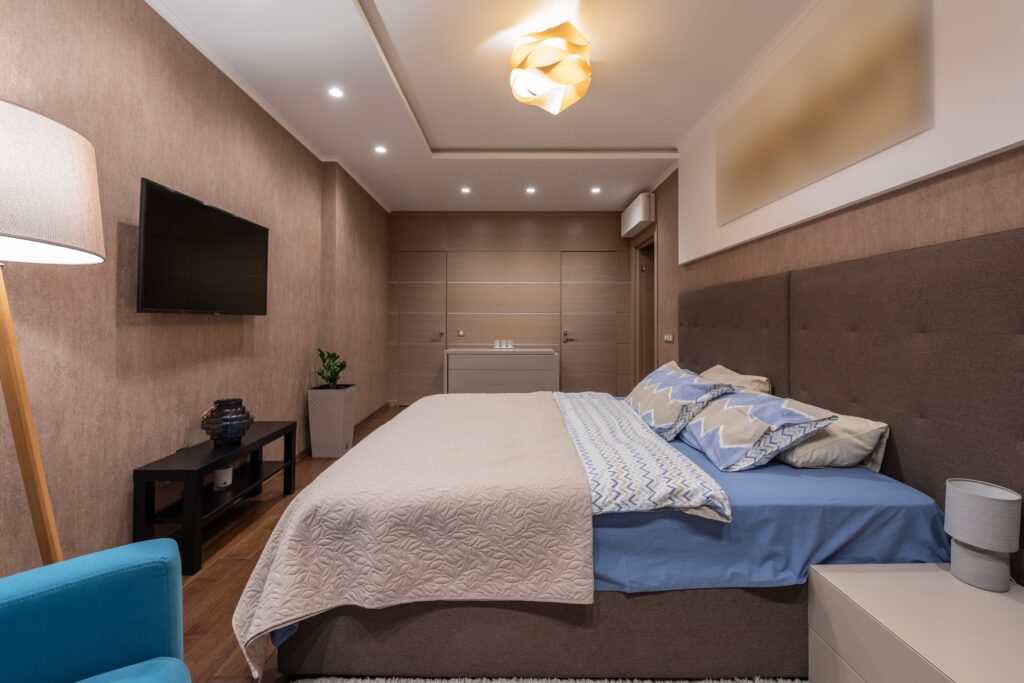
Nearly every modern system includes a sleep or quiet function. It reduces fan speed, softens the compressor, and dims indicator lights, all of which help. Many will also drift the temperature gradually through the night, which matches the way body temperature naturally falls and avoids the unit working hard at 3am.
On temperature, aim for a bedroom in the range of roughly 16 to 19 degrees for sleeping. Cooler than a living room is normal and helpful. Setting a bedroom to living room warmth forces the system to run harder and longer than it needs to, which makes it louder and costs more.
Humidity plays a part too. A room that is damp feels colder in winter and stickier in summer, which pushes you to run the system harder than necessary. Addressing that at the source through proper ventilation and moisture control often improves sleep comfort more than turning the temperature up ever will.
Before assuming your system is inherently loud, consider that it may simply need attention. Rattles, whistles, and a general increase in volume are very often the result of clogged filters, a dirty fan, or a loose panel. A system straining through blocked airflow is both louder and less efficient than the same unit properly maintained.
Booking regular air conditioning servicing restores quiet operation and usually improves performance at the same time. If a unit has become noticeably noisier than it used to be, that is a symptom worth investigating rather than tolerating.
A bedroom that holds a steady temperature without you ever noticing the system is entirely achievable. It comes down to correct sizing, the right unit style for the room, thoughtful placement of both the indoor and outdoor units, and a system kept in good condition. Get those right and the machine disappears, which is exactly what you want at 2am.
Varcoe has been sizing and installing systems in Auckland bedrooms since 1975, with over 20,000 installations completed and quality units from trusted manufacturers including Panasonic. Our team assesses the room properly rather than guessing, so you end up with a system that is quiet because it is right, not because of a setting on a remote. It is also worth checking our current specials before you commit.
Book your free in home assessment or call the team on 0800 088 888, and get a bedroom that stays comfortable and stays quiet.
Straight answers on heating and cooling a bedroom without losing sleep over the noise.
Ducted systems are quietest in the room because the main unit sits in the roof space. Among wall mounted options, a correctly sized high wall unit on night mode, or a floor console, both run very quietly. Correct sizing matters more than the style you choose.
Quality modern units run at roughly 19 to 22 decibels on their lowest fan setting, which is below the level most people notice once settled. That figure rises considerably at higher fan speeds, which is why a properly sized unit that can stay on low is so important.
Usually because it is cycling on and off rather than running steadily, which is typically a sign the unit is oversized for the room. Air blowing directly onto the bed and an outdoor unit mounted near the window are the other common causes.
Around 16 to 19 degrees suits most people, cooler than you would set a living area. A cooler bedroom supports natural sleep and means the system runs gently rather than working hard, which keeps it quieter.
Often yes. Switch to night or quiet mode, lower the fan speed, redirect the louvres so air is not blowing onto the bed, and have the filters and internals cleaned. If it has become louder over time, a service usually resolves it.