Auckland Wide
Monday - Friday: 8.00am - 5.00pm

We’re asked this question constantly, and as a supplier of both these brands, here’s our honest answer: it entirely depends on what matters to you. Both of them are excellent brands, and it’s very rare that you get a bad unit from either of them (even in that case, their warranty programmes will resolve your issues very quickly). Heat pumps from either brand will heat your home well, last 10-15 years, and cost roughly the same to run.
But they’re different enough that one might suit you better than the other. Here, let us break down the actual differences for you.
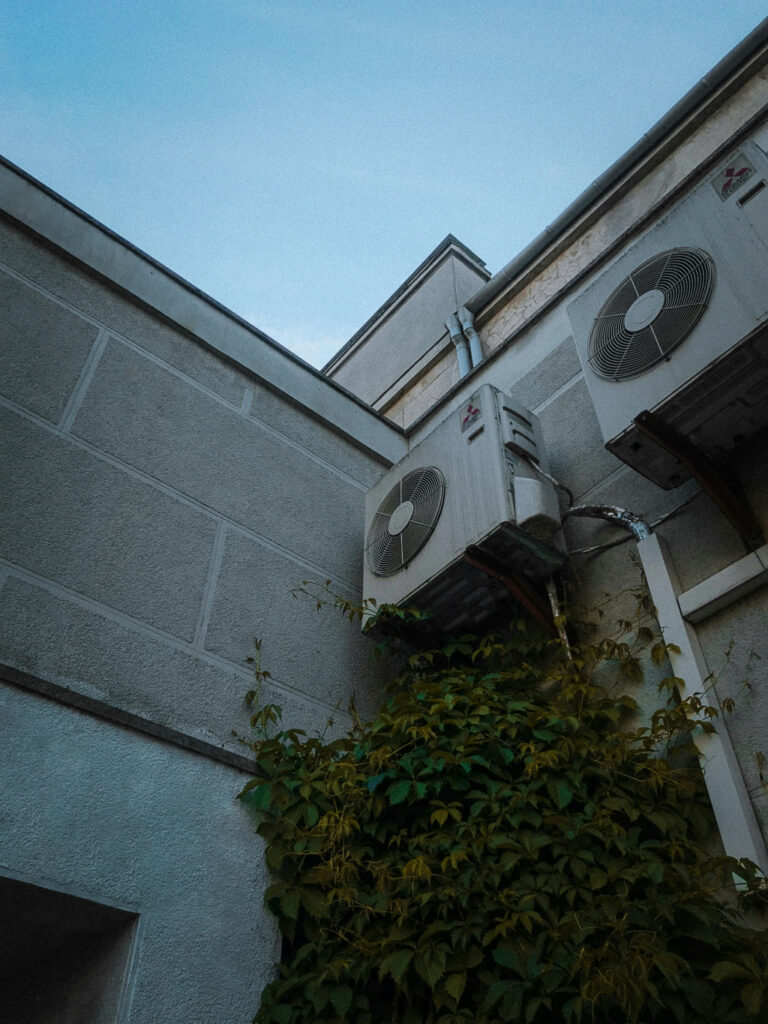
Winner: Mitsubishi, and it’s not close.
Mitsubishi’s EcoCore AP series runs at 18dB. To put that into perspective, the sound of a quiet library, according to the NZ Ministry of Health, is 30dB.
Daikin’s Cora series (ranking among their quieter offerings) runs at around 32-35dB. Still genuinely quiet… but 18dB vs 35dB is a massive difference in reality. You see, decibel – the measurement for loudness – is on a logarithmic scale. So every 10dBA increase roughly doubles how loud something sounds, which basically means a “quiet” Daikin unit is twice as loud as a Mitsubishi’s.
As such:
Winner: Mitsubishi HyperCore (if you need it), otherwise tie.
Standard heat pumps from both brands lose efficiency as temperature drops below 0°C. That’s completely normal (Joule Journal).
Mitsubishi’s HyperCore models are guaranteed to deliver full heating capacity even at -15°C. This matters hugely if you live in Christchurch, Dunedin, or other high-altitude locations where the cold can get intense during the winter months.
Daikin performs reasonably well in cold but doesn’t have a dedicated extreme-cold model.
This varies by specific model, not by brand.
| Model | Brand | Approx. Efficiency/Features |
| Mitsubishi Electric EcoCore AP 25 High Wall Heat Pump | Mitsubishi Electric | R32 refrigerant + EcoCore tech for improved energy efficiency (inverter control reduces power use). |
| Mitsubishi Electric EcoCore EF 50 High Wall Heat Pump | Mitsubishi Electric | Energy-efficient heating with inverter design; includes features like timer control to manage usage. |
| Mitsubishi Electric Designer Series EF 35 High Wall Heat Pump | Mitsubishi Electric | Efficient inverter system, quiet operation, and programmable controller for better energy management. |
| Panasonic Z80 Aero Series High Wall Heat Pump | Panasonic | Premium inverter system with nanoeX and AeroWings for enhanced efficiency and air quality. |
| Panasonic Z25 Developer Series High Wall Heat Pump | Panasonic | Inverter control for higher energy savings; suitable for small rooms. |
All these models come with technologies (typically inverter) that reduce their energy usage immensely compared to older HVAC systems. Seriously, most are within a few percentage points of each other, so if you’re looking for a meaningful difference between top models, you probably won’t find one.
But a tip we have is checking the Energy Rating Label when comparing one with another (they go from 1 for least inefficient and 7 stars for most). Go with whichever has the higher rating in your price range.
Winner: Look at the label, not the brand.
Winner: Daikin
| Brand & Model | Type | Approx. Price (incl. GST) | Notes |
| Mitsubishi Electric Designer Series EF 35 High Wall Heat Pump | Single-room wall unit | ~$1,983 | Typical entry-level Mitsubishi wall unit on Varcoe. |
| Mitsubishi Electric Designer Series EF 50 High Wall Heat Pump | Larger single-room wall unit | ~$2,965 | Higher capacity Mitsubishi variant. |
| Daikin Cora 35Z High Wall Heat Pump | Single-room wall unit | ~$1,753 | Mid-range Daikin Cora model. |
| Daikin Cora 46Z High Wall Heat Pump | Larger single-room wall unit | ~$2,236 | Higher capacity Daikin Cora wall unit. |
Daikin units typically cost $300-$800 less than an equivalent Mitsubishi. Installation costs the same.
Over 15 years that difference disappears into your power bills anyway, but upfront Daikin is better value.
Both offer 5-year standard warranties and similar terms. Here’s how we rank them after literally decades of dealing with their support department.
Daikin:
Mitsubishi:
Winner: Tie. Both have good support locally.
Winner: Mitsubishi by a tiny margin if you care about air quality tech, otherwise tie.
People choose Mitsubishi when:
People choose Daikin when:
Which brand lasts longer – Mitsubishi or Daikin?
Both brands have similar typical lifespans of 10-15 years with proper maintenance. The difference in longevity comes down to individual unit quality and how well you service it, not the brand itself. Both come with 5-year standard warranties and have excellent parts availability in Auckland, so either choice will serve you reliably over the long term.
Can I upgrade from a Daikin to a Mitsubishi later, or vice versa?
Technically possible, but it’s not straightforward. Heat pump systems are brand-specific – the indoor and outdoor units are designed to work together. Switching brands would mean replacing the entire system, which is a costly exercise. Choose based on what matters to you now, and you’ll have that brand for its lifespan.
If Mitsubishi is quieter, why would anyone choose Daikin?
Price and location matter more than you’d think. If you’re in the North Island where cold weather isn’t a factor, and noise isn’t a concern (like a lounge with a TV already running), Daikin delivers the same comfort at $300-$800 less upfront. That’s a genuine saving for identical performance in most situations.
Do both brands work well with smart home systems?
Yes. Both Mitsubishi and Daikin offer Wi-Fi control options that let you manage your heat pump from your phone. The feature sets are comparable, so this shouldn’t be a deciding factor between them. Ask your installer which models in your price range include Wi-Fi capability.
What if I live in a really quiet space like a bedroom – is Mitsubishi the only option?
Mitsubishi’s 18dB is genuinely exceptional for noise-sensitive spaces. That said, Daikin’s 32-35dB is still quiet – it’s roughly the sound of a whisper or quiet conversation. If your bedroom is well-insulated and you’re not extremely noise-sensitive, Daikin will be fine. If every decibel matters, Mitsubishi is the clear winner.
If you want us to walk through specific models and what makes sense for your Auckland home, call 0800 088 888. Varcoe has been a partner and supplier of both brands, and we’ll tell you straight up which makes sense for your situation – price, location, noise sensitivity, all of it!