Every year across Auckland the same pattern plays out. The weather stays mild through winter and early spring, nobody thinks twice about cooling, and then the first proper hot week arrives around December. Suddenly everyone remembers their air conditioning at once. Phones run hot, installers book out weeks ahead, and the people who left it late spend the hottest days of the year waiting in a warm house for an appointment that is still a fortnight away.
There is a much smarter way to handle it. Getting your home summer ready now, while the weather is still cool and diaries are open, means you walk into the heat fully prepared instead of scrambling. This guide explains why the rush happens, what you can do ahead of time, and how a little planning saves you money, stress, and a very uncomfortable few weeks.
Cooling is one of those things people only think about when they need it. Through the cooler months, an old or underperforming system is easy to ignore because you are not asking much of it. The moment the temperature climbs, though, every one of those ignored systems gets switched on at the same time, and a good share of them cannot cope.
That creates a wave of demand in a very short window. Installers who were quiet in winter are suddenly triple booked. Popular models sell out. Lead times stretch from days to weeks. If your system fails in the middle of that wave, you join a long queue at the worst possible moment. Booking ahead simply takes you out of that queue entirely.
Sorting your cooling before summer is not just about beating the crowd. There are genuine, practical benefits to acting now.
Shorter wait times. In the quieter months, an installer can often visit within days rather than weeks. You choose the appointment that suits you rather than taking whatever is left.
Better availability of models. The units and capacities you actually want are in stock. In peak season, you may be pushed toward whatever is available rather than the best fit for your home.
A calm, unhurried decision. When you are not sweating and desperate, you can compare options properly, ask questions, and choose the right system rather than the fastest one.
Time to sort any extras. If your install needs electrical work or a bit of planning, doing it now leaves plenty of room to get everything right before you need the system running.
A modern air conditioning system is a significant addition to your home, and it deserves a considered choice rather than a panic purchase in the middle of a heatwave.
If you already have a heat pump or air conditioner, the single most valuable thing you can do before summer is have it serviced. A unit that ran fine last summer can still be quietly struggling. Dust builds up in the filters, the coils get grimy, refrigerant levels can drift, and efficiency slips away without you noticing.
A pre summer service restores performance so the system cools properly on the first hot day, not the third callout later. Booking air conditioning servicing now means any small faults get caught while there is time to fix them calmly. The alternative is discovering the problem when the house is already too hot and every technician in the city is flat out.
The same applies if your system also handles winter warmth. Regular heat pump repairs and servicing keeps a dual purpose unit in top shape all year, so it is ready to switch from heating to cooling without missing a beat.
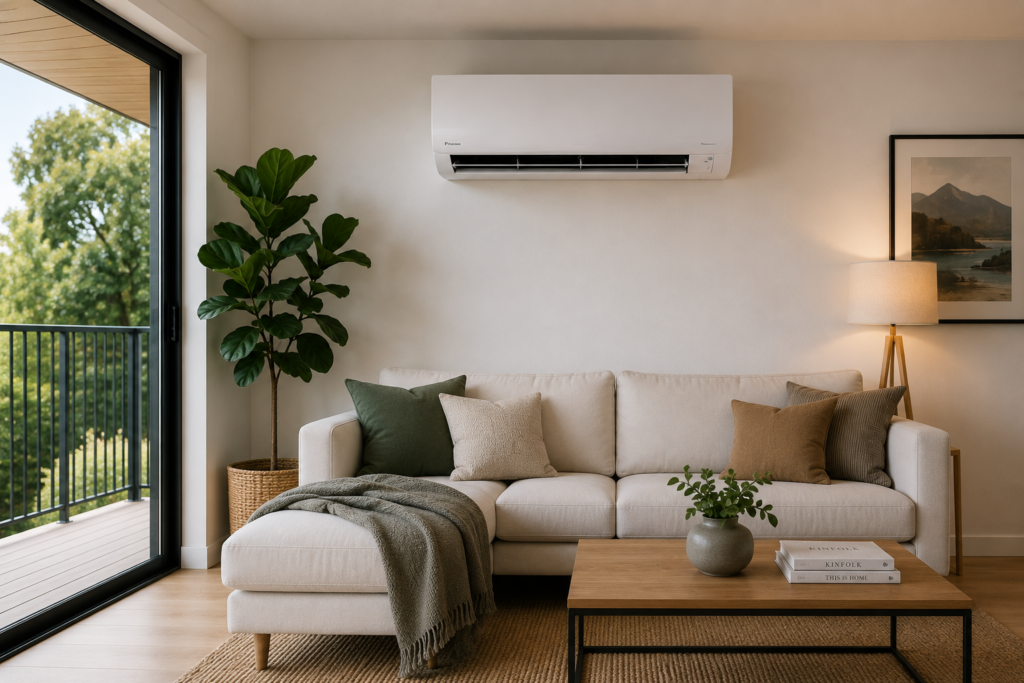
Before summer arrives, run your system for a while and pay attention. These are the signs that it may let you down when the heat sets in:
It takes far too long to cool a room. If the space never quite reaches a comfortable temperature, or the unit runs flat out without getting there, it is either faulty, low on refrigerant, or simply too small for the room.
Weak airflow or warm air. Air that is not properly cold, or a fan that seems to have lost its push, points to a unit that needs attention.
Strange smells or noises. Musty odours suggest mould in the system, while rattles and grinding point to mechanical wear. Neither improves on its own.
Rising power bills. If cooling is costing more than it used to for the same comfort, efficiency has dropped, and an old unit will only get worse.
Uneven cooling across the house. If one room is icy and another stays warm, your setup may not be right for the layout, and this is the ideal time to rethink it.
If several of these ring true, it may be time to consider a replacement rather than nursing an old unit through one more summer.
If you decide a new system is the way forward, getting the size right is everything. An undersized unit runs constantly and never quite cools, while an oversized one cycles on and off, wastes power, and leaves the air feeling clammy. Our heat pump size calculator gives you a quick, useful starting point so you understand roughly what capacity your space needs before you talk to anyone.
Think about how you actually live in your home too. If you only ever cool one or two rooms, a single unit may be plenty. If you want comfort across the whole house, a multi room air conditioning setup lets you cool several spaces from one outdoor unit, which keeps the exterior tidy and the running costs sensible. A remember that most quality systems both heat and cool, so a good heat pump keeps you comfortable through winter as well as summer, making it a year round investment rather than a seasonal one.
Efficiency matters more than ever with power prices where they are. Choosing an energy efficient model and using it wisely can make a real difference to your bills. Our guidance on how to reduce energy costs is worth a read before you commit, so your new system keeps you cool without a nasty surprise on the next invoice.
Beyond the convenience, timing your purchase well can genuinely reduce the cost. Demand is lower in the cooler months, which is exactly when suppliers and installers are keen to keep their teams busy. That often translates into sharper pricing and seasonal deals that vanish once the summer rush begins. It is always worth checking the current specials before you decide, because a good offer on the unit or the install adds up to a meaningful saving.
There is also the professional heat pump installation itself to think about. In quiet periods, our team can plan the job properly, coordinate any electrical work, and complete a typical install in just three to four hours. In peak season, that same job might sit in a queue for weeks. Booking now simply gets it done while everything is relaxed.
The households who sail through an Auckland summer in comfort are the ones who planned ahead. They booked their service, sorted their system, and never joined the December queue. You can be one of them with a single phone call now, while the weather is still on your side.
Varcoe has kept Auckland homes comfortable since 1975, with over 20,000 systems installed and a 4.8 star rating from more than 300 reviews. Whether you need a pre summer service, a replacement, or a brand new system sized for your home, our team will sort it properly and on your timeline.
Book your free quote today or call the team on 0800 088 888, and walk into summer already cool.
Straight answers on getting your cooling sorted before the Auckland summer rush.
The cooler months, roughly winter through to early spring, are ideal. Demand is lower, installers have open diaries, stock is plentiful, and you avoid the December rush entirely. You also have your system ready and tested well before the first hot day.
Yes. A system can run while quietly losing efficiency through dirty filters, grimy coils, or drifting refrigerant. An annual service before summer restores performance and catches small faults before they become breakdowns at the worst possible time.
A typical residential installation takes around three to four hours. Larger or multi room systems take longer, but booking in a quiet period means the whole job is planned and completed without the delays that come with peak season.
Sizing depends on room dimensions, ceiling height, insulation, and how many spaces you want to cool. Our online calculator gives a solid starting estimate, and a proper in home assessment confirms the exact capacity so you are neither underpowered nor paying for more than you need.
Often, yes. Lower demand in the cooler months tends to bring better pricing and seasonal offers, which typically disappear once the hot weather arrives and everyone is booking at once.