Auckland Wide
Monday - Friday: 8.00am - 5.00pm

Getting a heat pump installed is one of the better home improvement decisions you can make in Auckland. Year-round comfort, lower power bills compared to conventional heating, and a system that lasts well over a decade when installed and maintained properly. But if you’ve never had one installed before, the process can feel like a bit of a mystery. This guide walks you through exactly what happens from the first phone call to the moment you’re running your new system so there are no surprises on the day.
Everything starts with a conversation. When you contact Varcoe, the first step isn’t a quote over the phone it’s a free on-site assessment. A technician visits your home, looks at the rooms you want to heat and cool, checks insulation, ceiling height, window placement, and airflow patterns, and assesses how your home sits relative to wind and relevant for many Auckland properties salt air exposure in coastal areas.
This matters more than most people realise. A heat pump sized correctly for your space will run efficiently and keep your power bills low. One that’s undersized will struggle on cold nights; one that’s oversized will short-cycle and wear out faster. The Heat Pump Size Calculator on Varcoe’s website is a useful starting point before the visit, but the on-site assessment is what produces an accurate recommendation.
During the assessment, the technician will also identify the best location for both the indoor and outdoor units taking into account aesthetics, airflow, access for future servicing, and any installation complexity that might affect the final quote.
Once the assessment is done, you’ll discuss which system type suits your home and budget. The main options are:
Single-split hi-wall the standard choice for a single room or open-plan living area. One indoor unit, one outdoor unit. Most common, most straightforward to install. See Varcoe’s single room heat pump options.
Multi-room (multi-split) one outdoor unit connected to multiple indoor units throughout the house. Ideal if you want climate control across several rooms without multiple outdoor units cluttering your exterior. Varcoe’s Multi-Room Heat Pump Systems page covers the specifics.
Floor console or ceiling cassette alternatives to the standard hi-wall unit that suit certain room layouts better, particularly older homes or rooms where a wall-mounted unit isn’t practical. See Floor Consoles and Ceiling Cassettes.
Ducted whole-home air distributed invisibly through ceiling vents across the entire home from a single system. The premium option, best discussed with Varcoe’s team for your specific property. More detail at Ducted Whole-Home Heat Pump Systems.
Varcoe installs Mitsubishi Electric, Daikin, and Panasonic all as manufacturer-certified installations, which means your warranty is fully protected. You can compare brands on the Mitsubishi, Daikin, and Panasonic pages. If you’re unsure which brand suits your situation, the team will advise honestly rather than push a particular product.
It’s also worth checking the Heat Pump Specials page at this stage there are sometimes seasonal deals worth taking advantage of before committing.
After the assessment and system discussion, you’ll receive a detailed, transparent quote. This should cover the unit, all pipework (refrigerant lines, condensate drain), electrical wiring, brackets, and commissioning. If your home needs any electrical upgrades a new dedicated circuit, switchboard work that will be identified at assessment and included in the quote. Varcoe’s Electrical team handles this in-house, so there are no subcontractors to coordinate or surprise additions after the fact.
If you’re eligible for the Warmer Kiwi Homes programme which provides eligible homeowners up to $3,450 toward installation costs Varcoe will flag this and handle the process as an approved provider. Check the Warmer Kiwi Homes page to see whether you qualify before your assessment.
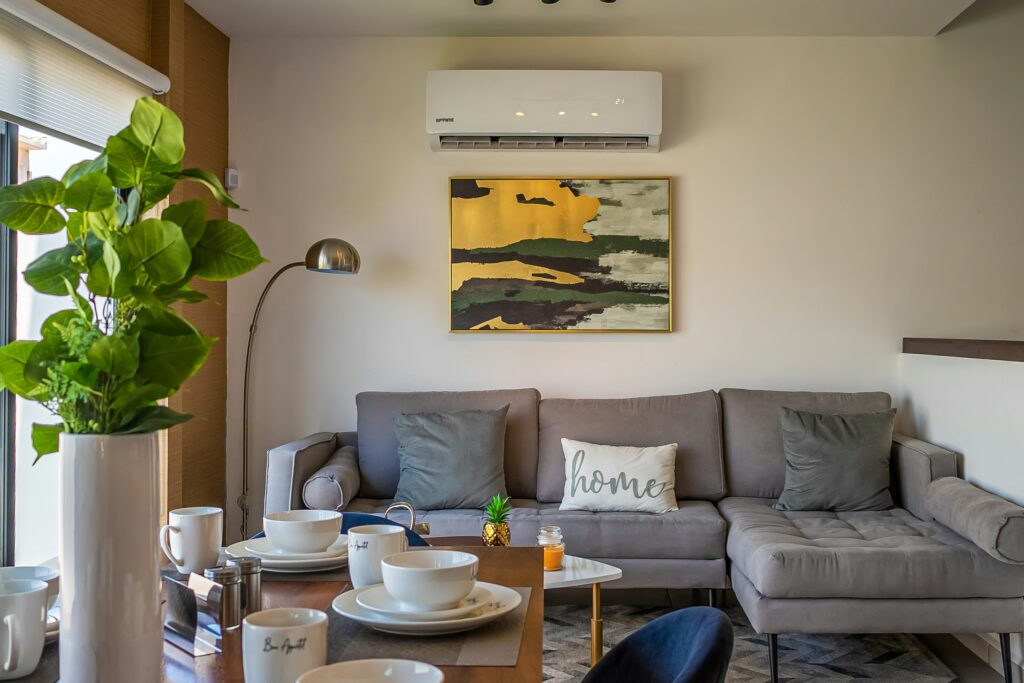
Once you’ve agreed on the quote and confirmed an installation date, here’s what actually happens on the day.
Mounting the indoor unit. A steel bracket is secured to your interior wall at the optimal position for airflow and performance. A hole is drilled cleanly through the wall to run the refrigerant lines and electrical cables through to the outdoor unit. The indoor unit clips onto the bracket.
Installing the outdoor unit. The outdoor unit is mounted on an exterior wall bracket or a concrete pad, positioned away from gardens, fences, and anything that would restrict airflow. It needs to sit within an effective distance of the indoor unit to operate efficiently.
Connecting the system. Refrigerant lines are run between the two units and fitted with precision. A licensed electrician handles all electrical connections this is a legal requirement in New Zealand, not optional. The condensate drain is connected and checked.
Testing and commissioning. Before anything is signed off, the system is tested thoroughly. Refrigerant charge, airflow balance, electrical safety, and heating and cooling performance are all verified. Nothing gets handed over until the technician is satisfied the system is running correctly.
For a standard single-room hi-wall installation, the whole process typically takes 3–4 hours. Multi-room systems take longer depending on the number of indoor units being installed. Ducted systems can require a full day or more.
Once the system passes testing, your installer will walk you through everything. How to operate the controller, how to set timers and schedules, what the different modes do, and what routine filter cleaning looks like. You’ll receive all documentation including warranty details a 12-month workmanship guarantee from Varcoe and the manufacturer’s warranty on the unit itself.
This walkthrough is worth paying attention to. A well-operated heat pump costs significantly less to run than one left on incorrect settings.
A heat pump that’s serviced regularly runs more efficiently and lasts longer. Varcoe recommends professional servicing every one to two years. Their Servicing and Maintenance team covers all Auckland suburbs and handles all makes and models not just systems Varcoe originally installed. Contact them directly for current pricing and availability.
If you have any questions about your system between services, Varcoe’s FAQ page covers the most common issues, and the team is reachable on 0800 088 888.
Most Auckland residential installations are straightforward. But a few things can add time and cost:
Longer pipe runs. If the outdoor unit can’t sit directly behind or close to the indoor unit, refrigerant lines have to run further adding materials and labour time.
Electrical upgrades. Older homes sometimes have switchboards that need updating before a dedicated circuit can be added for the heat pump. This is identified at the assessment stage, not on the day.
Access issues. Multi-storey homes, concrete block construction, or limited exterior access can make installation more involved.
Multiple systems. Installing two or three systems in a single visit is more efficient than separate calls, but does extend the day’s work.
None of these are reasons to avoid installation they’re just things to discuss at the assessment stage so the quote is accurate and the installation day runs smoothly.
A standard single-room hi-wall installation typically takes 3–4 hours. Multi-room systems take longer depending on the number of indoor units, while ducted systems can take a full day or more. Varcoe will provide a realistic time estimate before the job begins.
Yes. The technician will need access to the rooms where the indoor unit is being installed, as well as the exterior of your home for the outdoor unit. You’ll also need to be present for the final handover and walkthrough.
A small, neat hole is drilled through the wall to run refrigerant lines and cables between the indoor and outdoor units. Brackets are also secured to the wall. Any cosmetic marks are minimal and easily touched up with paint. Varcoe’s team works cleanly and leaves the site tidy.
In most standard residential situations, no consent is required. However, if your property is in a heritage zone or part of a body corporate or strata, additional approvals may be needed. Varcoe will flag this during the assessment if it applies.
Any installation-related issue is covered under Varcoe’s 12-month workmanship guarantee, meaning it will be fixed at no cost. After that, the manufacturer’s warranty on the unit provides ongoing coverage.
Varcoe has been installing heat pumps across Auckland since 1975 over 12,000 systems installed, with a 12-month workmanship guarantee on every job. Licensed technicians, manufacturer-certified installations, and coverage across every Auckland suburb from North Shore to South Auckland, West Auckland to East Auckland, and everywhere in between. Contact Varcoe directly or call 0800 088 888.