A heat pump in a living room has one job, to warm or cool a busy space. A heat pump in a bedroom has a harder, more specific job, to do that quietly enough and gently enough that it helps you sleep rather than keeping you awake. That changes what you should look for. The biggest, most powerful unit is often the wrong choice for a bedroom, and a quiet, correctly sized, well-placed one is what delivers the still, comfortable, silent night you actually want. Here is how to choose a heat pump for a bedroom and get it right.
The best heat pump for a bedroom is a quiet, correctly sized unit placed so it does not blow air directly onto the bed. Prioritise low noise, with many quality units running around 19 to 25 decibels on low, choose a size matched to the room rather than oversized, and position it on a wall where the airflow passes over the bed, not across it. Features like a quiet or sleep mode and a good timer make a real difference overnight. For most bedrooms a small, efficient high-wall unit is ideal.
Here is what matters, in order of how much it affects your sleep.
Because in a bedroom, noise is the difference between a heat pump you love and one you switch off at bedtime and stop using. A unit that is perfectly acceptable in a lounge can be intrusive in the quiet of a bedroom at night, where even a low hum or the sound of airflow becomes noticeable once the house is silent.
Quality modern heat pumps are remarkably quiet, with the best high-wall units producing as little as around 19 to 25 decibels on their lowest fan setting, which is quieter than a whisper or a library. That is the range to look for in a bedroom. It is worth checking the indoor unit’s sound rating rather than assuming, because there is real variation between models and brands. A dedicated quiet or sleep mode, which drops the fan speed and dims the display lights, is especially valuable, letting the unit tick over gently through the night. Our comparison of the best heat pump brands in New Zealand notes how the leading models perform on quietness.
It is tempting to assume a more powerful unit is a safer bet, but for a bedroom an oversized heat pump actively works against you. A unit that is too large for the room heats or cools it too fast, then shuts off, then kicks back in, cycling on and off repeatedly. That cycling is both less efficient and noisier, because the loudest moments of a heat pump’s operation are when it starts up and ramps, which is exactly what you do not want happening repeatedly beside your bed all night.
A correctly sized unit, by contrast, reaches the target temperature and then settles into a low, steady, quiet output to hold it there, which is both more efficient and far more pleasant to sleep through. Right-sizing is the single most important technical decision, and it is why a proper assessment of the room beats guessing from a spec sheet.
Bedrooms are usually among the smaller rooms in a house, so they typically need one of the smaller units in a range. Heat pump capacity is measured in kilowatts, and the right figure depends on the room’s size, its insulation, how much window area it has, and which way it faces. This table gives a rough starting guide for a typical, reasonably insulated Auckland bedroom.
| Bedroom size | Rough floor area | Typical capacity guide |
| Small single | Up to around 15 square metres | Smallest unit in the range, often around 2.0 to 2.5 kW |
| Standard double | Around 15 to 25 square metres | A small to mid unit, often around 2.5 to 3.5 kW |
| Large or master | Around 25 to 35 square metres | A mid-sized unit, often around 3.5 to 5.0 kW |
Treat these as a guide, not a final answer, because insulation, ceiling height, glazing and sun exposure all shift the number. A west-facing master bedroom with big windows needs more than a small, well-insulated single. The accurate figure comes from a proper sizing assessment, which is a standard part of how we plan an install, covered in our guide to what a heat pump installation involves.
Placement is the quiet hero of bedroom comfort, because it decides whether the air reaches you gently or blows straight at you.
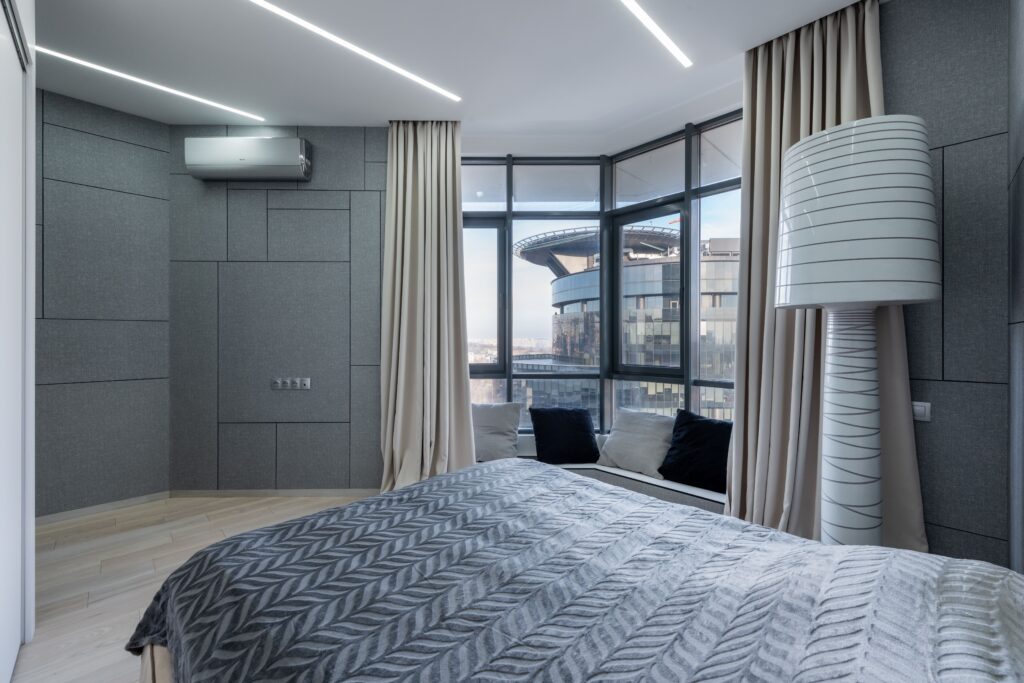
The goal is to mount the indoor unit high on a wall where the airflow travels over or past the bed rather than directly onto it. Air blowing straight down onto someone sleeping feels draughty and cold in cooling mode and can disturb sleep, so the ideal spot directs the air across the room above the bed, letting it circulate and settle evenly. Avoid placing the unit right above the bedhead where it blows down on your face, and avoid tucking it into a tight corner or behind a wardrobe that blocks the airflow. The outdoor unit matters too, since it should sit where its gentle hum will not carry into your window or a neighbour’s at night. Getting both units well placed is exactly the kind of judgement that separates a professional install from a rushed one.
A few features earn their place in a bedroom specifically. A quiet or sleep mode is the standout, lowering the fan and dimming the lights so the unit is barely noticeable. A good timer lets you have the room warm or cool as you go to bed and ease off through the night, so it is comfortable when you fall asleep without running hard until morning. Dimmable or switchable display lights matter more than people expect, because a bright glowing panel in a dark room is its own sleep disruptor. Wi-Fi control is a nice convenience, letting you adjust the room from your phone without getting up. And a built-in good-quality air filter helps keep the bedroom air clean, which pairs well with the dehumidifying benefit that makes a bedroom feel fresh and easy to sleep in through Auckland’s humid summers.
A bedroom heat pump stays quiet and efficient only if it is looked after, and a neglected unit gets noisier and works harder. Clean the filters regularly, roughly monthly in heavy use, because clogged filters restrict airflow, which makes the fan work harder and louder and reduces efficiency. Have the unit serviced periodically so the coils, fan and drain are checked and cleaned, which keeps both the performance and the quiet running that made it good for a bedroom in the first place. Our maintenance guide and servicing guide cover exactly what this involves and how often.
Choosing a heat pump for a bedroom is less about power and more about peace. Get the noise low, the size right and the placement thoughtful, and you end up with a unit that warms you in winter, cools and dries the air in summer, and does it all so quietly you forget it is running. That is exactly what a bedroom needs.
Varcoe has installed more than 20,000 heat pumps across Auckland since 1975, so we know how to size and place a unit for a quiet, comfortable bedroom. For honest advice on the right unit and the right spot, get in touch, call 0800 088 888, or email info@varcoe.co.nz.
The best bedroom heat pump is a quiet, correctly sized unit with a sleep or quiet mode, placed so the airflow passes over the bed rather than onto it. For most bedrooms a small, efficient high-wall unit is ideal. Low noise matters more than raw power, so check the indoor unit’s decibel rating on its lowest setting.
Quality units are very quiet, with the best high-wall models running around 19 to 25 decibels on low, quieter than a whisper. Look for a unit with a low sound rating and a dedicated quiet or sleep mode, which lowers the fan and dims the display so it is barely noticeable overnight.
It depends on the room’s size, insulation, windows and aspect, but bedrooms usually need one of the smaller units, often around 2.0 to 3.5 kW for a typical single or double room. Avoid oversizing, as a too-large unit cycles on and off, which is noisier and less efficient. A proper assessment gives the accurate size.
An oversized unit heats or cools the room too quickly, then switches off and on repeatedly. That cycling is less efficient and noisier, because start-up is the loudest part of operation, which is disruptive right beside the bed. A correctly sized unit settles into a low, steady, quiet output instead.
High on a wall where the airflow travels over or past the bed, not directly onto it, since air blowing straight down feels draughty and disturbs sleep. Avoid mounting it above the bedhead or in a spot where furniture blocks the airflow, and position the outdoor unit so its hum does not carry into the window.
Yes. It cools the room and removes humidity, which is a major comfort gain on warm, sticky Auckland nights, and a quiet unit on sleep mode does this without noise or a cold draught. Cooler, drier, still air is far easier to sleep in than a stuffy, humid bedroom.
We size, place and install bedroom heat pumps across Auckland for a cool, dry, quiet night, all year round.