When a heatwave rolls into Auckland and the bedroom feels like an oven, the portable air conditioner starts to look very tempting. You can grab one off the shelf for a few hundred dollars, wheel it home, plug it in, and supposedly cool any room you like. No installation, no tradesperson, no fuss. It sounds almost too good to be true.
So do portable air conditioners actually work? The honest answer is: sort of, in some situations, with real limitations. They are not a scam, but they are also not the magic fix the marketing suggests. Here is a straight, no-spin look at how they perform, where they make sense, and where you will end up disappointed, so you can decide whether one is right for you or whether your money is better spent elsewhere.
A portable unit is a single box on wheels that contains everything: the compressor, the coils and the fan, all in one. It draws in warm room air, passes it over a cold coil to chill it, and blows the cooled air back into the room. The heat it removes has to go somewhere, so it is pumped out through a flexible exhaust hose that you run to an open window, usually held in place with a plastic window kit.
That all-in-one design is the source of both their appeal and their problems. Because everything is inside the one unit sitting in your room, a portable behaves very differently from a permanently installed system where the noisy, hot-running compressor lives outside.
To be fair, portable air conditioners do have genuine advantages, and it is worth being clear about them.
There is no installation. This is the big one. You do not need to drill through a wall or book a technician. You unbox it, fit the window kit, and switch it on.
The upfront cost is low. A portable is far cheaper to buy than a fitted system, which makes it attractive when money is tight or the need feels temporary.
It can move between rooms. In theory you can roll it from the bedroom at night to the living room by day, though in practice the window kit has to be refitted each time.
It suits renters and tricky situations. If you are renting and cannot modify the property, or you have a heritage building or a body corporate that forbids external units, a portable may be the only option available to you.
For a short heatwave, a small space, or a situation where a permanent unit simply is not possible, a portable can take the edge off. As a temporary bridge, it has its place.
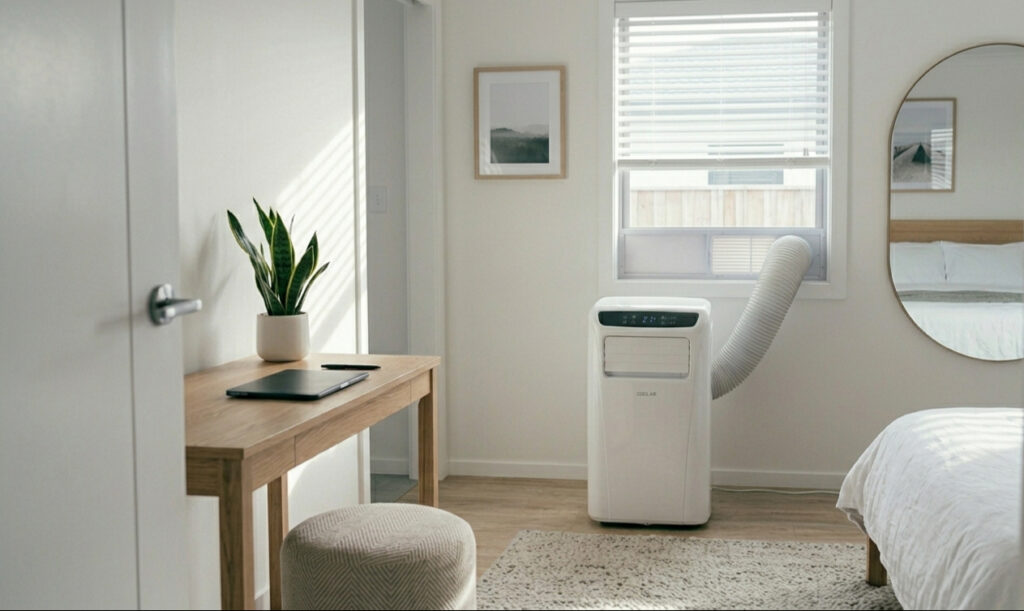
Here is where the reality check comes in, because the limitations are significant and most buyers do not see them coming.
The single-hose problem is real. Most affordable portables use one hose. As the unit blows hot air out the window, it creates lower pressure inside the room, which quietly sucks warm air back in from the rest of the house through every gap, door and crack. In effect, the unit is fighting against itself, which is why a portable often struggles to truly cool a room on a hot day.
The window seal leaks heat. That plastic window kit is rarely a tight fit, so warm outside air leaks back in around the hose while the unit works to push heat out. It is a constant tug of war.
They are noisy. Because the compressor sits inside the room with you, portables are noticeably louder than a fitted system, where the compressor is outside. In a bedroom, that drone can be enough to keep you awake, which rather defeats the purpose.
They are energy hungry. For the amount of cooling they deliver, portables tend to be inefficient, so your power bill can climb faster than you expect. If keeping running costs down is a priority, this is a serious drawback, and our guide to reducing energy costs explains why efficiency matters so much over a summer.
They take up floor space and need draining. The unit itself is bulky and lives in the middle of your room, and some models collect condensate that you have to empty periodically.
They only handle a small area. A portable might cope with a single small room on a warm day, but it will not keep a large or open-plan space comfortable through a genuine Auckland scorcher.
This is the heart of the matter. A fitted system, often called a split system because the compressor is split off to an outdoor unit, beats a portable on almost every measure that counts.
A heat pump or air conditioning unit keeps the noisy, hot-running compressor outside, so the indoor unit is quiet and unobtrusive. It is far more energy efficient, so it costs less to run for the same or better cooling. It cools larger spaces properly rather than struggling against itself. And crucially, the same unit also heats, so it earns its keep all year round rather than sitting in a cupboard for nine months. For homes with several rooms to cover, a multi-room system can condition the whole house from a single outdoor unit, which a row of portables could never match.
There is an upfront cost to a fitted system, which is the one area a portable wins. But that gap narrows quickly once you factor in the portable’s higher running costs and its short life as a single-season cooler. Our breakdown of heat pump installation costs shows that a proper system is more affordable than many people assume, and it adds lasting comfort and value to your home.
So, do portable air conditioners actually work? Yes, within limits. For a small room, a brief hot spell, or a rental where nothing can be installed, a portable will provide some relief and is better than sweating it out. As a stopgap, it does a job.
But if you are looking for a real solution, something that cools effectively, runs efficiently, stays quiet, and keeps you warm in winter too, a portable will leave you wanting. The money is far better invested in a properly installed system that delivers genuine comfort for fifteen years or more, and keeps running well with simple regular servicing. A portable cools a corner for a season. A fitted system transforms how your whole home feels, all year round.
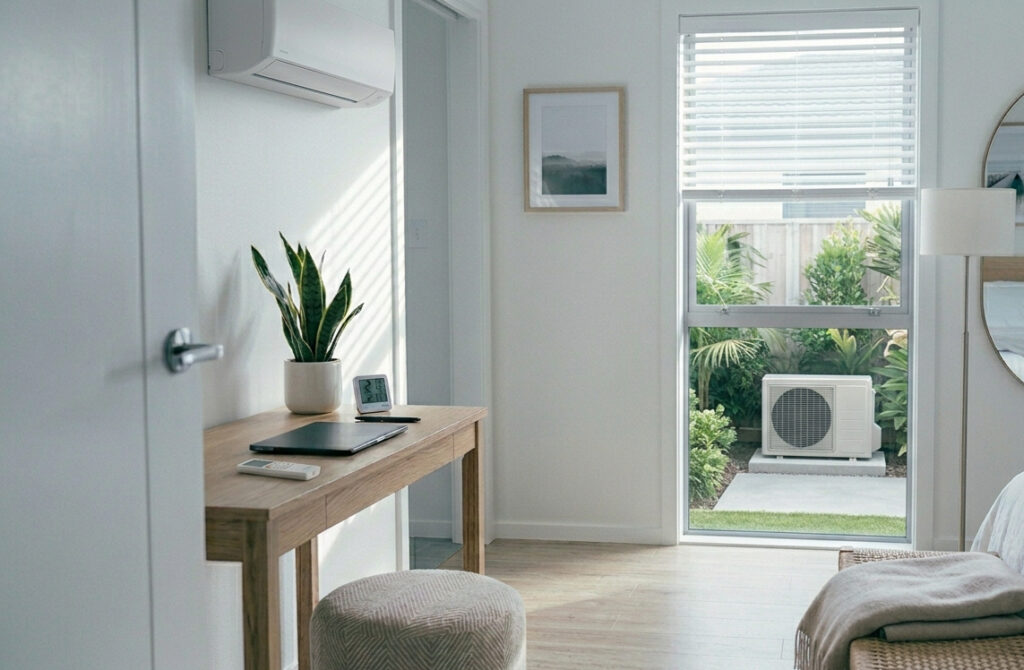
A portable air conditioner can be a handy bridge, but it is no substitute for the quiet, efficient, year-round comfort of a properly installed system. If you are tired of fighting the heat with a noisy box and a hose out the window, it is worth seeing how affordable a real solution can be.
Varcoe has been cooling and heating Auckland homes since 1975, with expert advice, certified installations and a 12-month workmanship guarantee. Request a free quote today, or call us on 0800 088 888, and we will help you find a system that keeps you comfortable through every season, not just the next heatwave.
No. A portable can take the edge off a small room, but a fitted split system cools far more effectively, especially in larger or open-plan spaces. The single-hose design of most portables means they partly work against themselves, drawing warm air back into the room as they vent heat out the window.
Generally yes, relative to the cooling they provide. Portables tend to be less energy efficient than fitted systems, so while they are cheaper to buy, they often cost more to run over a summer. A properly installed unit delivers more cooling for less power.
Yes. A portable removes heat from the room and has to expel it somewhere, so the exhaust hose must run outside, usually through a window kit. Running it without venting simply moves heat around the room and will not cool the space.
They can cool a small bedroom, but they are noticeably noisier than a fitted system because the compressor sits inside the room with you. For many people that noise disrupts sleep, which is why a quiet wall-mounted unit is usually the better choice for a bedroom.
For a temporary need or a rental where installation is impossible, a portable can make sense. For a lasting solution, a fitted system is the better value once you account for its efficiency, quieter operation, larger coverage and ability to heat in winter as well as cool in summer.