Choosing a heat pump for a bedroom is a very different job from choosing one for the lounge. A living area is all about quickly warming a large, busy space. A bedroom, and especially a baby’s room, is about something gentler: quiet, steady, healthy warmth that helps everyone sleep soundly through a cold Auckland night. Get it right and you have a room that is cosy without being stuffy, dry without being draughty, and so quiet you forget the unit is even running.
This guide walks through exactly what makes a heat pump well suited to a bedroom, the extra things to think about for a nursery, and how to make sure the one you choose is the right size for the space. By the end you will know precisely what to look for, and what to avoid.
Bedrooms have their own short list of priorities, and they are not the same as the ones that matter in a living room.
Nothing ruins a heat pump in a bedroom faster than a noisy fan or a clunking compressor. The best units run remarkably quietly, and many include a dedicated quiet or night mode that drops the fan speed and dims the display so nothing disturbs your sleep. When you are comparing models, the indoor noise level, measured in decibels, is one of the most important numbers to check. A premium single-room unit can run at a whisper.
In a small room you do not want a blast of hot air on one side and a cold patch on the other. Quality heat pumps use airflow controls and temperature sensors to spread warmth evenly and hold a steady temperature, rather than swinging between too hot and too cold. A unit designed for a single room delivers exactly this kind of considered, even comfort, and our single-room heat pump range is built for precisely this purpose.
A heat pump produces dry heat, which means it warms the room without adding the moisture that fuels mould and dampness. Most units also pass the air through built-in filters that catch dust and allergens, which is welcome news for anyone with asthma, hay fever or sensitive airways. For a bedroom you spend a third of your life in, cleaner air is a genuine benefit.
A timer or scheduling function lets you have the room warm and welcoming just before bedtime, then ease off automatically once you are asleep. If your unit has app control, a WiFi controller lets you adjust the temperature from your phone without leaving the warmth of your bed, which is a small luxury you will use every single night.
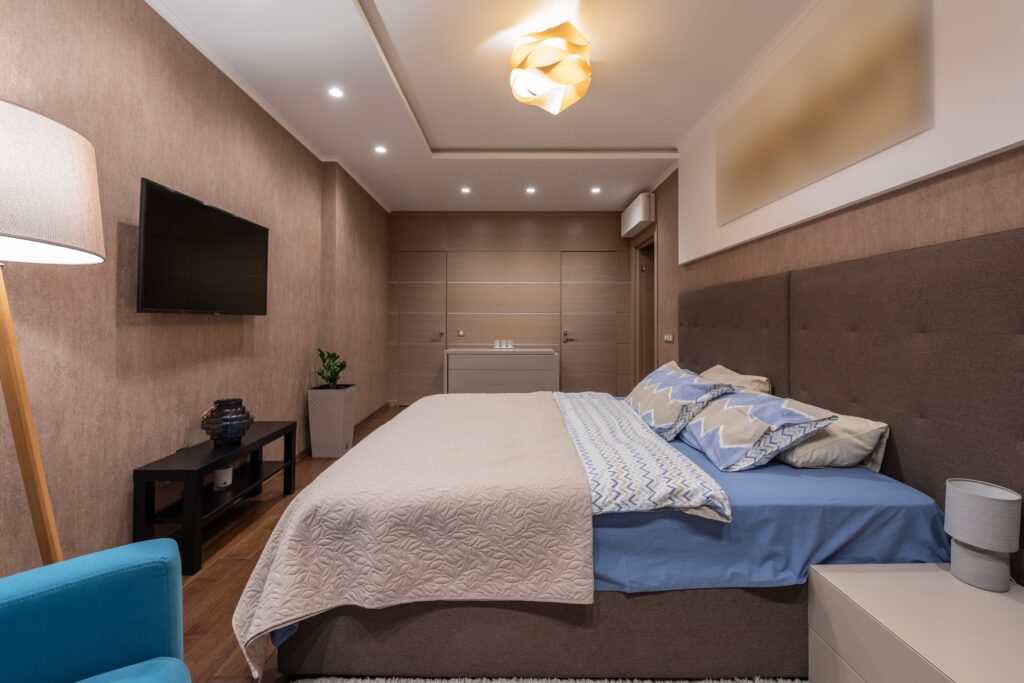
Sizing is where bedroom heat pumps most often go wrong, and bigger is not better. An oversized unit heats the small room too quickly, then shuts off, then kicks back on again and again. That constant cycling is both inefficient and noisy, which is the last thing you want in a space designed for rest. An undersized unit has the opposite problem, running flat out and never quite getting comfortable.
The right capacity depends on the room’s dimensions, its insulation, the size and orientation of the windows, and whether it sits on a sunny or shaded side of the house. As a rough starting point, a typical bedroom often needs a unit in the smaller capacity range, but the only way to be sure is to assess the specific room. Our heat pump size calculator gives you a quick, useful estimate, and for a precise recommendation it is worth having the space looked at properly.
A nursery raises the bar even higher, because a baby cannot tell you if they are too hot, too cold or kept awake by a noisy fan. A few things deserve special attention.
A comfortable range for a baby’s room is generally considered to be around 16°C to 20°C. The real benefit of a heat pump here is consistency. Instead of a room that is warm at bedtime and cold by the small hours, a heat pump on a gentle setting holds a steady temperature all night, which supports better, safer sleep.
This is the single most important placement rule. The unit should be positioned and angled so that warm or cool air is never blowing directly onto the baby. Good installers think about this from the start, directing the airflow across the room rather than straight at the sleeping area. Thoughtful heat pump installation is what turns a good unit into a great one for a nursery.
Damp, mouldy rooms are particularly hard on babies and young children. Because a heat pump warms without adding moisture, it helps keep the nursery dry and the air healthier, reducing the conditions that mould and dust mites love.
A unit with a strong quiet mode is worth seeking out for a nursery, so that the gentle background hum never becomes the reason a sleeping baby wakes.

When it comes to quiet, reliable bedroom heating, the established brands have earned their reputations. Mitsubishi Electric units are renowned for whisper-quiet operation and excellent filtration, which makes them a favourite for bedrooms and nurseries. Daikin models are equally trusted across New Zealand for their efficiency and even, comfortable heat. Both offer compact single-room options ideally suited to smaller spaces, and our team can match the right model to your specific room and budget.
Once your unit is in, a few simple habits keep a bedroom comfortable and efficient. Set a sensible, steady temperature rather than a high one, since a small room does not need to be cranked up to feel warm. Use the timer so the room is the right temperature when you actually need it, not all day. Keep the filters clean so the air stays fresh and the unit stays efficient. And resist the urge to point the louvres straight at the bed, which only creates an uncomfortable draught.
The best bedroom heat pump is not always the biggest or the most powerful. It is the one that is quiet, correctly sized, and installed with care so it delivers gentle, healthy warmth exactly where you need it. For a baby’s room, those qualities matter even more, and getting the choice and placement right makes a real difference to how well your little one sleeps.
Varcoe has been helping Auckland families stay warm and comfortable since 1975, with expert advice, certified installations and a 12-month workmanship guarantee. Book a free in-home assessment today, or call us on 0800 088 888, and we will recommend the perfect quiet, gentle heat pump for your bedroom or nursery.
Most bedrooms suit a smaller-capacity unit, but the exact size depends on the room’s dimensions, insulation, windows and aspect. An oversized unit cycles on and off noisily, while an undersized one struggles to keep up, so it is worth getting the specific room assessed rather than guessing.
Yes. A heat pump is a safe and effective way to keep a nursery at a steady, comfortable temperature, with no exposed hot elements like some plug-in heaters. The key is correct placement so the airflow never blows directly onto the cot, and setting a gentle temperature in the region of 16°C to 20°C.
The better units are very quiet, and many include a dedicated quiet or night mode that lowers the fan speed and dims the display. When comparing models, check the indoor noise rating in decibels. A good single-room unit runs at little more than a soft hum.
A heat pump provides dry heat, which helps reduce dampness and mould, but it does not strip moisture the way a dehumidifier does. For most bedrooms this is a benefit rather than a problem. If anyone finds the air too dry, lowering the temperature setting usually helps.
You can. A single-room unit is perfect for one bedroom, but if you want to heat several rooms efficiently from one outdoor unit, a multi-room system may be a better fit. Our team can advise whether a standalone unit or a connected system suits your home best.