Planning to add climate control to your Auckland home this year? Before you lock in an install date, there is one part of your house that deserves a closer look, and most homeowners never think about it. Your switchboard. That grey box tucked away in the garage, laundry, or under the stairs quietly controls every circuit in your home, and it decides whether your new system runs safely or trips out on day one.
A modern heat pump or air conditioning system draws a meaningful amount of power. If your switchboard is older, overloaded, or still running ceramic fuses, it may not have the capacity or the safety features to support that extra load. The result can be nuisance tripping, poor performance, or worse, a genuine fire risk. This guide walks you through when an upgrade is needed, what it costs, and why bundling the two jobs together is the smarter move.
Your switchboard is the electrical heart of your home. When it is working well, you never notice it. When it starts to struggle, everything from your lighting to your appliances feels the effect. The challenge in Auckland is that housing stock spans many decades, and a large share of homes still run boards that were installed long before heat pumps, EV chargers, and induction cooktops became common.
Homes built twenty or thirty years ago simply used far less electricity than a modern household does. Adding a high draw appliance to an ageing board is a bit like plugging a second kettle into an already busy powerpoint. It might cope, or it might not, and the only way to know for certain is a proper assessment by a licensed professional.
Before you book any heat pump installation, run through this checklist. If several of these ring true, your board is likely due for an upgrade.
If the power cuts every time you run the microwave and toaster at once, that is a breaker doing its job by preventing overload. Occasional trips are normal. Regular trips are a clear sign your board cannot comfortably handle your current demand, let alone a new heat pump on top.
If your board still uses old ceramic fuses that you unscrew and replace by hand, it is dangerously outdated. These systems are no longer permitted for new installations. Circuit breakers are safer, reset in seconds, and give you far better protection during a fault.
When a high draw appliance kicks in and your lights dip or flicker, that points to voltage instability. Over time this stresses sensitive electronics and shortens their lifespan.
Switchboards installed before the year 2000 almost always lack RCD (Residual Current Device) protection, the modern safeguard designed to prevent electrocution. Boards this old generally do not meet current New Zealand safety standards, which is reason enough to replace them even before you factor in a new appliance.
A switchboard should never feel warm to the touch. Heat, scorch marks, buzzing, or a burning smell all point to loose connections or arcing, which are serious fire hazards. If you notice any of these, switch off the mains and call for help straight away.
This is the big one for anyone reading this article. If you are installing a heat pump, an air conditioner, an EV charger, or undertaking a rewire, you may well need more capacity than your existing board can provide. Upgrading proactively is always cheaper and less stressful than reacting to a failure.
A single room unit is fairly modest in its draw, but ducted and multi room systems ask a lot more of your wiring. Modern boards are built to carry between 100 and 200 amps, whereas many older boards top out around 60 to 100 amps. Once you add a heat pump to a board already running close to capacity, you have three choices: accept constant tripping, run the system underpowered, or upgrade the board so everything works as intended.
Getting the sizing right matters too. If you are still deciding on the right system for your space, our energy audit service helps match capacity to your home so you are not paying for more unit than you need, and your electrician knows exactly what the board has to support.
Replacing an outdated board is about far more than stopping the trips. A current compliant board delivers full RCD protection across all circuits, automatic reset circuit breakers, higher load capacity, and room to add future circuits for things like solar or an EV charger. It also brings your home in line with current safety standards, which matters for insurance, resale, and simple peace of mind.
Retrofitting climate control into an older home is one of the most common scenarios we handle. If your property falls into that category, our guidance on a retrofit installation explains how the wiring and board work happen alongside the unit itself, so nothing gets left as a surprise.
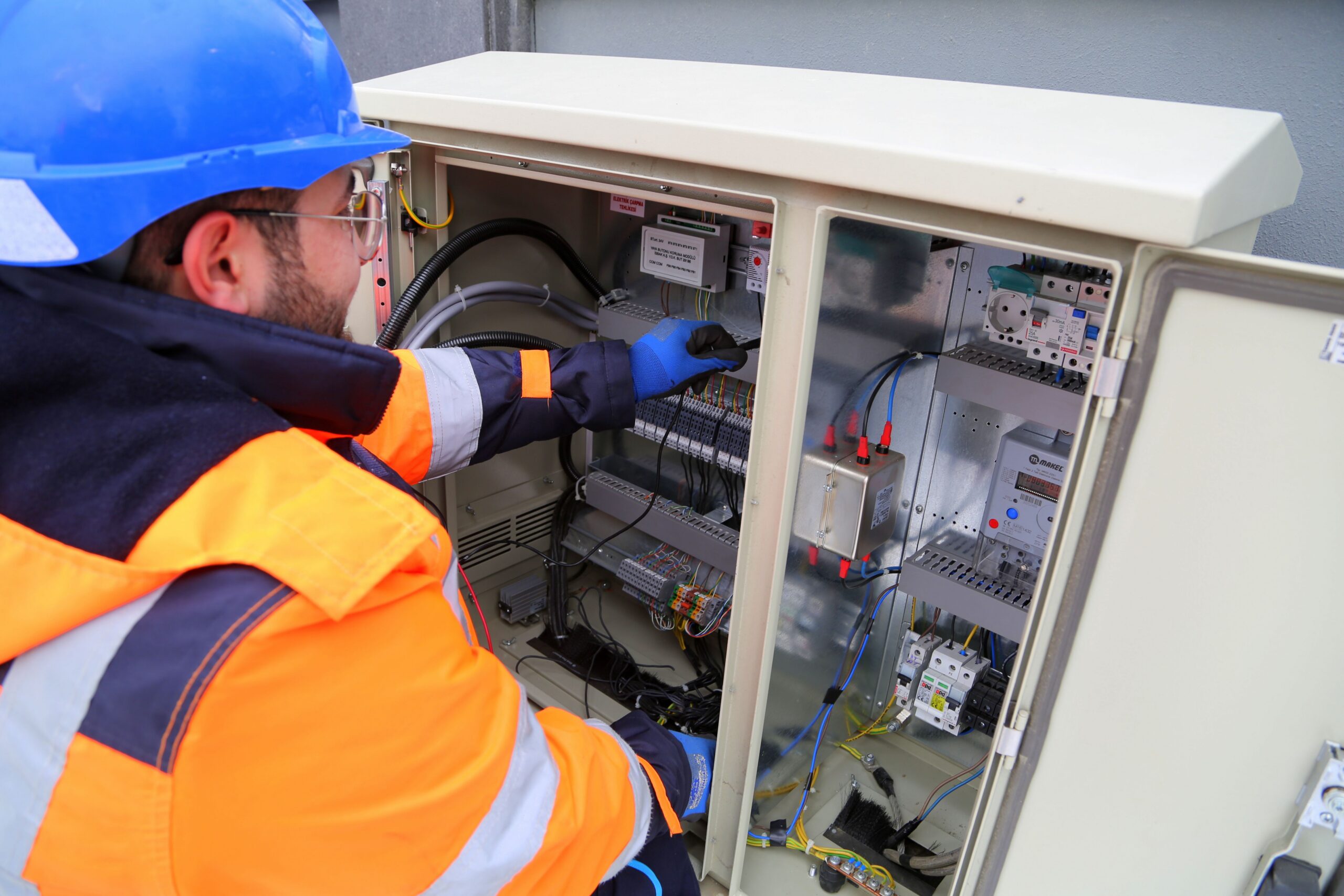
Older villas and bungalows around the inner suburbs often carry original boards from the 1960s through 1980s. These are prime candidates for replacement, though many have accessible laundries or kitchens that keep labour costs down. Suburban homes from the 1970s to 1990s frequently have weathered boards that still function but lack modern safety features, so an upgrade at the same time as your heat pump makes good sense. Newer suburbs built after 2000 usually have modern boards already, in which case an electrician simply confirms there is enough spare capacity for the new load.
For a standard residential job, a switchboard upgrade in New Zealand typically runs between $1,500 and $3,000. Basic upgrades that swap old fuses for circuit breakers sit at the lower end, while full upgrades with complete RCD protection reach the upper end. Larger homes or those needing remedial wiring can cost more.
Your quote should include removal and safe disposal of the old board, a new compliant enclosure, modern breakers on every circuit, RCD protection, safety testing, and a Certificate of Compliance. The main factors that move the price are how accessible the board is, the size of your home, and whether any existing wiring needs replacing.
Here is where you can save real money. If you are already committed to a new system, combining the board upgrade with the install is almost always the better path. You get a single site visit, one disruption to your household, coordinated planning so the electrician can pre wire for the unit, and one compliance certification covering both. Bundling also gives you room to negotiate a sharper overall price rather than paying two separate call out fees.
Our team handles the electrical work and the climate control together, so the two are designed to fit from the start. If you want to understand how the numbers stack up across both jobs, our breakdown of heat pump installation cost is a useful place to begin, and our qualified electricians can assess your board as part of the same quote.
Do not let an ageing switchboard undermine your investment in comfort. The safest and most cost effective approach is to sort the board and the new system together, with one team, one visit, and one certification. Varcoe has installed over 20,000 heat pumps and air conditioning systems across Auckland since 1975, and our licensed electricians assess your board as a standard part of every quote.
Book your free, no obligation assessment today. Request a free quote or call the team on 0800 088 888, and we will make sure your home is ready for the comfort you have been planning.
Straight answers on getting your board ready for a new heat pump or air conditioner.
No. If your board is modern, has spare capacity, and includes RCD protection, it may support a new system with no changes at all. The only way to be sure is a quick assessment, which we include as part of the quote.
No. DIY switchboard work is illegal in New Zealand and genuinely dangerous. All switchboard work must be carried out by a licensed, certified electrician who can issue a Certificate of Compliance on completion.
Probably not, unless you are experiencing frequent tripping or planning several new high draw appliances. A board from the mid 2000s onward is usually modern enough, though a professional should still confirm it has room for the extra load.
Not directly. A modern board does not use less electricity on its own. However, paired with an efficient new heat pump and a properly sized system, your overall running costs can drop noticeably because the whole setup runs the way it was designed to.
Most residential replacements take between four and eight hours. Power is disconnected for part of that time, which we coordinate in advance so you know exactly what to expect on the day.