Every Auckland homeowner reaches this crossroads eventually. Your heat pump is blowing lukewarm air, making an odd noise, or costing more to run than it used to, and the question lands: do you fix it, or is it finally time to replace the whole thing? Spend too little and you throw good money at a system on its last legs. Spend too much on a new unit when a simple repair would do, and you have wasted a perfectly good few years of service.
The good news is that this is not a guessing game. With a clear framework and a few honest numbers, you can make a confident decision. This guide walks you through the signs, the maths, and the point at which repair stops making sense.
A quality heat pump, looked after properly, runs efficiently for 15 to 20 years or more. Neglected systems fail far sooner. That gap between a well maintained unit and a forgotten one is enormous, and it is entirely within your control. Regular heat pump repairs and servicing is what keeps a system in the upper half of that range rather than the lower.
So the first question is not really “repair or replace” at all. It is “how old is this system, and how well has it been cared for?” A ten year old unit that has been serviced annually is usually worth saving. A ten year old unit that has never been touched, and is now on its second major fault, is a different story.
Before weighing up cost, it helps to recognise what a struggling system is actually telling you. Watch for these:
Weak or uneven heating and cooling. If some rooms never reach temperature, or the unit runs constantly without getting there, something is wrong. This can be a refrigerant issue, a tired compressor, or simply a system that was never sized correctly for the space.
Rising power bills with no change in habits. A gradual climb in running costs, despite using the system the same way, is a classic sign of falling efficiency. Dirty coils, low refrigerant, and worn components all force the unit to work harder for the same result.
Strange noises. Grinding, rattling, or screeching usually points to a mechanical fault such as a failing fan motor or a loose part. These rarely fix themselves and tend to get worse.
Frequent breakdowns. One repair in a year is bad luck. Three repairs in a year is a pattern, and it is often the system warning you that more failures are coming.
Leaks or moisture. Water pooling around the indoor unit, or ice forming on the outdoor unit, both point to problems that need a professional eye quickly.
If any of these are happening right now and you have lost heating or cooling entirely, our emergency repairs team can diagnose the fault fast and tell you honestly whether it is worth mending.
Knowing what typical repairs cost is central to making a smart call. Here is a realistic guide for the most common faults:
Minor jobs at the lower end are almost always worth doing, regardless of the unit’s age. It is the larger repairs, especially refrigerant leaks and compressor faults, where the decision gets interesting.
Here is a practical framework used across the industry. Weigh three things together: the age of the unit, the cost of the repair, and the frequency of past faults.
Repair makes sense when the system is under ten years old, the repair costs less than half the price of a new unit, and it has a clean history with few previous faults. In this situation you are extending the life of a sound investment.
Replacement makes sense when the system is over twelve to fifteen years old, the repair approaches or exceeds half the cost of a new unit, or you are facing your second or third significant fault in a short period. At that point you are pouring money into a system that will keep asking for more.
A useful shortcut is the “50 percent rule.” If a single repair costs more than half of what a new, comparable system would cost to supply and install, replacement is almost always the wiser financial choice. A new unit also resets your warranty, restores full efficiency, and gives you years of reliable service instead of a short reprieve.
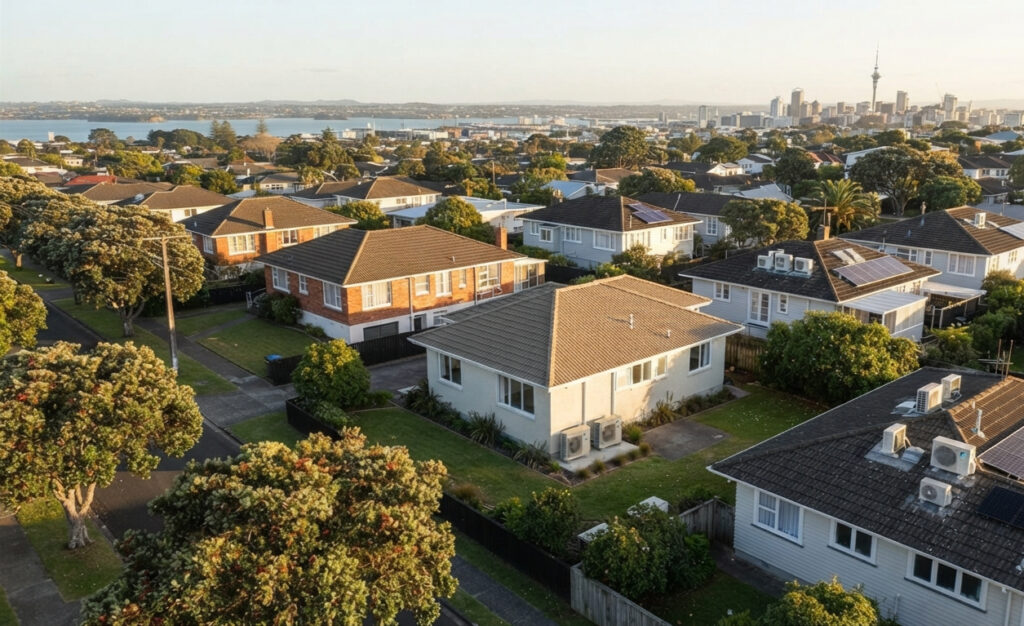
There is a hidden cost people often overlook. An older heat pump, even after a repair, is usually far less efficient than a modern one. A well maintained current model can use 15 to 20 percent less energy than a tired older unit doing the same work. Across an Auckland winter, that difference adds up on every power bill.
So a repair that keeps an inefficient system limping along is not just a one off expense. It locks you into higher running costs for as long as you keep the unit. When you compare the repair bill against the ongoing savings a new system delivers, replacement often pays for itself faster than expected. Our range of energy efficient models from trusted brands such as Mitsubishi and Daikin is designed with exactly these savings in mind.
If you decide a new system is the way forward, the priority is sizing it correctly for your space. An undersized unit runs flat out and never quite copes, while an oversized one cycles on and off and wastes energy. Our heat pump size calculator gives you a quick starting point so you know roughly what capacity your room or home actually needs before you talk to anyone.
It is also worth timing your purchase well. We regularly run seasonal deals, and checking our current specials before you commit can take a useful chunk off the total. A replacement is a bigger outlay than a repair, so any saving on the unit or install is worth capturing.
The homeowners who rarely face a hard repair or replace choice are the ones who service their systems every year. An annual service plan catches small issues before they become expensive failures, keeps efficiency high, and often maintains your warranty at the same time. A service costing a few hundred dollars a year routinely prevents emergency repairs running into the thousands.
The same logic applies to air conditioning. Booking regular air conditioning servicing keeps cooling performance sharp through summer and extends the working life of the system, so you are far less likely to be weighing up a costly replacement before your time.
The worst outcome is guessing. Repairing a system that should be replaced, or replacing one that only needed a minor fix, both cost you money you did not need to spend. A quick professional assessment removes the doubt.
Varcoe has serviced, repaired, and installed heat pumps across Auckland since 1975, with over 20,000 systems fitted and a reputation built on honest advice rather than upselling. If your system is struggling, let us take a look and tell you plainly what makes the most sense for your home and your budget.
Book your free assessment today or call the team on 0800 088 888, and get a straight answer on whether to repair or replace.
Honest answers on whether your old heat pump or air conditioner is worth fixing.
Compare the repair cost to the price of a new system. If the repair is under half the replacement cost, the unit is under ten years old, and it has a good service history, repair is usually the right call. Beyond those thresholds, replacement tends to make more sense.
A well maintained system lasts 15 to 20 years or more. Systems that are never serviced often fail much sooner, sometimes within eight to ten years, because minor faults are left to compound.
Rising bills with no change in use is a strong sign of falling efficiency. If the unit is more than a decade old, a modern replacement using 15 to 20 percent less energy may save you enough over time to justify the switch, even though the current unit still runs.
Yes. Most major failures start as small, cheap to fix issues such as a dirty coil or a slight refrigerant drop. Annual servicing catches these early, which is why a modest yearly service so often prevents a much larger emergency bill later.
For a total loss of heating or cooling, we prioritise a fast response so you are not left without comfort for long. Our technician diagnoses the fault, explains your options plainly, and gives you an honest recommendation on whether to repair or replace.