Most of the time, when your heat pump’s flashing its light, it’s actually good news. They mean your system caught something and is trying to tell you what it is instead of just dying silently. The tricky part is that Mitsubishi, Daikin, and Panasonic all speak different languages when it comes to these codes.At Varcoe, we’ve dealt with thousands of heat pump error codes across Mitsubishi, Daikin, and Panasonic units here in Auckland, so we know what usually fixes itself and what actually needs a technician. Here’s what you need to know when this happens to your heat pump.
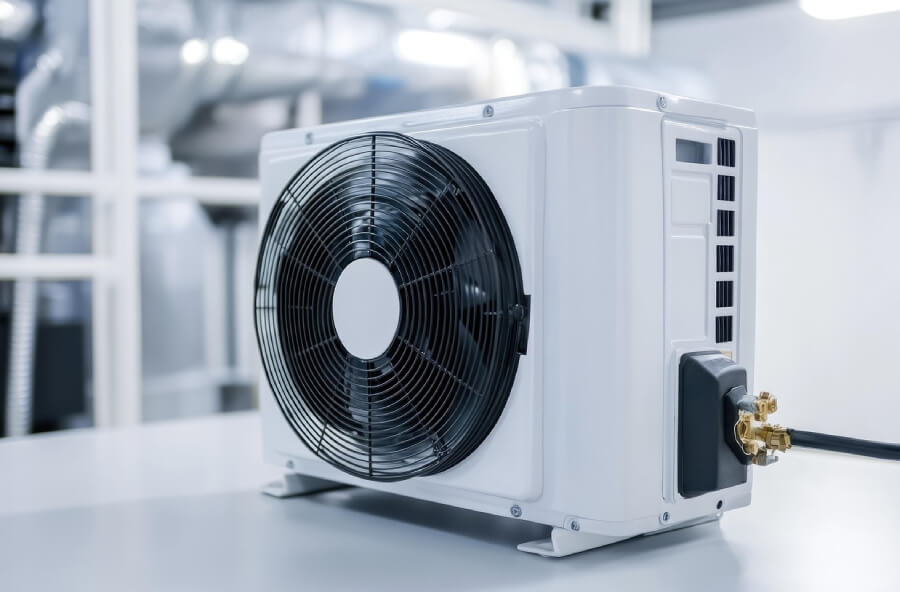
A flashing light could mean anything from “your filter is dirty” to “you need a refrigerant charge.” Some flashes are just normal operation.
For example, if your Panasonic heat pump is blinking and the indoor unit fan has stopped, you might just be in defrost mode. This is exactly what’s supposed to happen in winter when frost builds up on the outdoor coil. Give it a few minutes and it should resume heating.
The same goes for temporary power surges. If someone in your house flips too many switches at once, sometimes the system’s internal board trips and causes brief flashing. A simple reset often fixes this without any actual problem.
This is where it gets brand-specific, because Mitsubishi, Daikin, and Panasonic don’t use the same code system. That said, there are common themes:
Every heat pump comes with a manual that decodes the specific error codes for your model. This is honestly your best resource. If you’ve lost it, search your model number online. Most manufacturers have PDF versions available on their websites.
For Mitsubishi units, codes like E0 (communication error), P5 (drain fault), or UF (sensor error) all require different responses. The same applies to Daikin and Panasonic. Your manual will tell you whether something needs immediate attention or if it’s a maintenance issue you can handle yourself.
| Issue Type | What’s Happening | DIY Fix? | Professional Fix Required? |
| Drain pump or condensation problems | Heat pumps produce water through condensation. Blocked drains trigger specific error codes | Yes – Check outdoor drain isn’t clogged with leaves or dirt | Sometimes – Drain pump may need servicing |
| Refrigerant or pressure issues | System flags refrigerant problems with specific error codes | No – Not a DIY fix | Yes – Requires licensed technician with proper equipment. Can damage compressor if ignored |
| Sensor faults | Temperature and humidity sensors malfunction and system flags immediately | Maybe – Try reseating sensor connection | Often – Technician needs to replace sensor |
| Communication errors | Remote not communicating with unit properly | Yes – Check remote isn’t pointed through window, remove interference from fluorescent lights or wireless devices | Rarely – Usually resolves with troubleshooting |
Usually yes, but it depends on the code. Minor issues like sensor faults or communication errors won’t cause immediate harm. However, if the code relates to refrigerant pressure or compressor issues, continuing to run it could cause more damage. When in doubt, turn it off and call a technician rather than risk expensive compressor damage by ignoring a serious fault.
Intermittent codes that recur are worth investigating. It could indicate a loose sensor connection, a slow-developing drain blockage, or an electrical issue that trips under certain conditions. Document when it happens (during heating vs. cooling, specific temperatures, time of day) and call a technician with that information. They can often diagnose intermittent faults faster with context.
Yes. Search your exact model number (found on the unit’s specification plate) plus “error codes” or “manual PDF.” Most manufacturers have downloadable versions on their websites. However, some codes are brand and model-specific, so make sure you’re checking the right manual for your exact unit, not a similar model.
Not necessarily. Transient faults (power surges, temporary sensor glitches) clear and don’t recur. However, if the same error comes back repeatedly or within a few days, it’s a persistent problem that needs professional attention. A one-time error that’s gone after reset is usually harmless; patterns are what warrant investigation.
Possibly. Fluorescent lights, wireless devices, and even having the remote pointed through a window can cause communication interference. Try moving the remote away from these sources or turning it off completely. You can also operate the unit through the wall-mounted control panel if it has one. If the error clears without the remote nearby, interference was likely the culprit.
If you’re in Auckland and you’ve done the basic troubleshooting (reset, checked the filter, and noted the exact flashing pattern), give us a call on 0800 088 888.
We’ll talk you through what you’re seeing and let you know if it’s something simple or if one of our technicians needs to visit. We service all three of the major brands, so we can decode whatever your system is throwing at you.
In most cases, we can diagnose issues over the phone and get you sorted quickly. If it does need a visit, at least you’ll have the information ready so we can get straight to work instead of spending time guessing what the problem is.