The biggest mistake we see people make is thinking bigger is always better. They’ll come in wanting the largest unit possible, convinced that more power means more comfort. Then six months later they’re calling us saying their power bills are through the roof and their lounge temperature swings from too hot to too cold.
At Varcoe, we’ve sized heat pumps for thousands of Auckland homes since 1975. Size your heat pump right, and it’ll keep you comfortable without working harder than it needs to. Get it wrong and you’re just throwing money away.
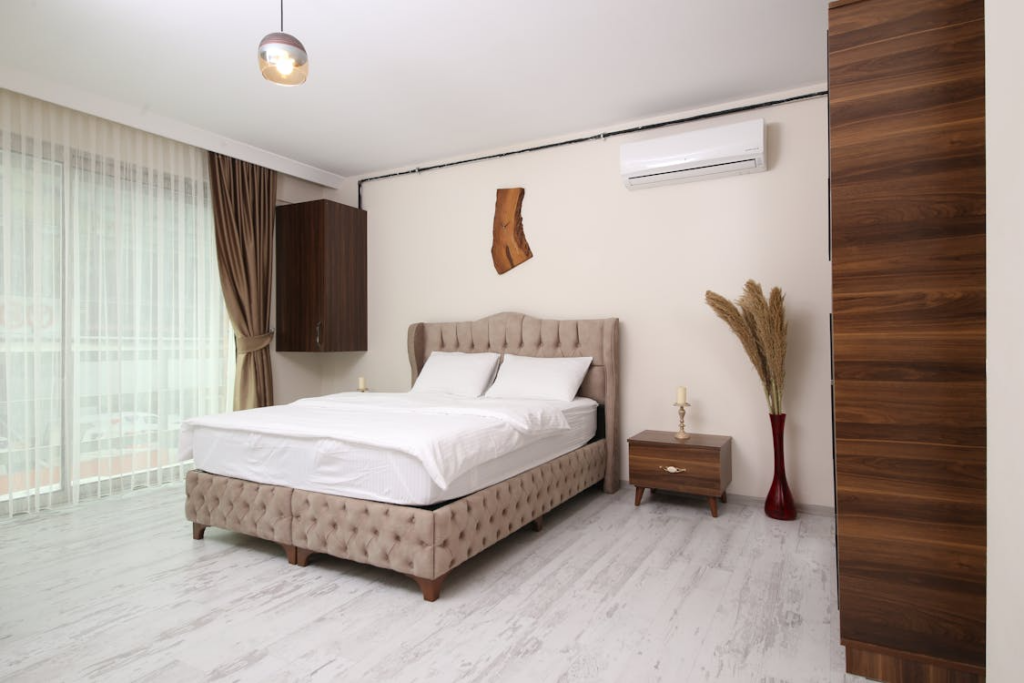
Most bedrooms are somewhere between 12 and 16 square metres. A 2.5kW to 3.5kW unit does the job nicely. If your bedroom’s on the smaller side or gets plenty of afternoon sun, 2.5kW is enough. For a standard master bedroom, go with 3.5kW. It’ll handle the space without running constantly.
Here’s what catches people out: they think if the door’s closed, the room stays warm. It doesn’t. Cold air finds its way in, especially in older homes. A heat pump sized for your bedroom accounts for that. It’s not just about the space itself, it’s about holding the heat.
Got a huge master that’s practically a second living room? Something like 20m² or more? Then step up to 5kW. No point struggling with an undersized unit when you spend half your time in there.
(Meta: Bedroom with an air conditioning unit on the wall.)
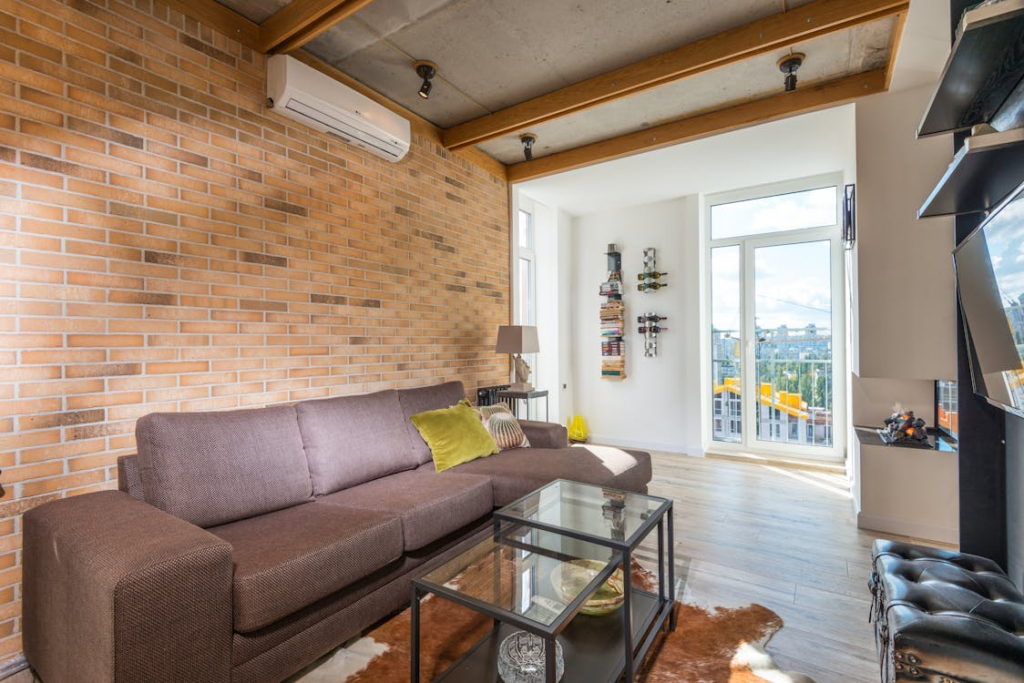
This is where people start guessing. A small living room, maybe 20 to 25m², needs about 5kW. A medium one around 25 to 30m² wants 5.5kW to 6kW. Anything bigger than that and you’re moving into the 7kW territory.
Open-plan spaces mess with people’s heads because you’re not just heating a box. You’re conditioning a bigger volume of air, and if you’ve got high ceilings or a mezzanine upstairs, add another 1kW to be safe. Same goes for rooms with lots of glass. Heat just pours out through windows, especially on cold nights.
We’ve assessed probably a thousand Auckland lounges. A 30m² living area with normal insulation usually works out to 5.5kW. That’s the sweet spot for a family of three who actually use their lounge.
Once you’re talking 35m² or more, you’re looking at 7kW to 9kW. These aren’t just bigger versions of smaller units. They’re designed to handle all that air without sounding like a jet engine or running flat out twenty-four seven.
If your great room has those big sliding glass doors facing the afternoon sun, it’s going to need more power. The room heats up quickly, which means your heat pump works harder to cool it down. Better to overestimate slightly here than be stuck with something that can’t keep up on hot days.
(Meta: White air conditioning unit on the upper wall of a compact living room.)
This is where multi-split systems (also called multi-room systems) come in. Say you want your lounge and a couple of bedrooms all on the same system. You can’t just add up the square footage and pick a unit. It doesn’t work that way.
What you actually do is calculate the total air volume you’re conditioning, then add about 20 percent on top. So if your lounge is 30m² and you’re adding two 15m² bedrooms, that’s 60m² total. But you’d actually want to go with a 7kW outdoor unit connected to different indoor units in each space. The lounge gets 5.5kW to 7kW, each bedroom gets 2.5kW to 3.5kW.
The beauty of it is flexibility. On a hot Auckland summer day, you can cool just the lounge if that’s where you are, instead of pumping cold air into empty bedrooms. On a winter night, you might run all three rooms. You’ve got options.
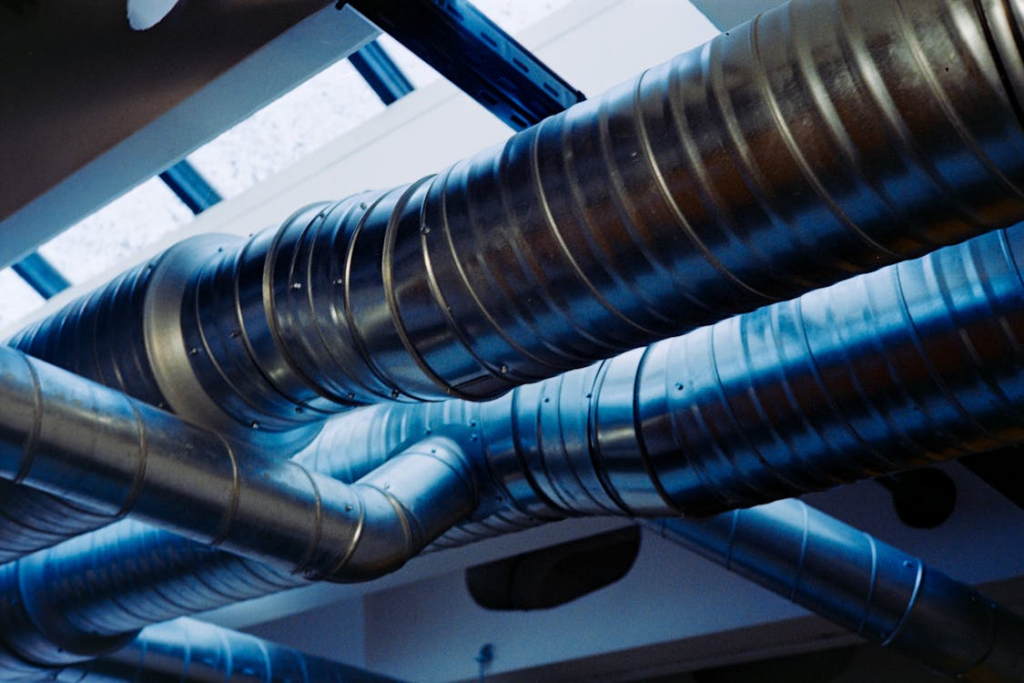
Whole-house ducted systems are different. Those are basically 8kW to 12kW depending on your entire home’s footprint. Way more complex installation, so we’ll skip those for now.
(Meta: Metal ducting on the roof of an establishment.)
Insulation quality changes everything, and nobody wants to hear this. If your home’s got old single-glazed windows and 1970s walls, you might need 25 percent more capacity than the basic calculation suggests. If you’ve recently renovated with proper double glazing and decent insulation, you could potentially go smaller.
Auckland’s pretty mild compared to places like Dunedin, so you’re not fighting brutal winters. That’s actually a massive advantage. But our humidity in summer is real. A heat pump that’s properly sized for your space will dehumidify the air while it cools. An undersized unit can’t do that. It runs flat out just trying to keep the temperature down, so you end up with sticky humidity and a tired system.
Windows matter too. Which direction do they face? Does your bedroom get hammered by afternoon sun or is it shaded most of the time? A room that gets full afternoon exposure might need a bigger unit than the square footage suggests. A shaded room might get away with slightly less.
Here’s something we wish more people understood: about nine out of ten professionally installed heat pumps are sized wrong. Oversizing is more common than undersizing, and it’s not what you’d think.
When your unit’s too big, it cycles on and off constantly. We call that short cycling. It sounds efficient but it’s the opposite. The compressor uses the most power when it’s starting up, so a system that’s constantly turning on and off burns way more electricity than one that runs steady.
You also get temperature swings. The unit heats the room above your set point, shuts off, then the room drifts down below where you want it. On it goes again. You never get that stable, comfortable temperature. Just hot, cold, hot, cold.
Oversized systems also cost more upfront and run up higher power bills. And they wear out faster because all that cycling is brutal on the compressor and other components.
The proper way to calculate this is something called a Manual J calculation. It sounds like something an engineer would do, and technically it is, but what it really means is someone coming to your home, measuring your rooms, checking your insulation, looking at your windows, and figuring out the actual heating and cooling load for your specific situation.
That’s the difference between a guess and a real recommendation. And honestly, it’s worth doing properly because you’re looking at a system that’ll last 15 years. Might as well get it right.
These are rough numbers for homes with normal insulation. Your place might need adjusting.
| Room Type | Room Size | Recommended Capacity |
| Single bedroom | 12-16m² | 2.5kW to 3.5kW |
| Modest living room | 20-25m² | 5kW |
| Medium living room | 25-30m² | 5.5kW to 6kW |
| Large living area | 30-40m² | 7kW to 8kW |
| Very large open plan | 40m²+ | 8kW to 10kW |
Older homes usually need one step up from these numbers. Brand new, super-efficient homes might go one step down.
If my room is 28m² and the chart says 5.5-6kW, should I go with the smaller or larger number?
It depends on factors the quick reference can’t capture. If your room has poor insulation, large windows, or gets afternoon sun exposure, go with 6kW. If it’s well-insulated, north-facing, or shaded most of the time, 5.5kW is fine. When in doubt, err slightly conservative rather than oversizing – an undersized unit still heats the room, just runs longer. An oversized unit wastes power through constant cycling.
Can I install a smaller heat pump now and add a second unit later if I find it’s not enough?
Yes, absolutely. This is actually a smart approach if you’re unsure about your needs. Start with what you think you need, live with it for a season, then add another unit if necessary. With multi-room systems, you can expand the outdoor unit’s capacity if it was designed with that potential. Just discuss future expansion plans during your initial installation.
My bedroom gets full afternoon sun – does that mean I can use a smaller heat pump since the sun provides natural heating?
Not really. Sun gains help during the day but disappear at night when you actually need heating in winter. In summer, afternoon sun makes cooling harder, not easier – your heat pump has to work harder to fight the solar heat gain. Size for your worst-case scenario (winter nights or summer heat) rather than banking on daytime sun.
I have a renovated home with new insulation and double glazing – can I definitely go down one size from the recommendations?
Possibly, but not automatically. New insulation helps, but it depends on how extensive the work was. If you’ve done a full insulation upgrade, new windows throughout, and sealed all air leaks, you might go down a half-size. If it’s just new windows in the main living area, that’s not enough to justify a significant downsize. A professional assessment would determine this accurately.
What happens if I install a heat pump that’s slightly undersized – will it eventually fail from overworking?
Not immediately, but it will run constantly during extreme weather, using more power and wearing components faster. The real problem is comfort – on cold winter days or hot summer days, it won’t reach your set temperature. You’ll be uncomfortable before the unit fails. It’s better to size correctly than rely on an undersized unit to “just get by.”
Give us a ring on 0800 088 888 or email info@varcoe.co.nz.
We’ll talk through what you’ve got, what you need, and whether we need to come see it in person. Free assessment, no pressure. Just straightforward advice on the right unit for your room.