Correctly installing a wine cooler is the difference between perfectly preserved bottles and spoiled wine. Proper installation protects your investment and ensures optimal flavour for any collection.
Quick Installation Overview:
Poor installation can reduce cooling efficiency by up to 30% and strain your unit, while proper setup can extend its life by up to 70%.
Success lies in understanding ventilation requirements, electrical safety, and taking time for preparation. Rushing the process often leads to costly mistakes.
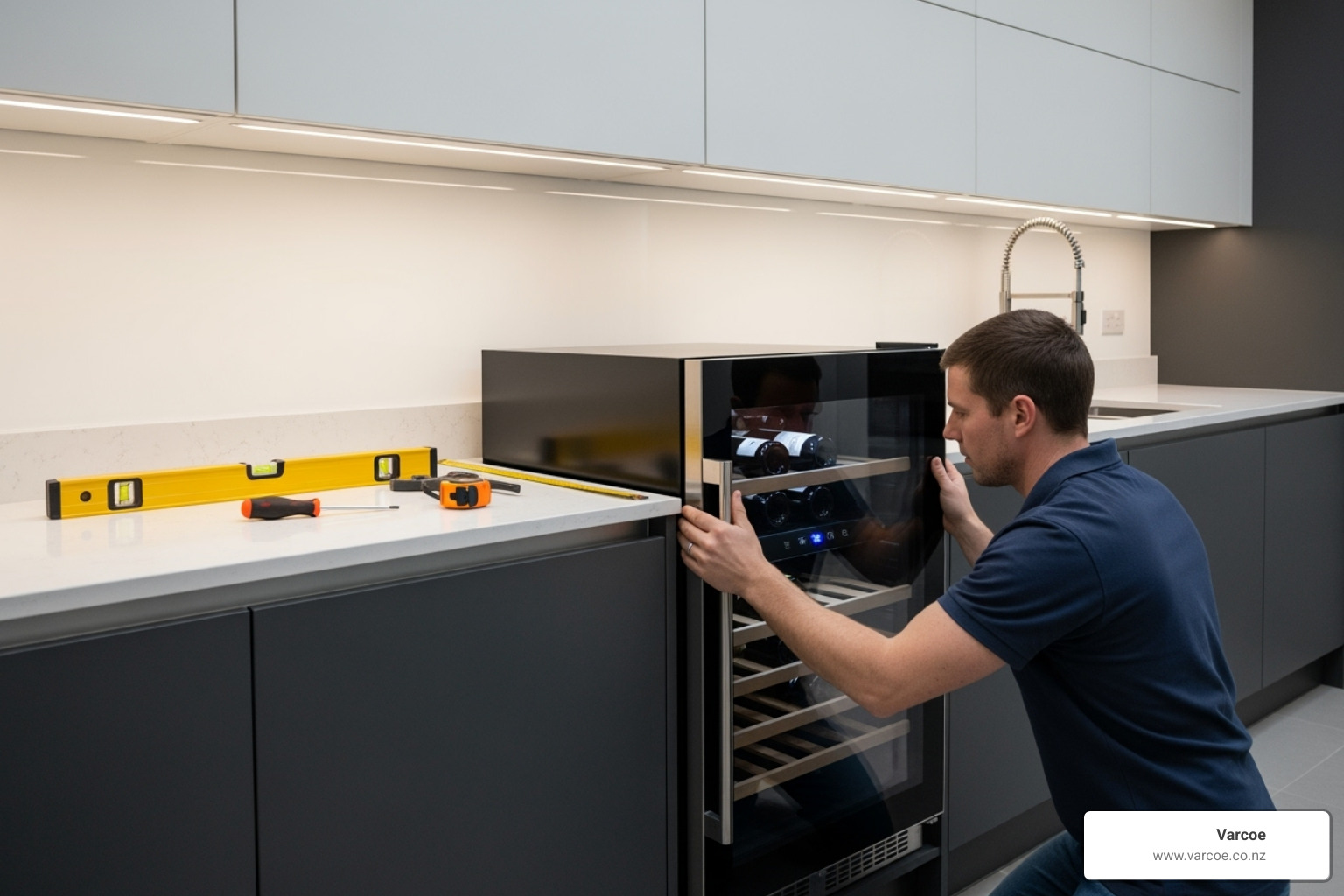
Proper planning before you unbox your new wine cooler is key to a smooth installation and ensures your wine stays perfectly preserved. This phase saves you headaches later.
Your first decision is choosing between a built-in or freestanding wine cooler. This choice impacts aesthetics and the installation process.
Built-in wine coolers are designed to integrate into your cabinetry for a seamless, professional look. They use a front-venting system, expelling hot air from vents at the front, usually near the base. This design allows for snug installation within cabinets without overheating, making them perfect for under-counter installations or custom bar areas.
Freestanding wine coolers function more like a standard fridge, venting from the rear or side. They require generous clearance, typically 3 to 5 inches on the back and sides, for proper airflow. Without this space, the cooler will work harder, run inefficiently, and potentially fail sooner.
Cooling technology also plays a role. Compressor-based units offer powerful, reliable cooling like a standard fridge, though they produce some vibration and noise. Thermoelectric coolers use the Peltier Effect for whisper-quiet, vibration-free operation, making them ideal for living areas, but they can be less effective in very warm environments.
| Feature | Built-in Wine Cooler | Freestanding Wine Cooler |
|---|---|---|
| Ventilation | Front-venting, typically at the base | Rear or side-venting |
| Placement | Designed for cabinetry, under counters, custom spaces | Stands alone, requires clearance on sides and back |
| Aesthetics | Seamless, integrated look, often panel-ready options | Visible as a standalone appliance |
| Space Needs | Precise cabinet cutout, minimal side/back clearance | Requires several inches of clearance on all sides/back |
| Installation | More complex, involves cabinet modification | Simpler, just position and level |
| Cost | Generally higher due to specialised design | Often more budget-friendly |
Your choice depends on your space, style, and budget. If you’re exploring other cooling solutions, you might find it helpful to browse more info about our cooling products.
Having the right tools ready makes installing a wine cooler a much smoother experience. You will need a few essential items for a successful installation.
A tape measure is crucial for precision, especially for built-in units. A spirit level is also vital, as the cooler must be perfectly level for the cooling system to work efficiently and the door to seal correctly.
You’ll also need a screwdriver set for adjusting levelling feet and securing brackets, and a drill may be useful for mounting. Safety gloves protect your hands and improve your grip.
For built-in installations, a utility knife or saw might be needed for cabinet modifications, along with shims for a perfect fit. It’s also wise to have screws, wall anchors, and protective floor covering on hand.
We’ve created a resource to help you prepare: Download our comprehensive shopping list of materials and tools. Having everything ready beforehand prevents delays.
The right location is crucial for your wine cooler’s performance and longevity.
The golden rule is to avoid direct sunlight. Even with UV-resistant glass, direct sun will force your cooler to work overtime and can damage your wine.
Similarly, keep it away from heat sources like ovens, dishwashers, or heating vents. The extra heat forces the cooling system to work much harder than it should.
The floor surface must be firm and level. An uneven surface can prevent a proper door seal, leading to temperature fluctuations, and can create vibrations that disturb wine sediment.
For built-in units, precise measurements of the cabinet opening are non-negotiable. Check the manufacturer’s specifications for width, height, and depth, and account for door swing and handle clearance.
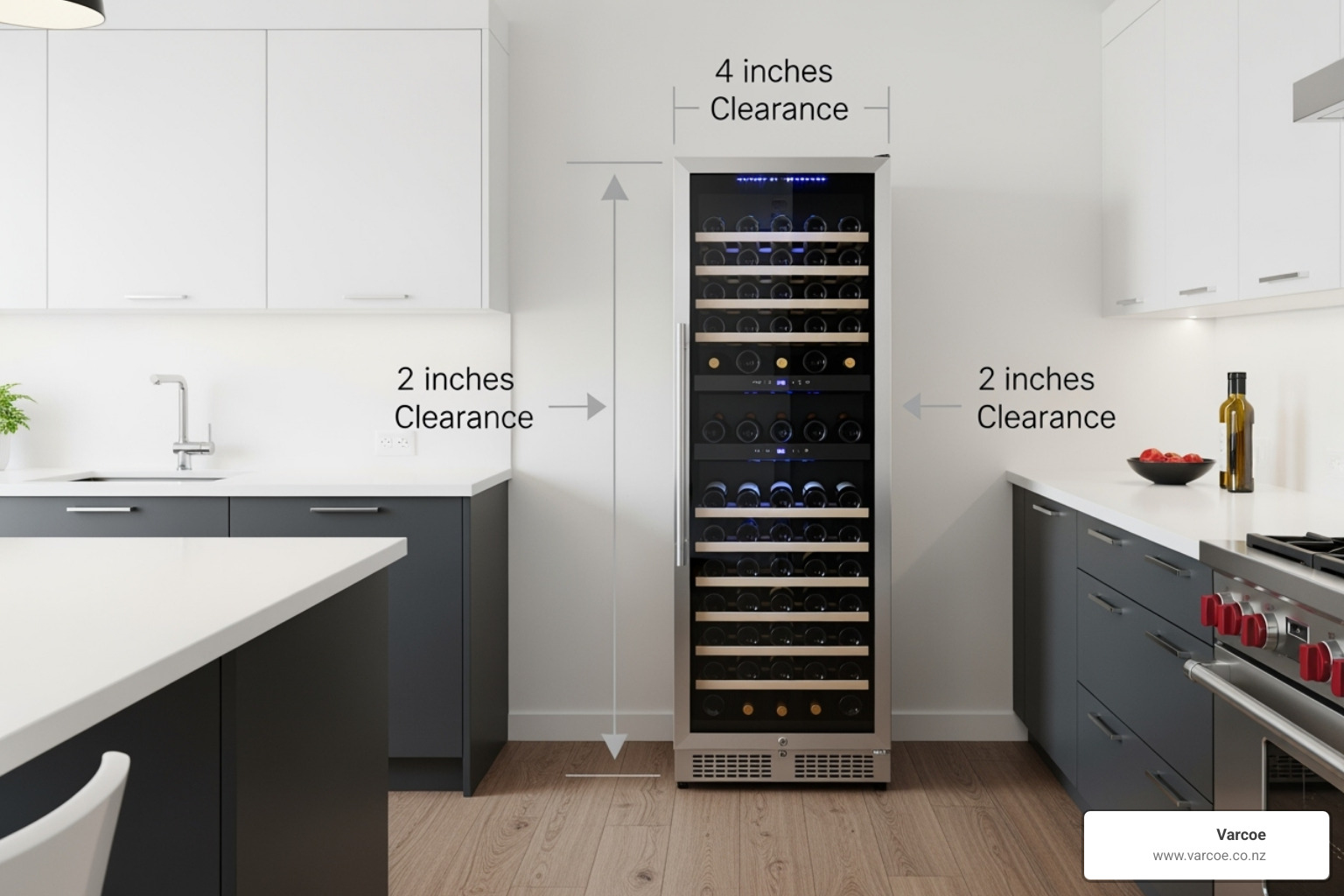
Clearance requirements are critical. Built-in units typically need 2 inches at the back, 1 inch on the sides, and 4 inches on top. Freestanding units need more, usually 3 to 5 inches around the back and sides. Restricted airflow can decrease cooling efficiency by up to 30% and shorten the unit’s lifespan.
Good insulation around the location also helps. Proper insulation can reduce strain on a cooling unit by up to 50%, improving efficiency and longevity.
After careful planning, it’s time for the actual installing a wine cooler. A methodical approach will prevent issues later. This guide covers both freestanding and built-in models.
Freestanding wine coolers are straightforward to install, but attention to detail is still necessary for proper care.
First, unbox and position the cooler near its final location, inspecting for any shipping damage before proceeding. These units can be heavy, so handle them with care.
Ventilation clearance is critical. A freestanding cooler needs at least 3 to 5 inches of space around the back and sides. Restricted airflow can decrease cooling efficiency by up to 30%, increasing energy use and shortening the cooler’s lifespan.
Levelling the unit is crucial for proper door sealing and operation. An uneven cooler can cause cool air to escape and warm air to enter, forcing the compressor to work harder. Use a spirit level on the top and sides, adjusting the feet at the bottom until the unit is perfectly level. A helpful tip is to set the front feet slightly higher than the back to help the door close securely.
If your unit includes anti-tip brackets or wall anchors, install them for safety, especially in homes with children or pets.
Built-in installations require more precision but result in a satisfying, integrated look.
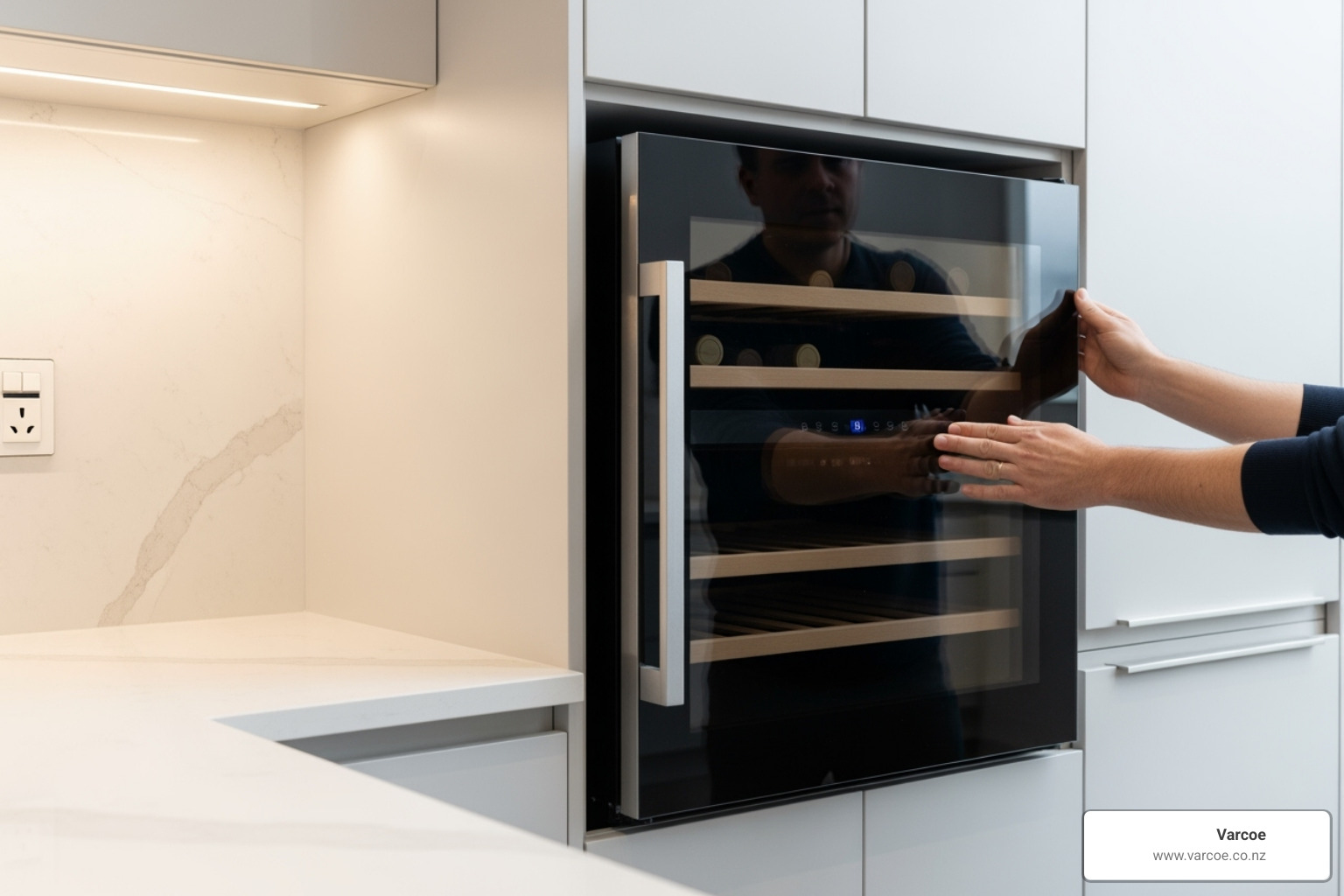
Prepare the cabinet opening to the manufacturer’s exact specifications for width, height, and depth. Even front-venting units need minimal clearance, typically 2 inches at the back, 1 inch on the sides, and 4 inches on top. If modifying a cabinet, make clean, precise cuts. You can find helpful advice from others who have tackled similar projects: See how others have retrofitted cabinets.
Ensure a level base inside the cabinet, using shims if necessary. A level base prevents stress on the unit’s frame and ensures the door operates correctly.
Slide the unit into place carefully. Get a helper if needed and never force the unit. If it’s too tight, re-check your measurements rather than risk damage. Once in position, use your spirit level again and make fine adjustments with the levelling feet.
Secure the unit with the provided mounting brackets to prevent tipping. Create pilot holes and fasten the screws without overtightening. Finally, check that the door opens and closes smoothly without catching on adjacent cabinetry.
Electrical safety is non-negotiable when installing a wine cooler. Poor electrical connections are responsible for over 90% of all HVAC breakdowns, a statistic we at Varcoe take seriously.
Your wine cooler should have a dedicated circuit and not share power with other high-draw appliances. Always use a three-prong, grounded outlet and verify the unit’s voltage requirements (most are 110-120V, but larger units may need 220-230V).
Never use an extension cord. They are not designed for the continuous power draw of a wine cooler, can overheat, create a fire risk, cause voltage drops that damage the compressor, and will likely void your warranty. If the outlet is not suitable, consult a qualified electrician. For more details on electrical needs, this resource is helpful: Learn more about electrical demands.
Let the coolant settle before plugging in the unit. After being moved, the refrigerant and oils need time to stabilise. Wait at least 2 hours, but 24 to 48 hours is ideal. This simple step prevents serious compressor damage.
After successfully installing a wine cooler, a few final steps will ensure it performs flawlessly for years. Patience during this phase is key to protecting your wine collection.
Your new cooler needs time to stabilise before use. Rushing this process can cause issues.
Once plugged in, let the cooler run completely empty for 24 to 48 hours. This crucial waiting period allows the internal environment to stabilise and helps you spot any potential issues before your wine is at risk.
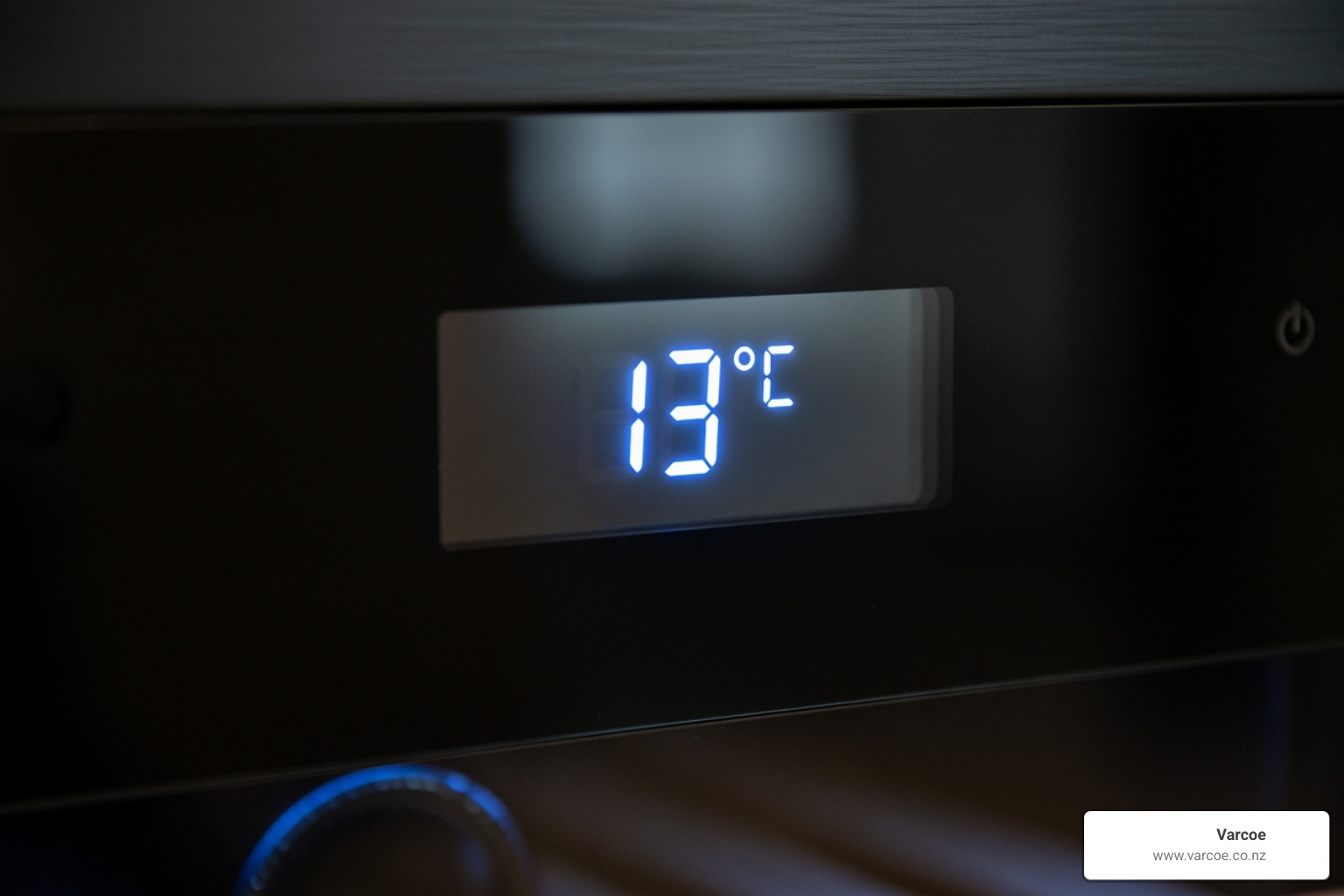
During this time, monitor the temperature. Temperature stabilisation is critical for wine preservation. The ideal temperature for long-term storage is 13°C (55°F), though a range of 10°C to 16°C is acceptable. Sparkling wines prefer cooler temperatures (around 4°C), while reds can be stored slightly warmer (up to 18°C).
Humidity control is also important. The ideal range is 55% to 70%. Low humidity can dry out corks, while high humidity can cause mould. Many units manage this automatically, but a hygrometer can help you monitor levels.
When you begin loading your wine bottles, do so gradually. Adding room-temperature bottles slowly prevents a sudden temperature spike that would strain the compressor.
Regular maintenance ensures reliable performance. The routine is straightforward and protects your investment.
Proper placement and maintenance can extend equipment life by up to 70%. By following these practices, you ensure every bottle you open tastes exactly as intended.
This is a crucial step. When a wine cooler is transported, the refrigerant and lubricating oils inside the compressor are disturbed. Plugging it in immediately can cause these fluids to enter the compression system, leading to severe and often irreparable damage.
You should wait 2 to 24 hours before plugging in the unit. If the cooler was kept upright during delivery, a few hours may be enough. However, if it was tilted or has travelled a long distance, it is safest to wait the full 24 hours.
This patience prevents compressor damage and ensures a long life for your appliance. Always check your manufacturer’s manual for the specific recommendation for your model.
While tempting for a budget-friendly integrated look, the answer is almost always no. The reason is ventilation.
Freestanding units are designed to vent heat from their back and sides. They require several inches of open space to dissipate heat effectively. Enclosing a freestanding unit in a cabinet traps this hot air, causing the unit to overheat. This forces the compressor to run constantly, leading to inefficient cooling, higher energy bills, and a drastically shortened lifespan. It can also create a fire hazard and will void your warranty.
Built-in models are specifically engineered with front-venting systems that expel hot air from the front, allowing them to be safely installed within cabinetry. For an integrated look, investing in a proper built-in model is the only safe and effective option.
Learning from common installation mistakes can save you time, money, and frustration. Here are the most frequent errors to avoid:
You’ve now completed the journey of installing a wine cooler, from planning to ongoing care. With this knowledge, you can create the perfect environment for your wine collection, protecting your investment and ensuring years of enjoyment.
Remember these key takeaways:
At Varcoe, we understand that creating the perfect climate goes beyond a single appliance. With 50 years of experience serving Auckland, Waikato, and Bay of Plenty, our team specialises in custom, energy-efficient climate solutions. Whether you need expert advice on your wine cooler setup or more comprehensive climate control, we are here to help.
Your wine cooler is now ready to preserve your collection in ideal conditions. It’s time to pour a glass and toast to your successful installation.
For those ready to take their wine storage to the next level, explore our specialised Wine Cellars for bespoke solutions.