
The Smart Homeowner’s Guide to a Perfect Heat Pump Maintenance Timeline
Heat Pump Maintenance Schedule: Perfect Plan 2025
Why Every Heat Pump Owner Needs a Maintenance Plan
A heat pump maintenance schedule is your roadmap to keeping your system running efficiently year-round. Here’s what you need to know:
Essential Maintenance Timeline:
- Monthly: Check and replace air filters, inspect for debris
- Seasonally: Clean outdoor coils, clear vegetation, check condensate drains
- Twice yearly: Professional servicing (spring and autumn)
- Annually: Full system diagnostics and tune-up
Your heat pump works harder than most HVAC systems. Unlike a furnace that only heats or an air conditioner that only cools, your heat pump runs year-round to keep your Auckland home comfortable through every season.
This constant operation means regular maintenance isn’t optional – it’s essential. The research shows that a well-maintained heat pump can improve energy efficiency by up to 25%, while a neglected system can consume 10-25% more power than necessary.
The stakes are high. Without proper care, your heat pump might last only 10 years. With regular maintenance, that same unit can serve you faithfully for 15-20 years or more.
The good news? Most maintenance tasks are straightforward. Some you can handle yourself in just minutes. Others require professional expertise but happen only once or twice a year.
This guide breaks down exactly when to do what, so you can protect your investment and enjoy consistent comfort without the surprise repair bills.
Why a Regular Heat Pump Maintenance Schedule is Non-Negotiable
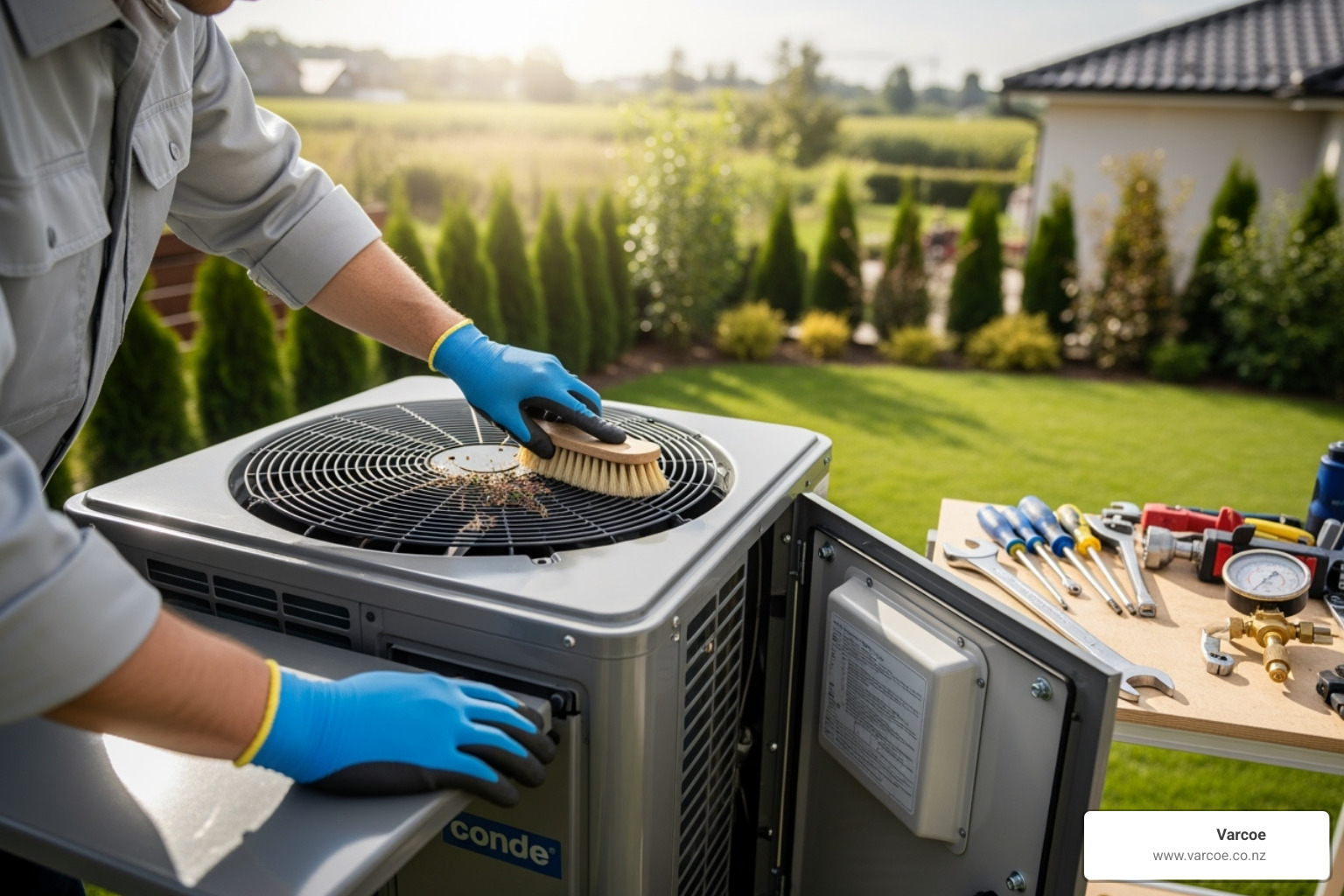
You wouldn’t skip servicing your car for three years straight, right? Yet many homeowners treat their heat pump like a “set and forget” appliance. Here’s the reality: your heat pump is one of the hardest working systems in your home, and without a proper heat pump maintenance schedule, you’re setting yourself up for some unpleasant surprises.
Let’s talk about what hits closest to home for most Auckland families: those monthly power bills. Research from the National Renewable Energy Laboratory shows that the difference in energy use between a well-maintained and a neglected heat pump can be a whopping 10% to 25%. That’s like throwing money straight out the window every month.
Think about it this way: if your power bill is $300 monthly, poor maintenance could be costing you an extra $75 each month. Over a year, that’s $900 you didn’t need to spend. Suddenly, that annual service doesn’t seem so expensive, does it?
Energy savings are just the beginning. A well-maintained heat pump can soldier on for 15 to 20 years, while a neglected one might give up the ghost in just 10 years. When you consider that replacing a heat pump system can cost thousands, those regular check-ups start looking like excellent insurance.
Your family’s health matters too. Improved indoor air quality is one of the most overlooked benefits of regular maintenance. Your heat pump circulates air throughout your home constantly, and dirty filters become collection points for dust, allergens, and other nasties. When filters get clogged, your system works harder and potentially recirculates contaminated air. Regular maintenance keeps the air your family breathes clean and fresh.
Here’s something many homeowners don’t realise: skipping maintenance can void your warranty compliance. Most manufacturers require proof of regular servicing to honour warranty claims. Miss those services, and you could be left covering expensive repairs out of your own pocket when a major component fails.
Preventing costly repairs is perhaps the most compelling reason for regular maintenance. Small issues caught early during routine checks can be fixed quickly and affordably. Leave them unattended, and they often snowball into major breakdowns that happen at the worst possible times, like during Auckland’s hottest summer days or coldest winter nights.
The beauty of a proper maintenance schedule is that it keeps your Heat Pumps running smoothly year after year, giving you peace of mind and consistent comfort. It’s not just about fixing problems; it’s about preventing them entirely.
Your Year-Round DIY Heat Pump Maintenance Checklist

Here’s the good news: you don’t need to be a technician to keep your heat pump running smoothly between professional services. Many essential maintenance tasks are surprisingly simple and take just minutes to complete. Think of this as your friendly heat pump maintenance schedule for the DIY tasks that make a real difference.
The benefits of these routine checks is that they prevent small issues from becoming expensive headaches. Plus, there’s something quite satisfying about taking care of your home’s hardest-working appliance yourself.
Monthly Tasks: The 5-Minute Check
Once a month, give your heat pump a quick health check. These tasks are so straightforward, you can easily fit them into your weekend routine.
Changing air filters is hands down the most important thing you can do. When filters get clogged with dust and debris, your heat pump has to work much harder to push air through your home. Check your filters monthly and clean or replace them every one to three months. If you’ve got pets or someone in the family has allergies, you might need to do this more often.
When choosing replacement filters, consider the MERV ratings. Higher MERV ratings capture more particles, which means cleaner air for your family. Just remember to turn off your heat pump before swapping filters and make sure those airflow arrows point in the right direction.
Inspecting for blockages around your indoor unit takes just a moment. Have a quick look at the return air vent. You’d be surprised how often we find toys, dust bunnies, or even furniture blocking proper airflow.
Wiping down the indoor unit with a damp cloth keeps dust from building up and being drawn into your system. It’s a small step that helps maintain good air quality.
Checking for unusual noises is as simple as listening while your heat pump runs. New rattling, buzzing, or grinding sounds often signal that something needs attention before it becomes a bigger problem.
Seasonal Tasks: Prepping for Summer and Winter
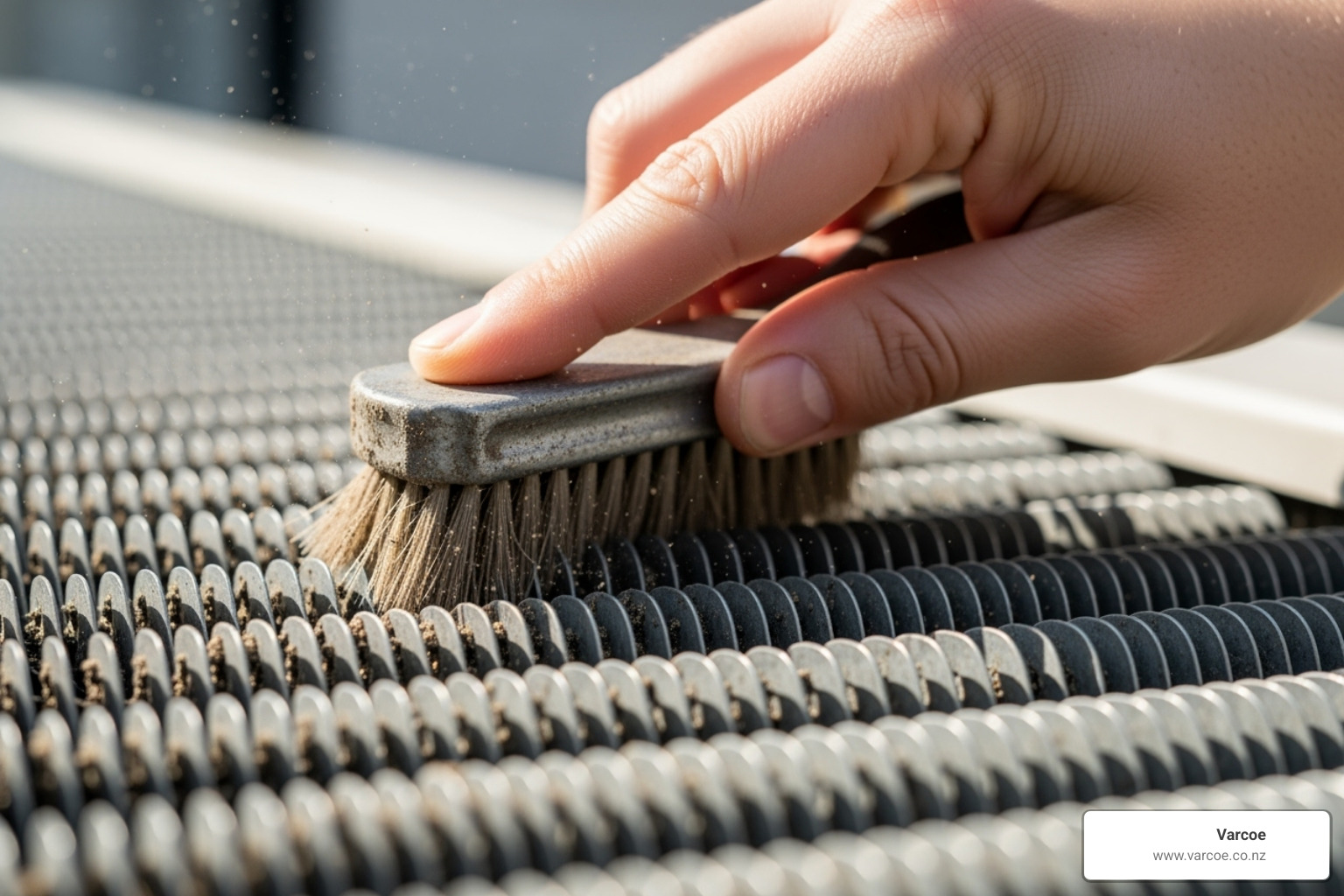
As Auckland’s seasons change, your heat pump needs a bit more attention to handle the shifting demands.
Cleaning outdoor coils is essential because dirty coils can’t transfer heat efficiently. The outdoor unit collects all sorts of debris throughout the year – leaves, dirt, grass clippings, you name it. Use a soft brush or your garden hose on a gentle setting to clean them when they look grubby. Just be careful with those delicate fins.
Clearing debris from around your outdoor unit keeps the airflow unrestricted. Maintain at least 50cm clearance on all sides – that’s about two feet of breathing room. In winter, gently remove any snow or ice buildup that might block airflow or damage components.
Checking the condensate drain prevents water damage and keeps things flowing smoothly. The drain line near your indoor unit can sometimes get clogged. If you notice a blockage, try clearing it with a mixture of water and mild bleach – about one cup of bleach to four litres of water.
Straightening coil fins might sound technical, but it’s actually quite simple. Those aluminium fins on your outdoor unit can get bent, reducing airflow. You can carefully straighten them with a fin comb from the hardware store or even a thin, flat tool. Just be gentle to avoid damage.
Cleaning supply and return registers throughout your home ensures proper airflow. Use your vacuum’s brush attachment to remove dust from these vents and make sure nothing’s blocking them.
These seasonal tasks set your heat pump up for success, whether it’s gearing up for Auckland’s humid summers or preparing for those chilly winter months. By staying on top of these simple maintenance steps, you’re actively extending your system’s life and keeping those power bills in check.
The Professional Heat Pump Maintenance Schedule: When to Call the Experts
While your DIY efforts are fantastic and genuinely help keep your system running well, some aspects of heat pump care are best left to the professionals. Think of us as your heat pump’s personal trainers – we know exactly how to keep everything in peak condition.
Your heat pump is a bit of a workaholic. Unlike a furnace that only kicks in during winter or an air conditioner that only runs in summer, your heat pump operates year-round in Auckland’s climate. This constant operation means it experiences significantly more wear and tear than single-season systems.
That’s why we, along with industry experts, strongly recommend professional servicing at least once a year, and ideally twice a year for optimal performance and longevity. It might seem like overkill, but consider this: the average cost of professional servicing is around $170-$190, whilst the average repair bill can easily exceed $347. Prevention is definitely better (and cheaper) than cure.
The sweet spot for professional maintenance is during the “shoulder seasons” – those lovely periods when you’re not relying heavily on your heat pump. Autumn maintenance in early March or April prepares your system for the colder months ahead, ensuring it’s ready to handle winter’s heating demands efficiently. Our technicians pay special attention to defrost controls and perform thorough system inspections during these visits.
Spring maintenance in September or October addresses any wear from winter and primes your heat pump for efficient cooling during Auckland’s warmer months. This timing allows us to perform post-winter checks like cleaning coils and measuring refrigerant levels before you need maximum cooling performance.
These bi-annual servicing appointments maximise efficiency, ensure safety, and help us spot minor issues before they become expensive breakdowns. Our expertise with premium brands like Daikin Heat Pumps ensures your unit receives the specialised care it deserves.
What a Professional Tune-Up Includes
When our certified technicians arrive for your professional heat pump service, we don’t just have a quick look and call it done. We perform a comprehensive series of checks and adjustments designed to optimise your system’s performance, safety, and efficiency.
Refrigerant level inspection is one of our most critical tasks. We carefully check refrigerant levels and inspect for any leaks, as low refrigerant can severely hamper your heat pump’s ability to heat or cool effectively. This leads to increased energy consumption and potential compressor damage – definitely something worth preventing.
Electrical connection tightening might sound mundane, but loose connections can be a genuine fire hazard and cause your system to operate inefficiently. We inspect and tighten all electrical connections to ensure everything is safe and secure.
Motor lubrication keeps all those moving parts happy. Your fan and blower motors need proper lubrication to reduce friction and wear, which extends component life and ensures smooth, quiet operation. Nobody wants a heat pump that sounds like it’s complaining.
Blower and fan cleaning removes the dust and grime that inevitably accumulates on these components. Clean blower assemblies and fan blades mean better airflow and improved efficiency – it’s amazing how much difference a thorough clean can make.
For ducted systems, ductwork leak inspection is crucial. Leaky ducts can waste a significant amount of conditioned air, impacting both efficiency and comfort. We can seal any leaks we find with proper HVAC tape or duct sealant.
Thermostat calibration ensures your thermostat accurately reads temperatures and communicates correctly with your heat pump. There’s nothing more frustrating than setting your temperature to 22°C and getting 25°C instead.
Our full system diagnostics involve a thorough check of all system controls, including defrost assembly and crankcase heaters. We monitor coil temperatures, check safety panels, examine disconnect switches, and verify that everything is functioning as it should.
We also handle condensate drain clearing, airflow verification, and inspect belts and coils for optimal condition. Finally, we assess your unit’s placement and overall physical integrity to ensure everything is positioned correctly and in good shape.
Choosing a certified technician like our team at Varcoe guarantees reliable and thorough service for your heat pump investment.
Crafting Your Ideal Professional heat pump maintenance schedule
The perfect heat pump maintenance schedule depends on how hard your system works and Auckland’s unique climate demands. Most of our customers fall into one of two categories.
Annual service for moderate use works well if your heat pump isn’t your sole source of heating and cooling, or if you use it less frequently. This single yearly check-up catches most potential issues and keeps the system running efficiently without overdoing the maintenance.
Bi-annual service for primary heating and cooling is what we recommend for most Auckland homes, where the heat pump handles the bulk of temperature control duties. Scheduling one visit in early autumn and another in late spring ensures your unit is perfectly prepared for its busiest periods, maximising efficiency and extending its lifespan.
Scheduling in shoulder seasons gives you several advantages. You’ll avoid the rush of emergency calls during peak summer and winter, often giving you more flexibility for appointments. More importantly, your system will be ready before you truly need it – there’s real peace of mind in knowing your heat pump is in top condition before the weather turns.
Auckland climate considerations make regular maintenance even more important. Our humid summers and mild but damp winters mean your heat pump constantly works to manage both temperature and humidity. This continuous operation can lead to issues like mould growth in condensate drains or corrosion on outdoor units if not properly maintained.
Our experienced team, with expertise in brands like Mitsubishi Electric Heat Pumps, can help you determine the best maintenance schedule for your specific system and usage patterns. After 50 years in the business, we’ve learned that a custom approach always delivers the best results.
Telltale Signs Your Heat Pump Needs an Unscheduled Service
Even with the most diligent heat pump maintenance schedule, your system might occasionally cry out for help between professional visits. The good news is that heat pumps are pretty good at telling you when something’s not right. You just need to know what to listen and look for.
Think of your heat pump as a reliable friend who suddenly starts acting strangely. When that happens, it’s time to pay attention and call in the experts.
Unusual noises are often the first sign something’s amiss. Your heat pump normally runs with a gentle hum, but if you suddenly hear rattling, buzzing, grinding, squealing, or banging sounds, that’s your cue to pick up the phone. These noises can signal anything from loose screws to motor troubles or even a failing compressor.
Weak airflow is another red flag. If the air coming from your vents feels feeble, or if some rooms are suddenly much warmer or cooler than others, something’s blocking the flow. While it might be as simple as a clogged filter (check your monthly DIY tasks first!), it could also indicate blower motor issues or problems with your ductwork.
Watch out for short cycling too. This is when your heat pump keeps turning on and off like an indecisive teenager, never completing a full heating or cooling cycle. It’s incredibly inefficient and puts unnecessary strain on your system. This behaviour often points to bigger issues like refrigerant problems or electrical faults.
Your power bill can be a detective tool as well. A sudden spike in energy costs without any change in your usage patterns means your heat pump is working overtime. This is a classic symptom of reduced efficiency, usually caused by a developing problem that needs professional attention.
Water leaks around your indoor unit or excessive moisture buildup are clear warning signs. These usually indicate a clogged condensate drain line or, more seriously, a refrigerant leak that needs immediate attention.
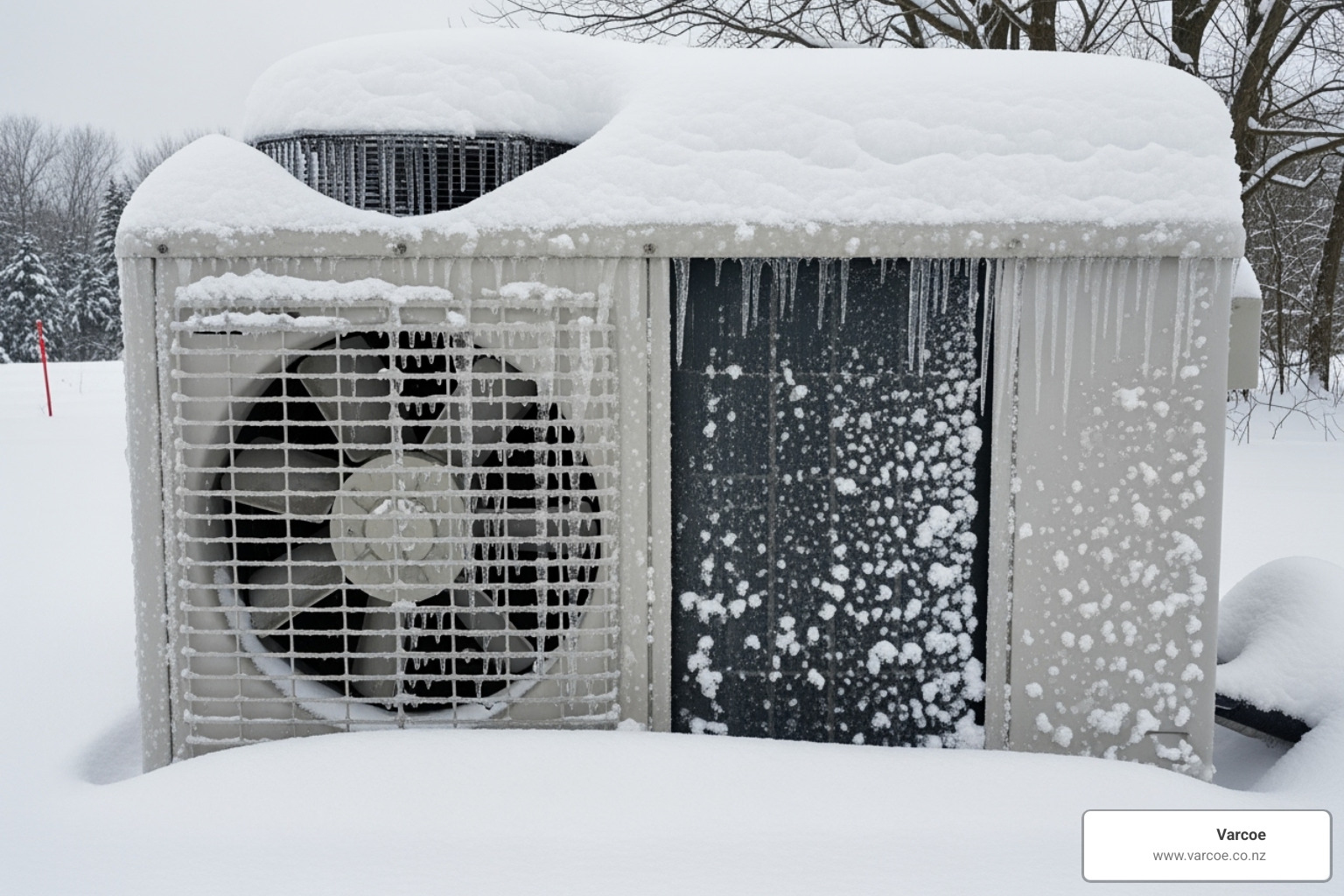
In winter, keep an eye on icing patterns on your outdoor unit. While a light frost is perfectly normal, heavy ice buildup when it shouldn’t be there suggests problems with the defrost cycle, low refrigerant levels, or restricted airflow.
Don’t ignore unpleasant odours either. Musty smells often mean mould or mildew has taken up residence in your evaporator coil or ductwork. A burning smell is even more concerning and could indicate electrical issues or an overheating motor.
Modern heat pumps, especially those with Wi-Fi Heat Pump Control, often have diagnostic error lights that flash specific patterns when something’s wrong. These flashing lights are like your heat pump speaking in code, telling you exactly what’s bothering it. While your owner’s manual might help decode these messages, you’ll usually need a professional to diagnose and fix the underlying problem.
The key thing to remember is that ignoring these warning signs won’t make them go away. In fact, it usually makes things worse and more expensive to fix later. When your heat pump starts sending distress signals, responding quickly can save you money and keep your home comfortable.
Frequently Asked Questions about Heat Pump Maintenance
We get lots of questions from Auckland homeowners about caring for their heat pumps. Here are the answers to the most common ones that come up during our service calls.
How long can a heat pump last with a good maintenance schedule?
Here’s the thing that surprises many people: a well-maintained heat pump can last 15 to 20 years, whereas a neglected unit may fail in as little as 10 years. That’s potentially doubling your system’s lifespan just by sticking to a proper heat pump maintenance schedule.
We’ve seen heat pumps that have been faithfully serviced twice a year still running beautifully after two decades. On the flip side, we’ve also had to replace units that were only eight years old because they never received proper care.
The difference often comes down to those regular bi-annual check-ups we recommend. When our technicians catch small issues early, they can fix them before they turn into expensive failures. It’s like the difference between changing your car’s oil regularly versus waiting until the engine seizes up.
Can I perform all heat pump maintenance myself?
The short answer is no, and we’re glad you asked! While homeowners can absolutely handle basic tasks like cleaning filters and clearing debris around the outdoor unit, attempting all maintenance yourself isn’t safe or practical.
Tasks involving electrical components or refrigerant are dangerous and require a qualified technician with proper certifications and specialised tools. We’ve seen well-meaning DIY attempts that ended up causing more damage than the original problem would have cost to fix.
Plus, most manufacturers require professional servicing to keep your warranty valid. So while we absolutely encourage you to tackle those monthly filter changes and seasonal cleaning tasks, leave the technical stuff to us. Your safety and your warranty depend on it.
Does my heat pump need servicing if it seems to be working fine?
This is probably the question we hear most often, and the answer is a resounding yes! Preventative maintenance is crucial for catching minor issues before they become major, expensive failures.
Think of it this way: your heat pump might seem fine on the surface, but it could be working 20% harder than it needs to because of dirty coils or low refrigerant levels. You won’t notice the difference in comfort, but you’ll definitely notice it in your power bill.
During our professional tune-ups, we often find issues that homeowners had no idea existed. A slightly loose electrical connection here, a partially blocked drain there, or coils that need cleaning. None of these things would stop your system from running, but they all reduce efficiency and shorten its lifespan.
It also ensures your unit runs at peak efficiency, saving you money on power. Regular servicing isn’t just about preventing breakdowns; it’s about making sure you’re not paying more than you should to stay comfortable year-round.
Conclusion: Protect Your Investment with a Smart Maintenance Plan
Your heat pump represents one of the smartest investments you can make in your Auckland home’s comfort and energy efficiency. But like any worthwhile investment, it needs proper care to deliver on its promise.
Think of your heat pump maintenance schedule as an insurance policy for year-round comfort. When you combine simple monthly DIY tasks with professional servicing twice a year, you’re not just keeping the lights on (so to speak). You’re ensuring your system runs at peak efficiency, slashing those power bills and extending your unit’s life well into its second decade.
Proactive care pays dividends. The difference between a well-maintained heat pump and a neglected one isn’t subtle. We’re talking about potentially 25% better energy efficiency, years of additional lifespan, and the kind of reliable performance that means you never have to think twice about your home’s comfort.
At Varcoe, we’ve spent 50 years perfecting the art of keeping Auckland homes comfortable. Our experience has taught us that the best repairs are the ones you never need. That’s why we’re passionate about helping you establish a maintenance routine that prevents problems before they start.
Long-term savings come from thinking ahead. Yes, regular servicing involves some upfront cost, but it’s a fraction of what you’ll spend on emergency repairs or premature replacement. Plus, there’s something wonderfully reassuring about knowing your system is in expert hands.
The peace of mind that comes with proper maintenance is invaluable. No more worrying about whether your heat pump will keep up during Auckland’s sweltering summer days or those chilly winter nights. No more surprise breakdowns when you need your system most.
Ready to give your heat pump the expert care it deserves? Our certified technicians are standing by to help you establish the perfect maintenance routine for your specific system and needs.
Book your professional heat pump servicing with our experienced team today. Your future self (and your power bill) will thank you.